
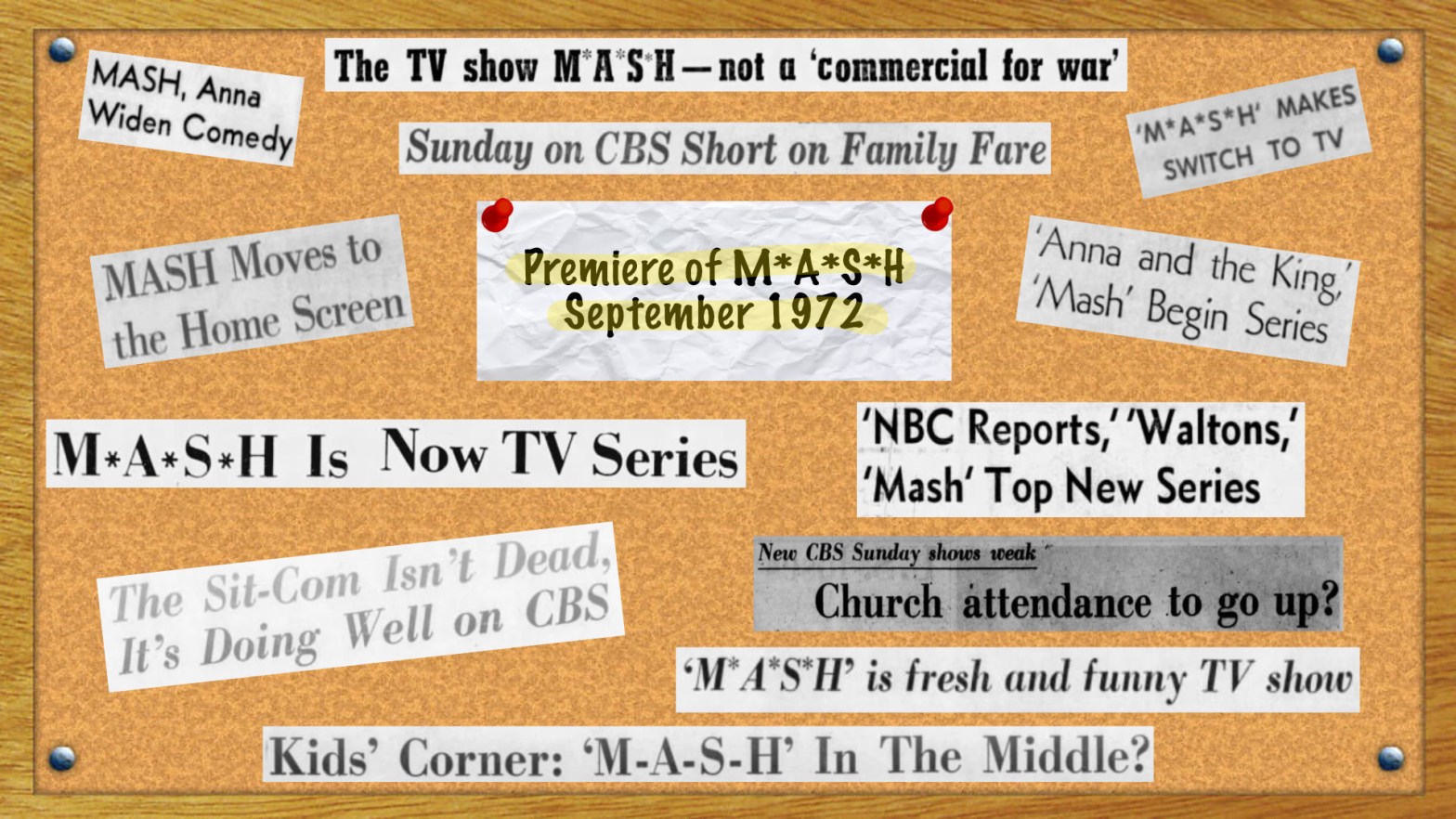
“M*A*S*H Headlines” is a new, limited time post that will focus on the press reaction to various events in the M*A*S*H timeline. The Press Pass posts focus on the press materials released by 20th Century Fox and CBS, but this series of posts will focus the press coverage of various M*A*S*H events including the release of Robert Altman’s film, the premiere of the M*A*S*H pilot episode on CBS, the death of Henry Blake, the M*A*S*H finale, and more! See the full series of Headlines posts here.
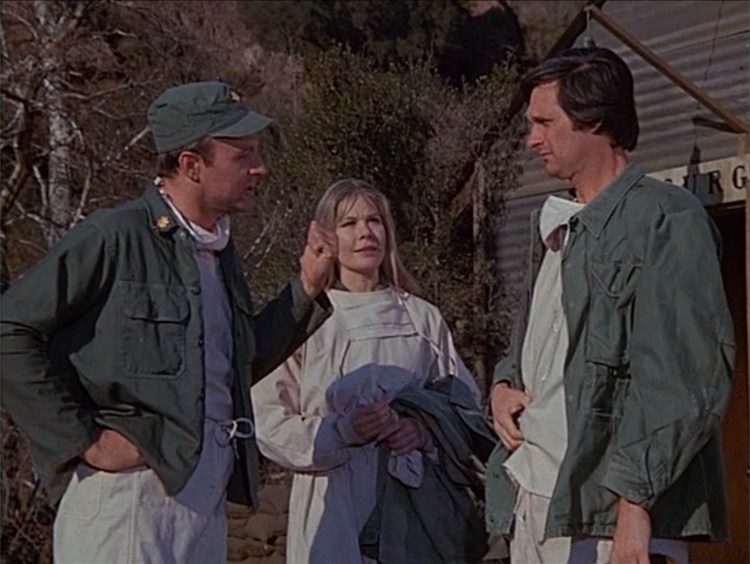
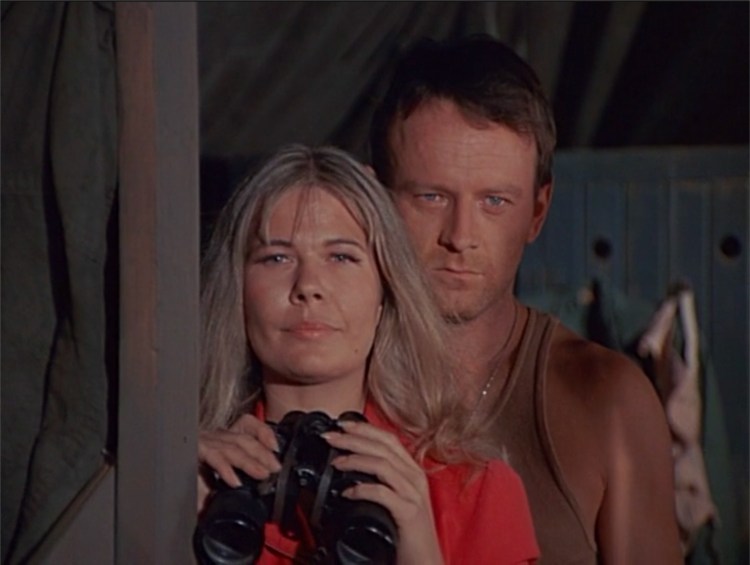
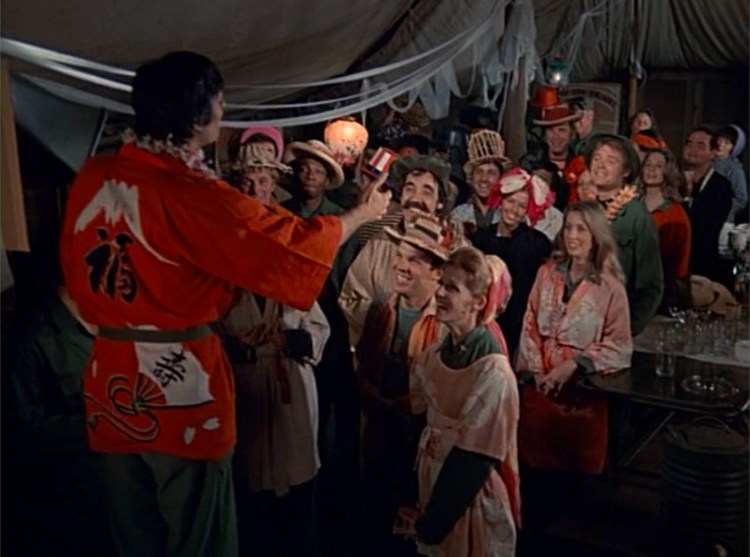
When M*A*S*H debuted on CBS on September 17, 1972, the reaction was largely positive. The critics praised the show for its sharp wit and lack of respect for authority. In his review in Valley News, Ernie Kreiling said simply, “Certainly M*A*S*H is a (S)MASH with this viewer.” Reviewing newspapers from the week after the pilot episode aired, there are only a few negative reviews of the show. M*A*S*H seemingly won over the critics, but it did not win the audience. The pilot episode ranked 45th in the ratings (see a great breakdown of M*A*S*H‘s ratings at MASH4077TV.COM) and the highest a M*A*S*H episode reached in its first season was 18th. While M*A*S*H did not fare well in its first season, it would fare better in the ratings for the next decade. But first impressions are important, so let’s look back at what the critics thought of the M*A*S*H pilot.
As I mentioned in the introduction, M*A*S*H‘s ratings in its first season were rough. So what went wrong? The Forth Worth Star-Telegram‘s Jerry Coffey nailed the cause of the issue in his review of the show when he said, “It’s difficult to predict how the series will fare as an audience-grabber…especially since the network has placed it in what seems to be the worst possible [time] slot.” M*A*S*H was on Sunday nights in its first season, and it was placed on between two CBS shows that were deemed to be more family friendly (Anna and the King and The Sandy Duncan Show). Meanwhile, the competing networks, NBC and ABC, also aired more family friendly content on Sunday nights. On NBC, Americans could watch The Wonderful Word of Disney, which would show a Disney movie each week. The movie was consistently in the top 10 of ratings each week and the highest rated program on Sunday nights. This was tough competition for M*A*S*H.

M*A*S*H‘s pilot episode received mostly positive reviews from the critics following its debut. That is impressive given that M*A*S*H was following the successful Robert Altman film. There was skepticism that the dark comedy and sexual material from the movie could be translated to television. In order to be successful, the show would have to be edgy, and Rick Du Brow wrote in The Atlanta Journal that the series succeed in pushing the envelope. He said, “What is notable about M*A*S*H is the stronger, freer contemporary attitude it signifies for television situation comedy. We find not only signs of the new leeway for racy, sexy comedy, but also a total disrespect for people who deserve it even though they may have a position of authority.” He wasn’t the only critic to immediately see what made M*A*S*H different from other sitcoms. Win Fanning said, “Irreverent is the best word to describe it, and irreverence has been rather hard to come by on TV series, if we except one or two variety shows.” In fact, “irreverence” was a term used by many reviewers because M*A*S*H met the Webster’s definition of the term which is “lacking proper respect or seriousness.” Like the movie, the series thumbed its nose at authority and pushed what the network censors would allow.
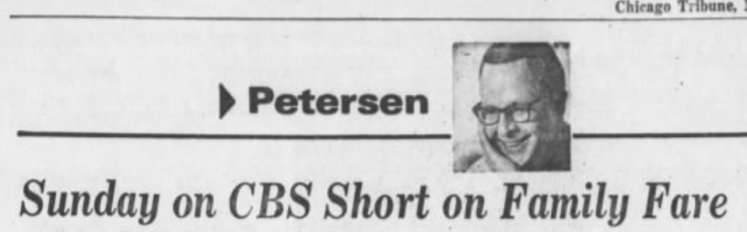
Every new show will have its detractors, however. Clarence Peterson wrote in the Chicago Tribune that M*A*S*H didn’t push the envelope enough saying, “without the blood and gore, you don’t get the same sense of horror that made the film for many who saw it an anti-war polemic.” The fact that CBS wouldn’t allow M*A*S*H to show any blood early in the series is pretty well known, and there were some reviewers that noticed. The movie had been very bloody and did not shy away from the horrors of war. As the series gained popularity and developed, Larry Gelbart was able to push and get more serious storylines, and show more blood. Another common complaint following the pilot was the use of a laugh track when there was no studio audience. Most sitcoms in this period had laugher from a live audience, but M*A*S*H used canned laughter since it was filmed without a live audience. The use of the laugh track was not Gelbart’s choice, and Will Jones had to admit, “I even almost forgave the laugh track because I was laughing harder than it was.”


As I mentioned earlier, M*A*S*H was compared to the Altman film, and some of the comparisons were not fair. An R-rated movie could get away with things that a television show couldn’t, especially in 1972. Some reviewers felt that the characters didn’t feel as well rounded as their movie counterparts. Robert Albano, for example, wrote, “Alan Alda’s and Wayne Rogers’ performances come nowhere near the well-developed characterizations of Hawkeye and Trapper that Donald Sutherland’s and Elliot Gould’s did…” I would argue that one episode is too little time to judge a character. It is hard to define a cast of characters in 26 minutes. By the end of season one, the M*A*S*H ensemble felt like it was well formed, but that took time. And that is a major difference between film and television. A movie has two hours to introduce, define, and resolve characters. A series like M*A*S*H had 24 episodes to flesh out characters and develop their relationship. It was not necessary to flesh out each character from episode one, and I appreciate that Gelbart, Reynolds, and crew allowed the characters to grow as the series progressed.
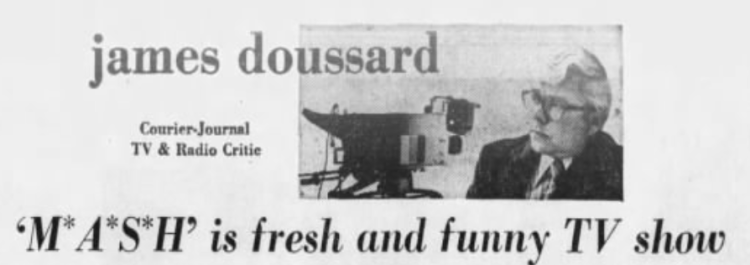
M*A*S*H did not debut in a vacuum in September 1972. There were other new series released that were reviewed at the same time, and some of the reviewers were not kind. In the Anderson Daily Bulletin, the headline regarding the CBS Sunday evening lineup wondered, “Church attendance to go up?” The lineup was called “weak,” and the ratings proved that. Mary Ann Lee agreed with this assessment in her review calling the CBS lineup for 1972, “A little salt, a lot of blandness.” I have written that season one has some weak episodes, but most shows do. Once M*A*S*H found its footing, and was moved to Saturday nights in season two, the show found its audience. In September 1972, no one could have predicted that M*A*S*H would go on for another 250 episodes and that the show would change television by killing off a major character, successfully changing cast members multiple times, and concluding with the most successful series finale of all time. But there was at least one reviewer who saw something special in M*A*S*H. James Doussard summed it up best in his opening sentence of his review by proclaiming, “If M*A*S*H can stay as fresh and funny as last night’s premiere, CBS-11 [Louisville, KY] could have a hit on its hands as big as All in the Family.”



Newspaper Bibliography
- Associated Press. “Church Attendance to Go Up?” Anderson Daily Bulletin. September 18, 1972, 8.
- Coffey, Jerry. “M*A*S*H Makes Switch to TV.” Forth Worth Star-Telegram. September 19, 1972, 9A.
- Constantine, Peggy. “But Nobody Knows My Name.” Corpus Christi Caller-Times. September 10, 1972, 36.
- Doussard, James. “M*A*S*H is Fresh and Funny TV Show.” The Courier-Journal. September 18, 1972, B2.
- Du Brow, Rick. “Anna and the King, M*A*S*H Begin Series.” The Delaware Gazette. September 15, 1972, 17.
- Du Brow, Rick. “M*A*S*H, Anna Widen Comedy.” The Modesto Bee. September 15, 1972, B5.
- Du Brow, Rick. “M*A*S*H Debuts on TV.” New Castle News. September 15, 1972, 24.
- Du Brow, Rick. “NBC Reports, Waltons, M*A*S*H Top New Series.” The Atlanta Journal. September 20, 1972, 17D.
- Du Brow, Rick. “Video in Review.” The Idaho Statesman. September 24, 1972, 12.
- Fanning, Win. “M*A*S*H, Banacek, Banyon, Streets of Frisco Reviewed.” Pittsburgh Post-Gazette. September 18, 1972, 31.
- Jones, Will. “After Last Night.” Minneapolis Star Tribune. September 18, 1972, 10B.
- Kornman, Sheryl R. “M*A*S*H.” Tuscon Daily Citizen. September 18, 1972, 20.
- Kreiling, Ernie. “A Closer Look at Television.” Valley News. September 22, 1972, 28.
- Lee, Mary Ann. “A Little Salt, Lot of Blandness.” The Memphis Press-Scimitar. September 18, 1972, 26.
- Lewis, Dan. “The TV Show M*A*S*H – Not a ‘Commercial for War.’” The Des Moines Register. September 17, 1972, 3-TV.
- “M*A*S*H is Now TV Series.” The State. September 17, 1972, 6E.
- Peterson, Bettelou. “The Sit-Com Isn’t Dead, It’s Doing Well on CBS.” Detroit Free Press. September 18, 1972, 5C.
- Peterson, Clarence. “Sunday on CBS Short on Family Fare.” Chicago Tribune. September 18, 1972, 3-13.
- Sharbutt, Jay. “Laughs are Few in Siam.” The Park City Daily News. September 19, 1972, 7.
- Sharbutt, Jay. “Locations Exotic but Shows Routine.” Palo Alto Times. September 18, 1972, 16.
- Shippy, Dick. “Kids’ Corner: M*A*S*H in the Middle?” The Akron Beacon Journal. September 19, 1972, A25.
- Smith, Cecil. “M*A*S*H Moves to the Home Screen.” The Los Angeles Times. September 18, 1972, 19.
 The M*A*S*H Historian
One thought on “M*A*S*H Headlines 2: M*A*S*H Series Pilot Episode Well Reviewed”