

As we enter fall, I am beginning to run out seasonal based episodes to review each month! In 2025, though, I have been rewatching one season of M*A*S*H per month. For season ten, I looked through the list of episodes and picked one at random. The winner was “Blood and Guts” (10×12). I knew the episode featured a war corespondent and how the episode ended, but I couldn’t remember the reason that he visited the 4077th. So I pulled out the script, and I was happy to find that the copy of the script for this episode in the collection has a few extras. As part of the rewatch this year, I have had some time to think about M*A*S*H from a different perspective. As I have posted on this site for the last few years, I’ve read memoirs by actors and writers, and it’s interesting how everything has really come together for me more now than ever before. Perhaps part of that is me being older, but I think the biggest contributor is the fact that I have read more widely about how and the why the series was created. M*A*S*H did not glorify war, and it often mocked the absurdity of it. After rewatching this episode, the message at its core is the central tenant of M*A*S*H.
The Script
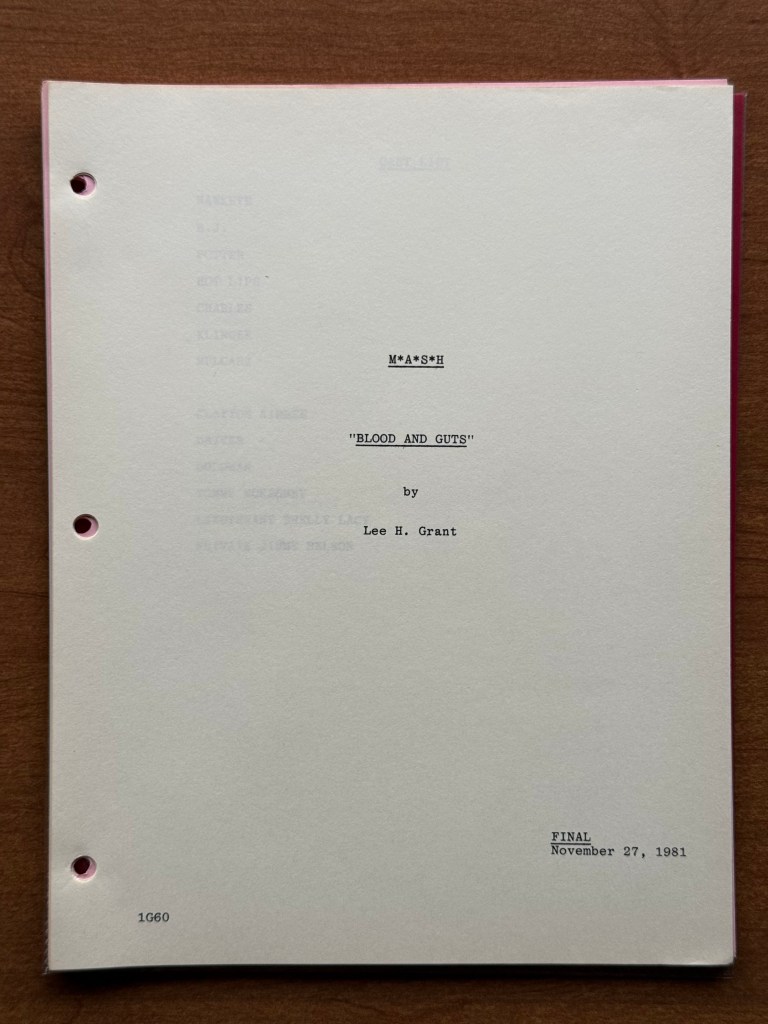
My copy of the script is a Final draft dated November 27, 1981. The episode was written by Lee H. Grant, and this is his only writing credit for M*A*S*H. He has a few other writing credits for shows including CHiPs and Barney Miller. Most of his credits are for other positions behind the camera including first assistant director and stage manager. “Blood and Guts” was directed by Charles S. Dubin, a very familiar name for M*A*S*H fans as he directed over 40 episodes of the series. The episode originally aired on CBS on January 18, 1982.
As I mentioned in the introduction, there are a few interesting features in this script. There are two sets of revised pages, but they are both dated December 8, 1981 (blue and pink pages). There aren’t many episodes that I have seen with two sets of revised pages from the same day. Other than that, there aren’t any other production documents included with this script. We don’t see the Call Sheets or Shooting Schedule, which is unfortunate because I’d like to see how many days this episode was filmed. Since this episode doesn’t have a B-story, did it take less time to film? Were they trying to get the episodes filmed before the holiday break? Unfortunately, I don’t have a way to answers these questions with this script.

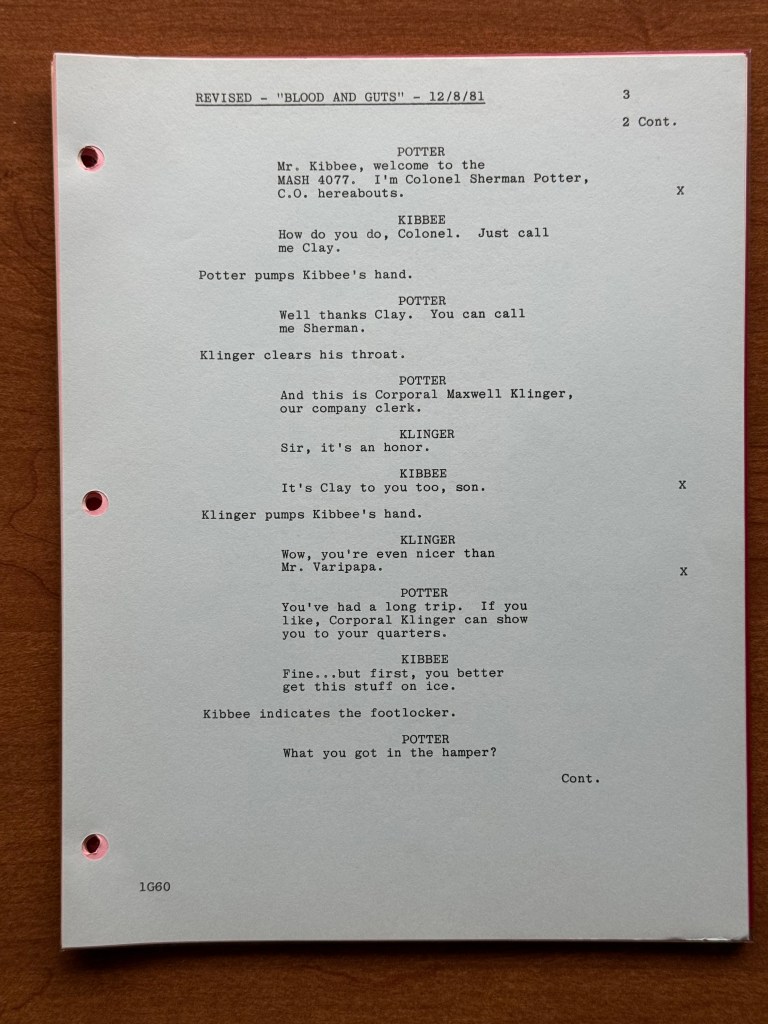
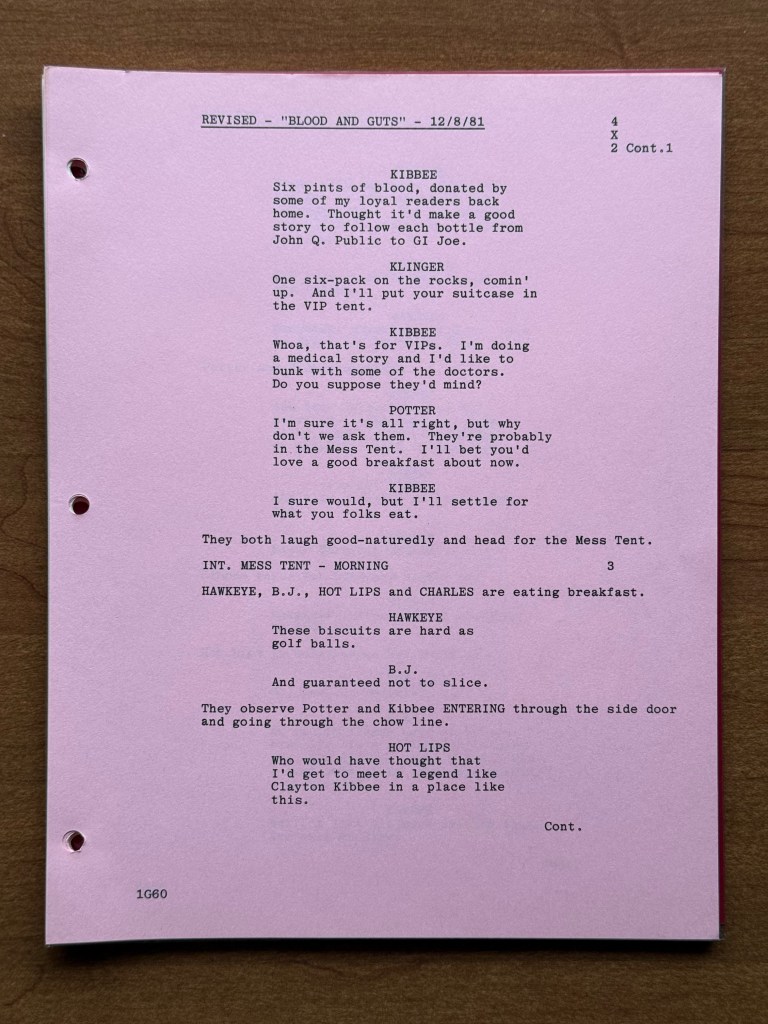
There were quite a few of revised pages in this script. Some episodes have a revised page here or there, but this one has blocks of revised pages that seem to be entire scenes. I’d like to see an original draft to see what did change. Was there originally a B-story that was cut for time? The Clayton Kibbee storyline has several subplots that take place at the same time, so I could see the writers deciding that a B-story was not necessary. It was unusual for M*A*S*H to not have a second storyline, however. As I’ve mentioned many times, each script is unique and tells a story. If I could find a script for “Blood and Guts” with production documents or without the revised pages, it would be able to answer several of the questions I am left with.
The Final Episode
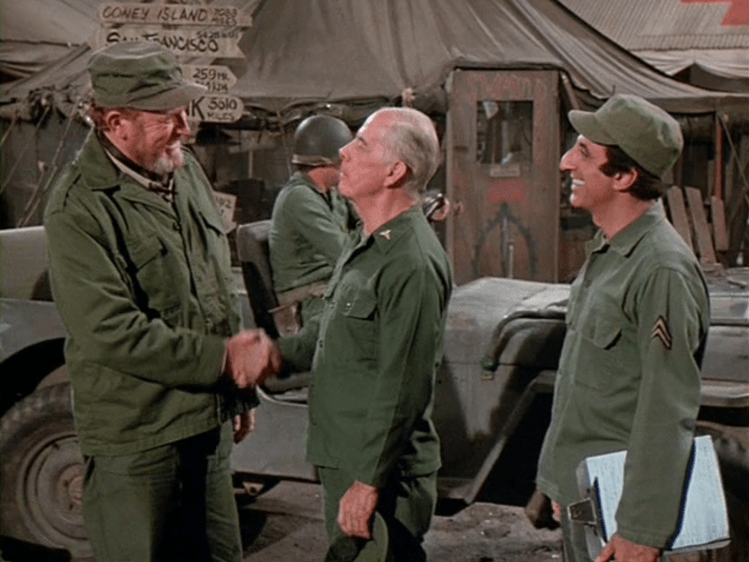

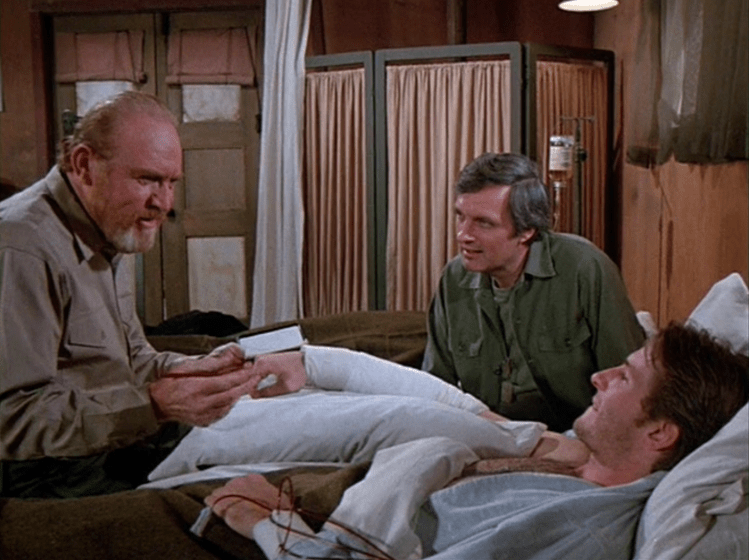
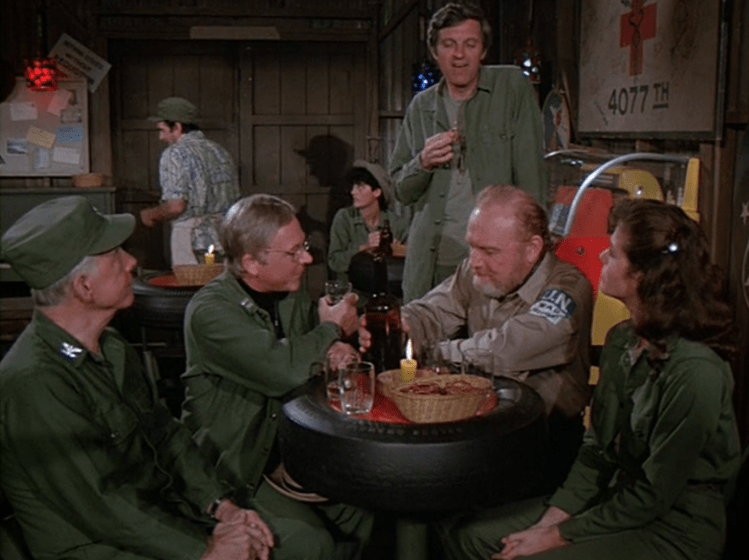


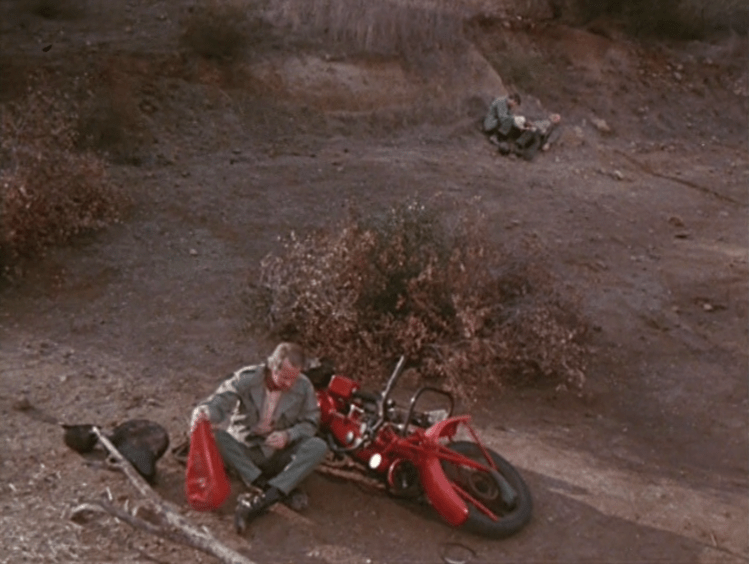
Everyone at the 4077th is excited when they learn that a famous war correspondent is going to visit the camp. When Clayton Kibbee arrives, everyone is smitten. He is personable, has great stories, and even Charles is impressed. However, Hawkeye is unhappy when he becomes a rival with the nurses. Kibbee brought several pints of blood donated by his readers, and he is writing stories following the blood as the pints are used by the 4077th. The first patient arrives needing blood. He crashed his motorcycle in a less than heroic situation. B.J. keeps the motorcycle and fixes it up. When Hawkeye hears the story Kibbee wrote about what happened to the boy on the motorcycle, he realizes that a lot of Kibbee’s stories are embellished. Hawkeye rants about it to anyone who will listen, but they don’t care that the stories are not 100% accurate. However, Kibbee slowly starts to get on other people’s nerves. The final straw is when he steals B.J.’s motorcycle to go to the front to find some action in the war. He crashes it, destroys it, and needs surgery because he fell on a bottle of alcohol. He ends of being the recipient of two pints of the blood he brought.
“Blood and Guts” isn’t one of the best episodes of season ten, but it isn’t one of the weakest either. The storyline is interesting, and the actor who played Clayton Kibbee (Gene Evans) was very good in the role. The point that Hawkeye makes about Kibbee’s articles glorifying war in heroics is a very valid point. War stories often have a clearly defined hero and enemy, but warfare is rarely that neat and tidy. It is this central point that makes M*A*S*H unique. It didn’t glorify war and it typically didn’t play heroics. I think this storyline is interesting because it almost breaks the fourth wall by calling out what M*A*S*H was always designed to do: show war for what it truly is. The final episode is very close to the version of the script I have. I think that is in large part due to the number of revised pages. The was one scene cut from the episode that is in the script. There was a scene where Hawkeye talked to Charles about Kibbee’s stories being fiction (pages 22 – 23).


By the end of the series, M*A*S*H became more episodic, so the storylines really didn’t flow from one episode to the next. Seasons four and five had a great flow to them; however, by this point in the series, you’ll have an episode where everyone at the 4077th is freezing followed by one where they are boiling hot. After 200+ episodes, the writers were looking for new stories, and it had to have been a challenge since there are only so many things you do with MASH unit doctors in a war that only last three years! Episodes like “Blood and Guts” are a unique twist on an episode we already saw. In season eight, we saw a war correspondent visit the 4077th with a very different outcome. So while the initial idea of “war correspondent visits the camp” in “Blood and Guts” and “War Co-Respondent” (08×23) may sound the same, the characters and the storyline is completely different. This was a fact of life in a MASH unit. The doctors and nurses were stuck there, so people would have come and gone all the time. Seeing how the same story can end differently each time is a unique twist, and one that only a long running television series can explore.
 The M*A*S*H Historian
One thought on “Script Spotlight 49: “Blood and Guts””