
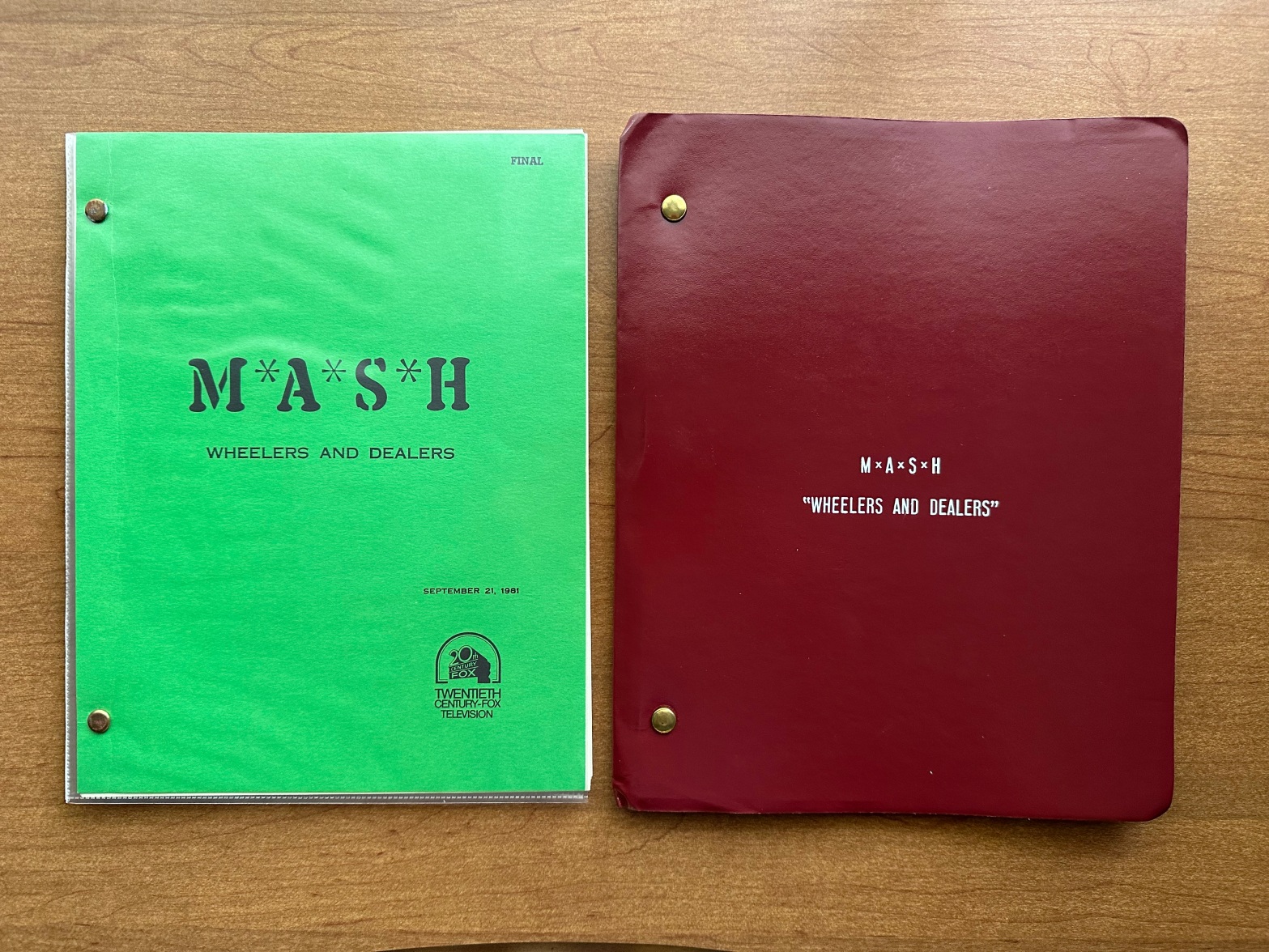
Since August 27th is G.W. Bailey’s birthday, I wanted to feature an episode in which he played a key role. As I was looking through some scripts, I found the episode “Wheelers and Dealers” (10×05), and all I could hear was Rizzo saying “vee-hicle.” That made this the obvious choice since it features Bailey’s comedy talents. As I got this script out, however, I found a second script. One that was clearly a copy, but it was photocopied by CBS for a specific program. I had never heard of the CBS Television Reading Program, so I did some research and found some information. This week, in addition to reviewing the episode, we are going to take a look at two scripts instead of one!
The Script
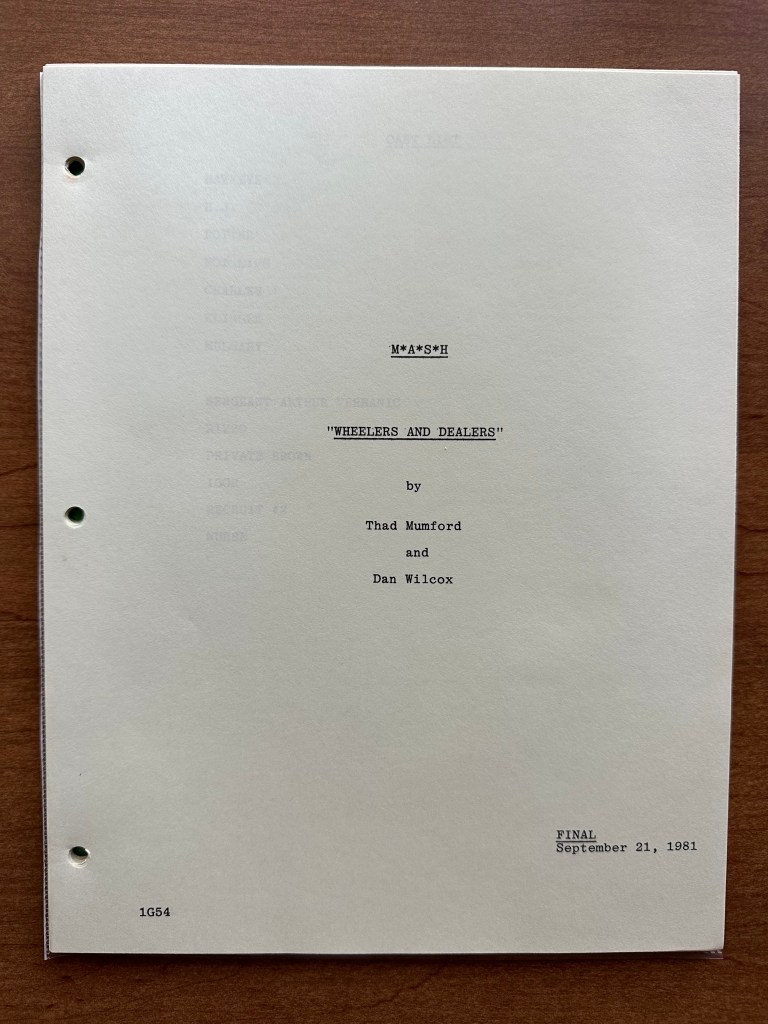
The original script is a final draft dated September 21, 1981. The episode was directed by Charles S. Dubin and written by the writing team of Thad Mumford and Dan Wilcox. Dubin is credited with directing an incredible 44 episodes of the series. Mumford and Wilcox were just as prolific with 36 writing credits to their names. By season ten, Karen Hall was a story editor for the series as well. The writing of M*A*S*H was just as vital as the acting, and the focus on the importance of strong writing was instilled by Larry Gelbart and continued after he left the series.
Unfortunately, this script doesn’t have many bells and whistles. There are no production requirements or revised pages. Strangely, I do have two copies of page nine. This would have likely been a file copy or one sent to executives at CBS or 20th Century Fox Television for review and not used on set. However, it is still important as it documents one of the many types of scripts that M*A*S*H produced. Instead of the original script being the most interesting object this week, it is the copy of the script that offers a more interesting story.
The CBS Television Reading Program
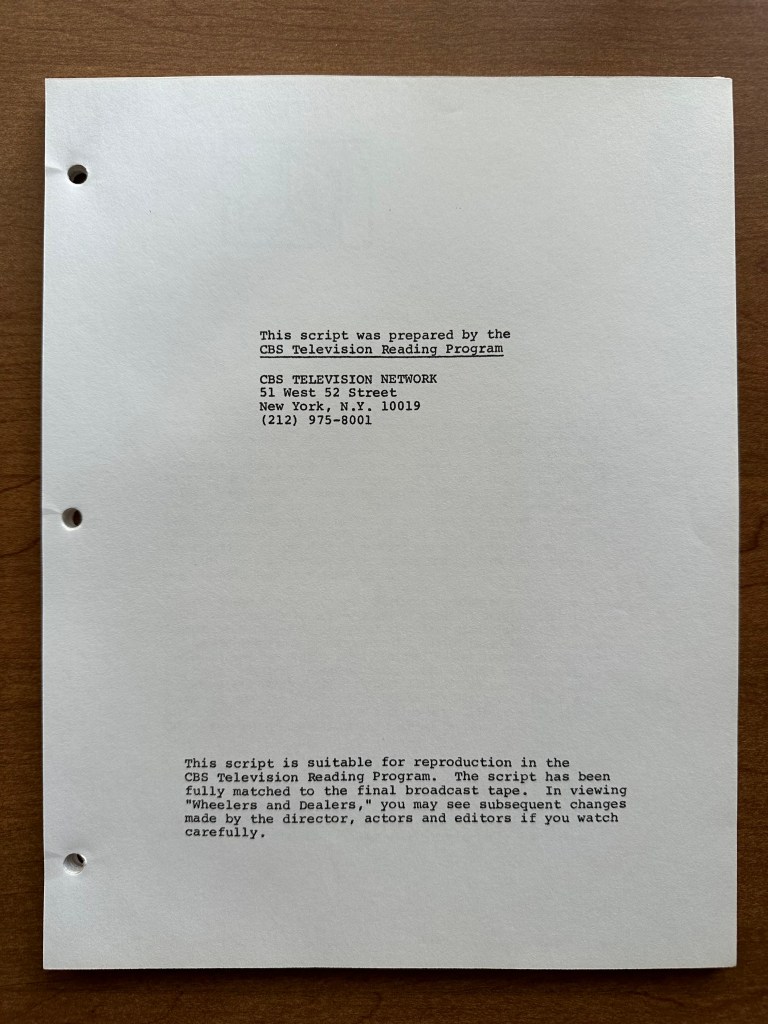
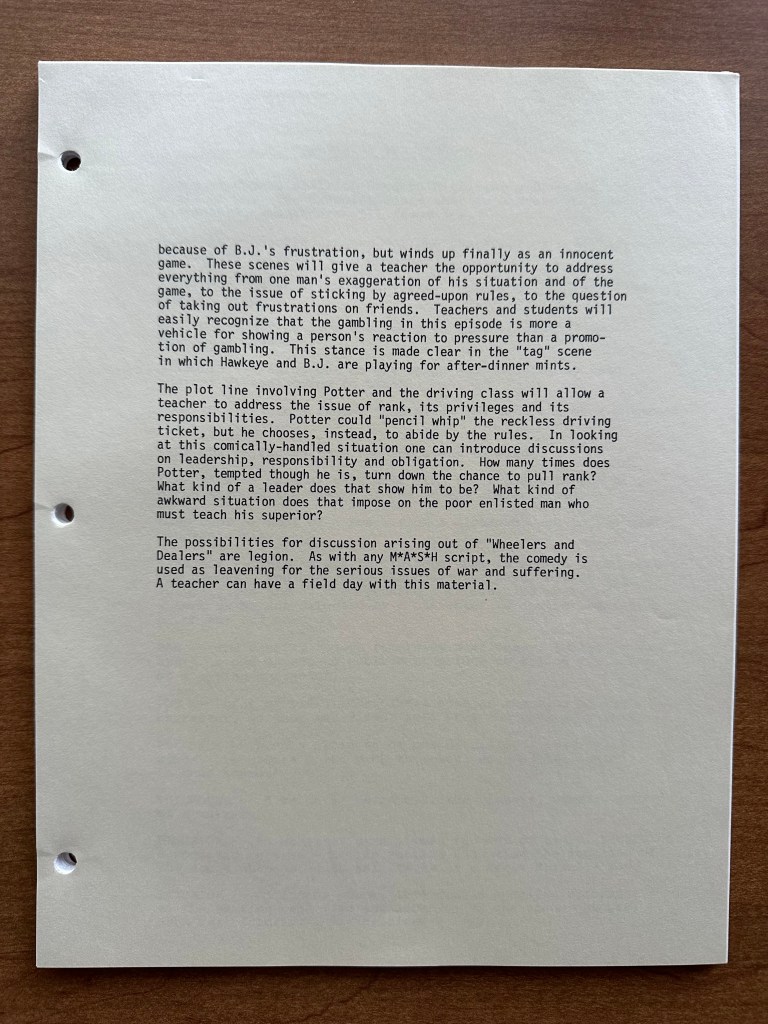
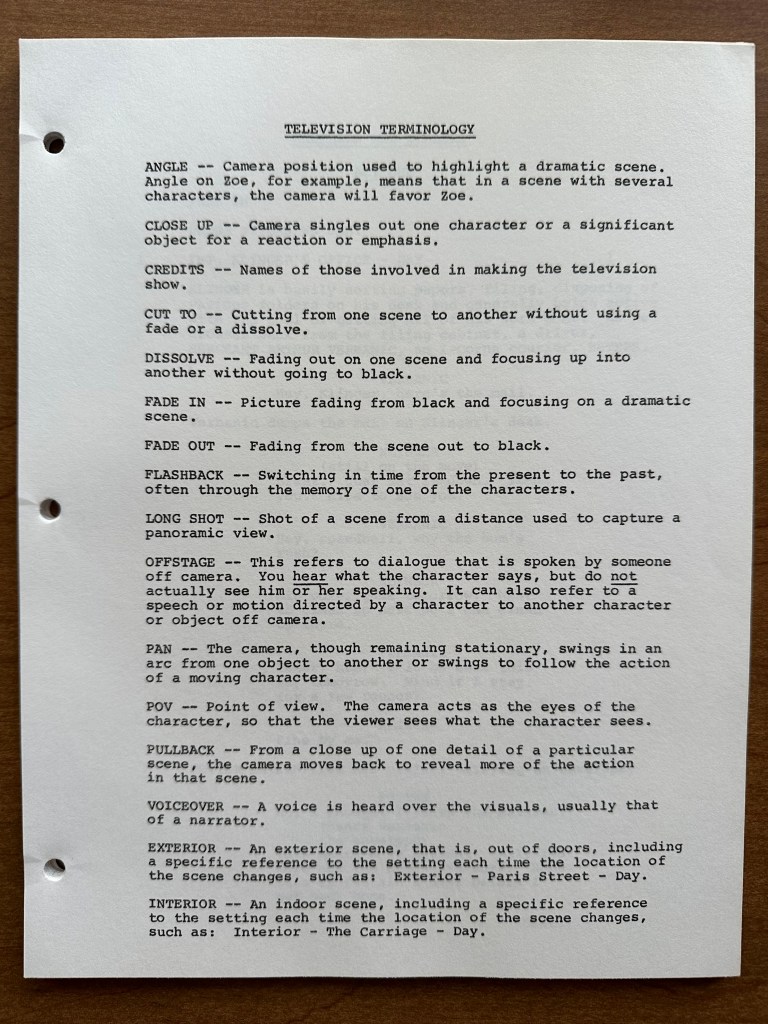
When I first opened this script, I was intrigued because it states, “This script was prepared by the CBS Television Reading Program.” I had never heard of this program, and my initial research didn’t turn up much information either. Using context clues, I figured that this script was likely used in a school setting, and an article I found in The New York Times from 1977 confirmed this. The article states, “The CBS program will provide students in the participating schools with scripts of selected drama specials to be presented on the network. The scripts are to be read both before and during the broadcasts. Subsequently, in the classrooms, ‘enrichment’ exercises will be offered to prompt discussions on the literary and social values in the programs.”
There are a few interesting aspects to this program. The articles said that the scripts would be from “selected dramas,” so CBS offering an episode of M*A*S*H shows that they felt the series was more than just a sitcom. The show’s popularity would have been a good motivator to get kids to read the scripts as well, so I am sure that was a major consideration in the program. The articles states that the program began seven years earlier (around 1970) after being developed by Dr. Michael Marcase, superintendent of Philadelphia schools, and Dr. Michael McAndrew. The program had proven successful as kids’ reading levels were improving after participating in the program.
CBS stated that the program was an effort “to put, television in alliance—instead of competition—with elementary and secondary schools.” And this makes sense at the time. Many parents felt that television was bad for children and leading to poorer grades and a shorter attention span. This program was an attempt by CBS to use television to help kids learn to read, and I think it is a good idea. When kids find something they want to read, as opposed to something they are forced to read, they are far more motivated to keep reading.
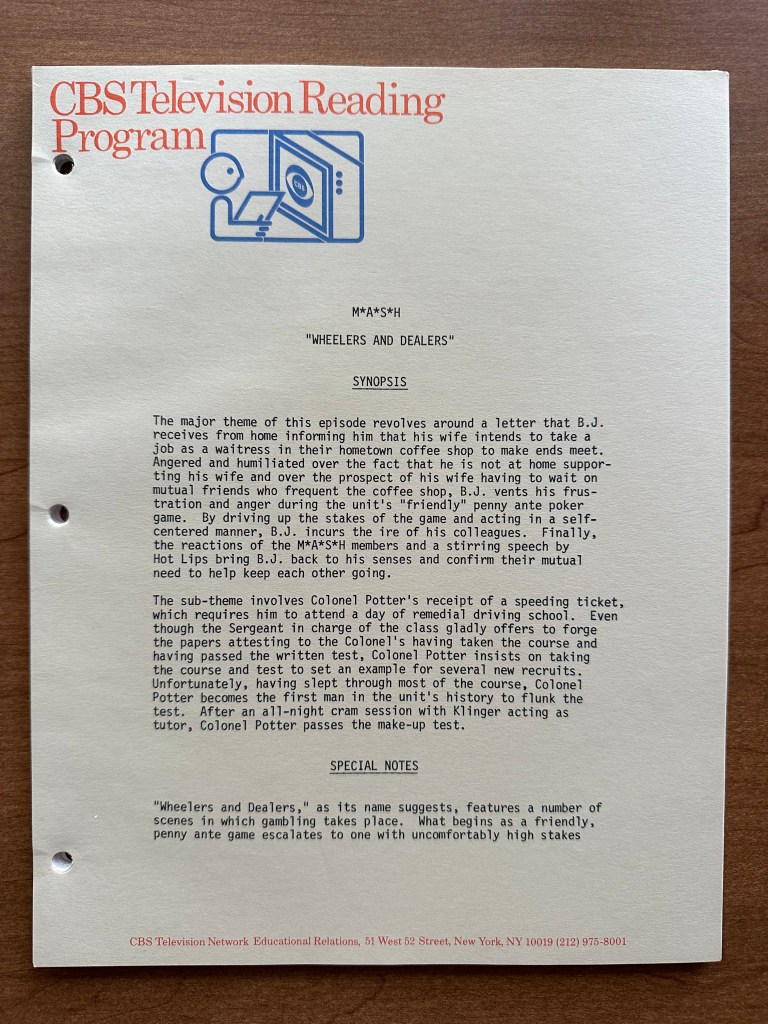
It’s no secret that I like scripts, but a kid in the 1970s getting to see a script for a popular television series must have been really fascinating. And the CBS Television Reading Program took things a step further by adding a few pages to the script including a glossary of common television production terms used in the script. This helped kids learn more about the process of making their favorite shows. I also like that there is a two page episode summary that included a warning about the gambling in the episode. This allowed a teacher to make the choice whether to use a script in their classroom based on the subject matter of the episode. Unfortunately, I cannot find any information on when CBS ended this program, how many schools participated, and what other scripts were offered. Nonetheless, this sounds like a promising program that I will continue to research.
The Final Episode
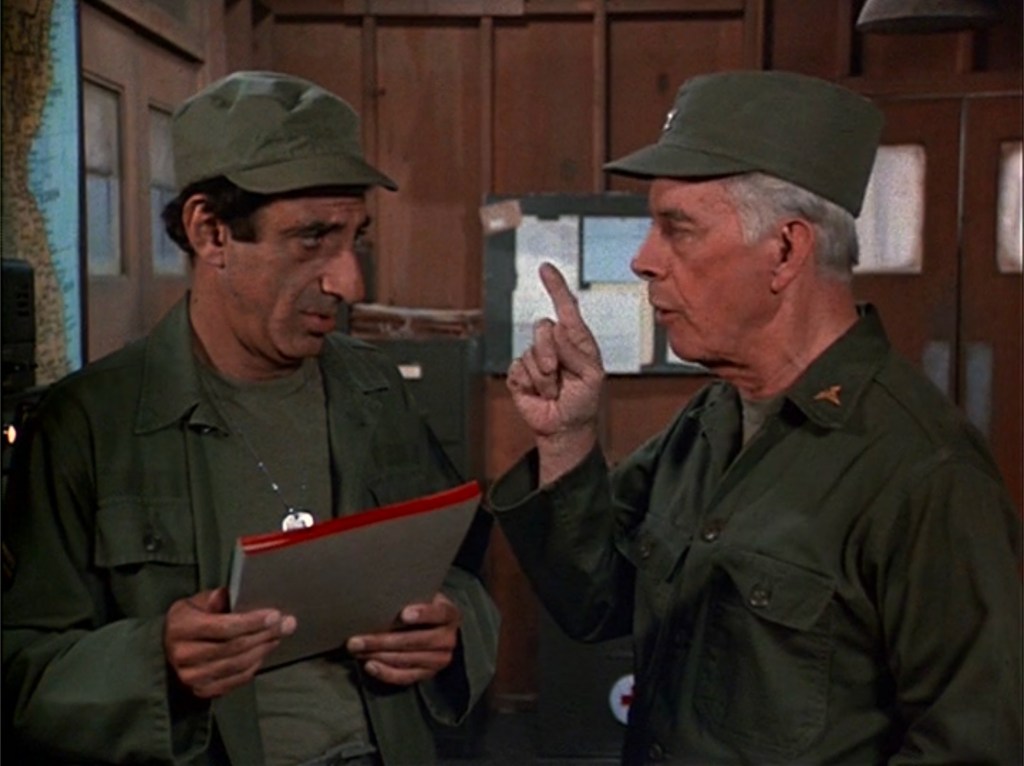
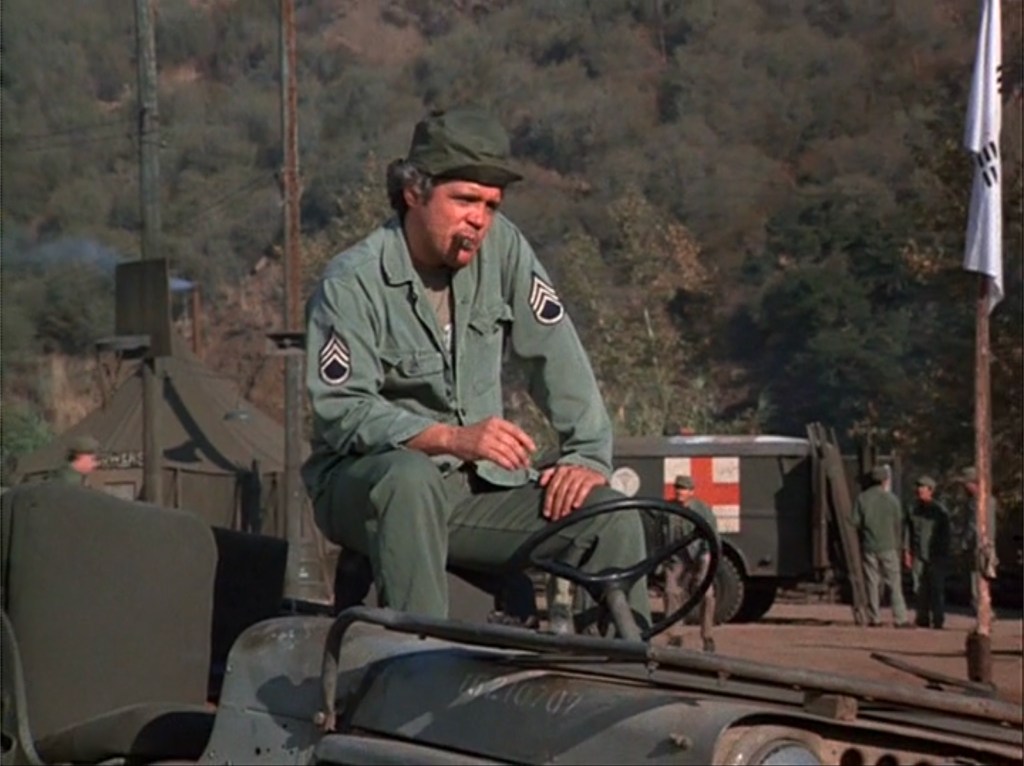
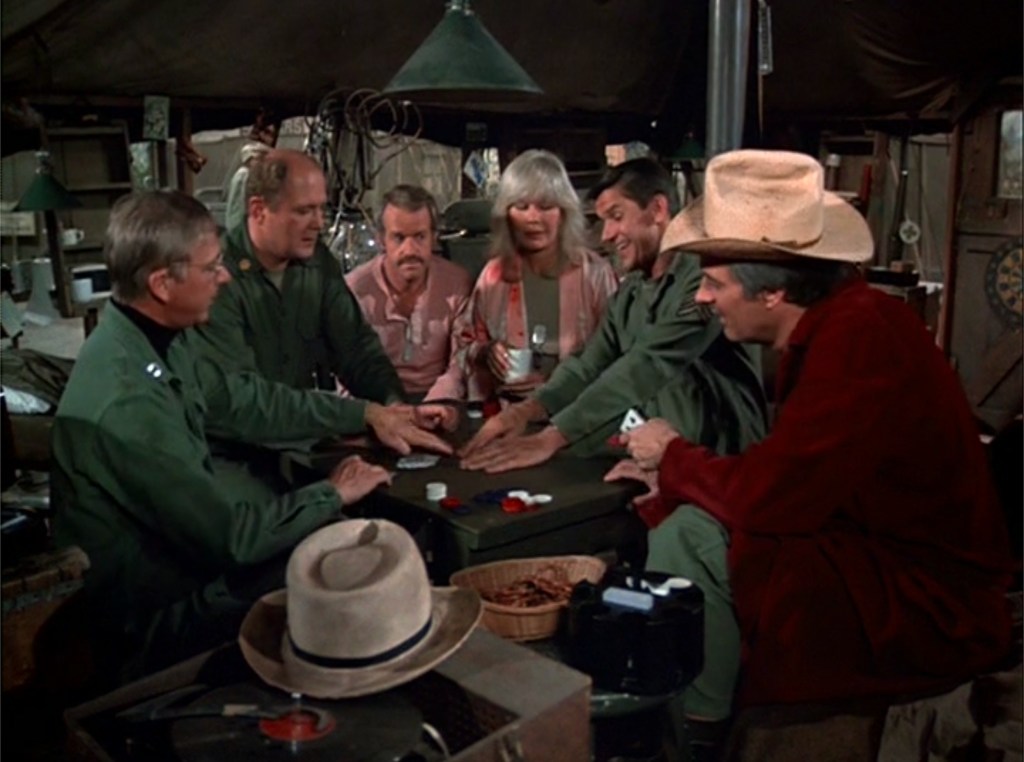
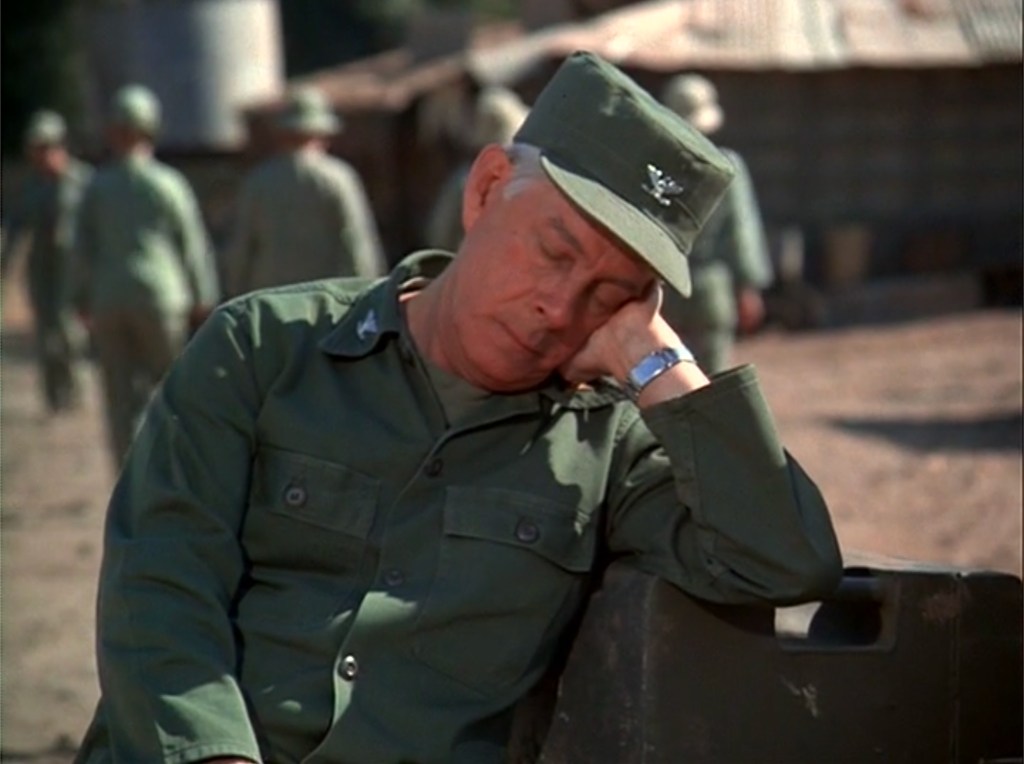
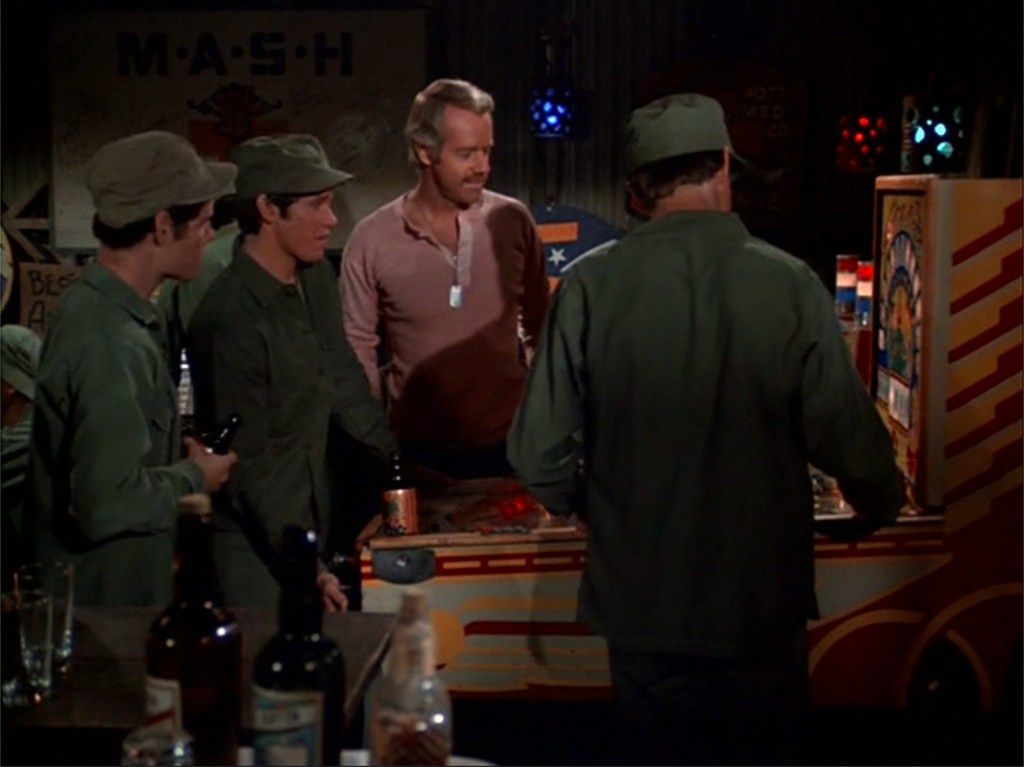
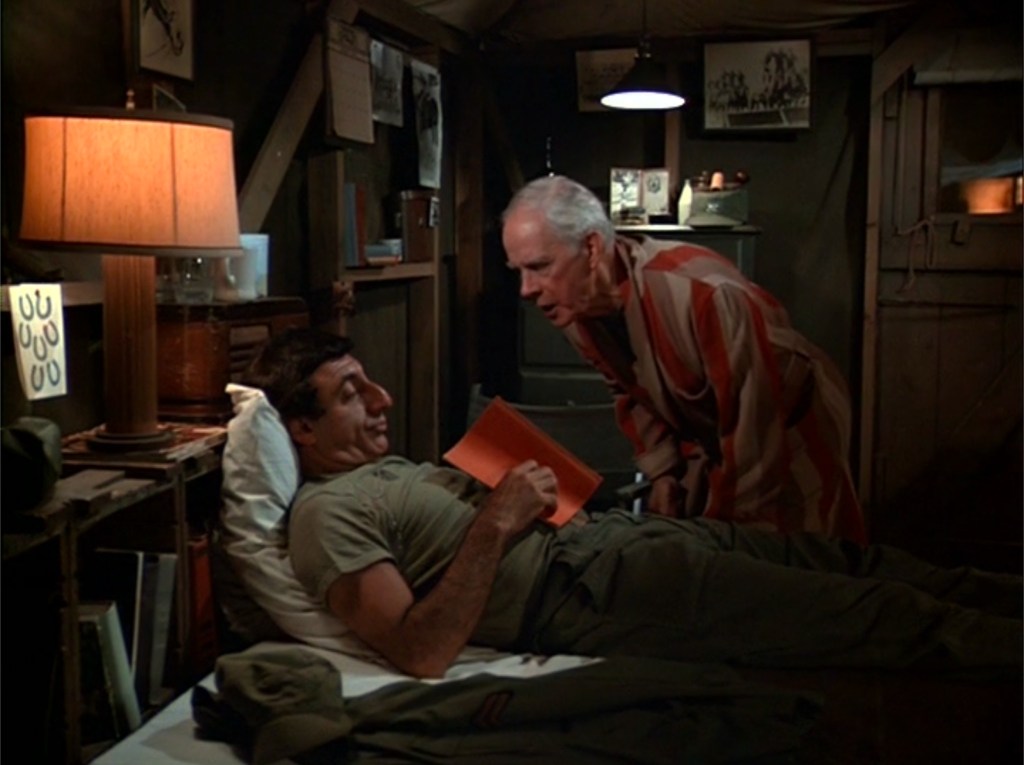
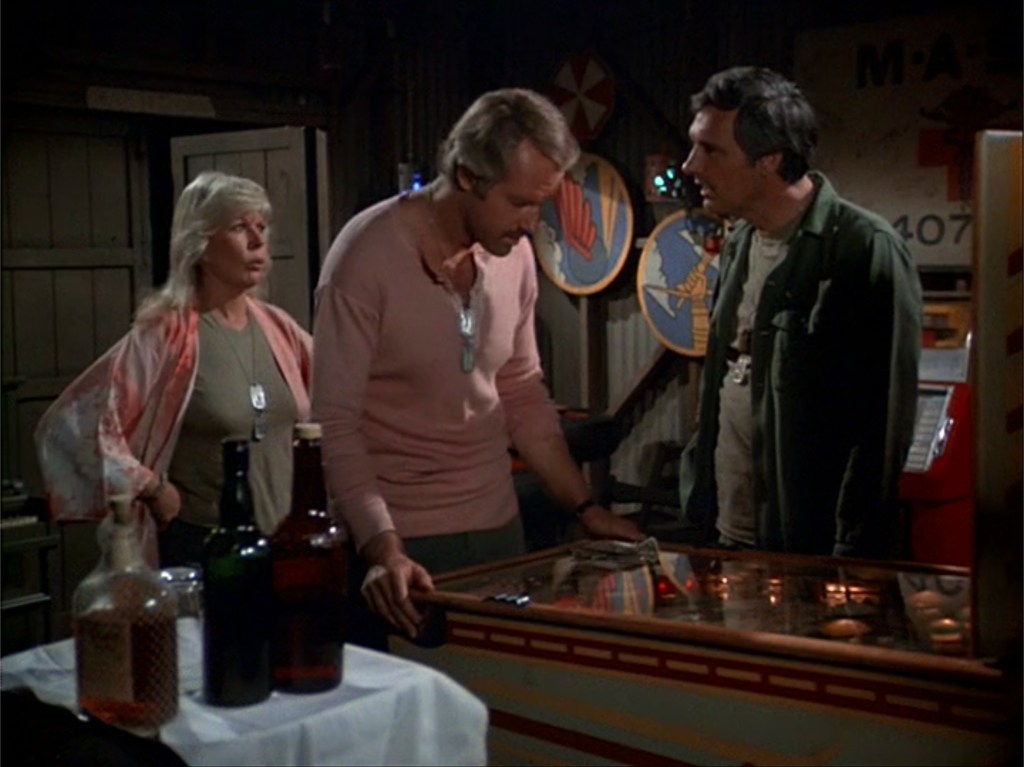
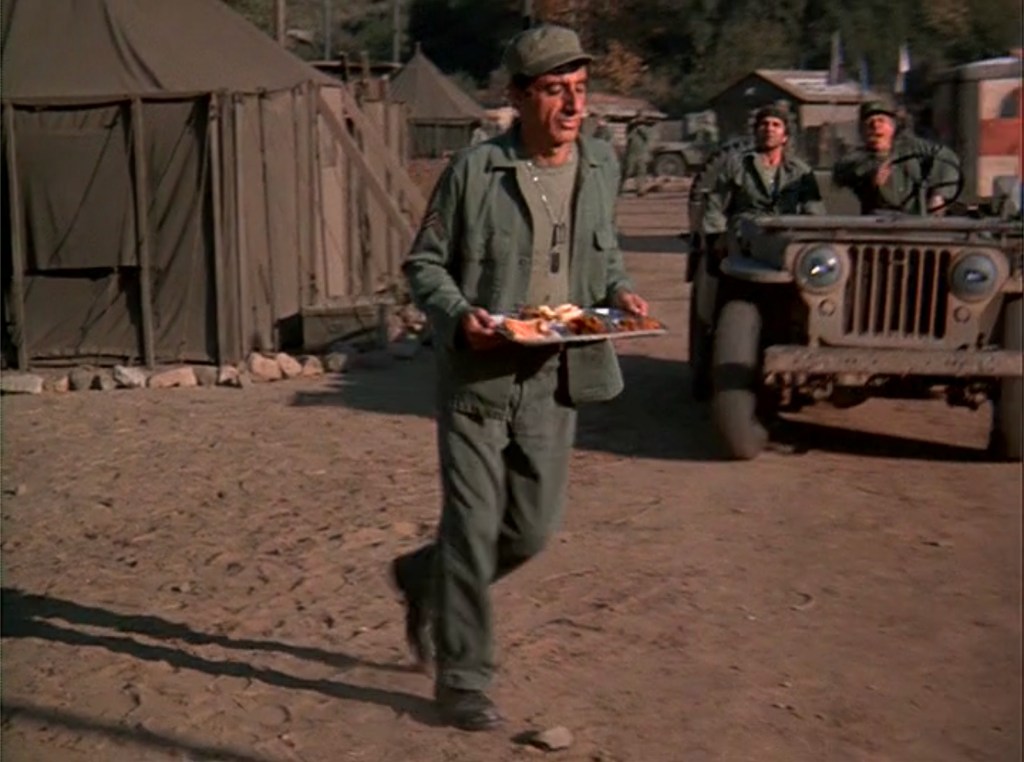
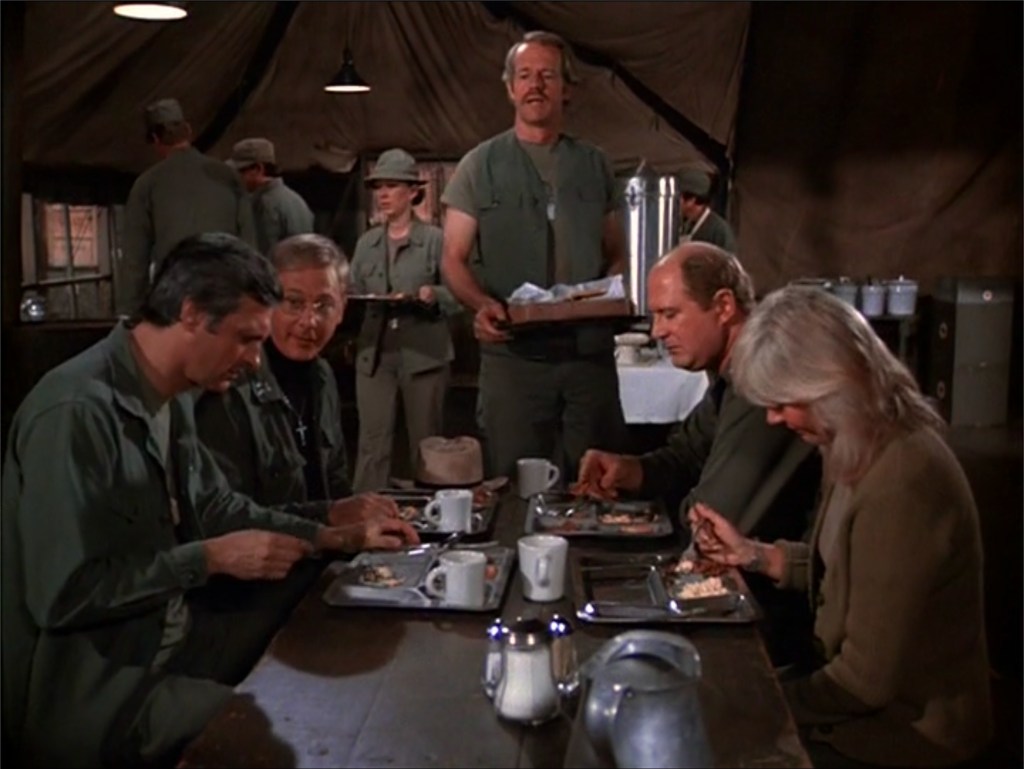
The episode opens with Klinger rushing to finish his work so he can join a big poker game. The mail brings some new Army forms, and Col. Potter reminds him that he promised to update to the new forms, so the poker game is out. That quickly backfires when Potter receives a driving citation and has to take traffic classes. He tries to get out of it, but Klinger reminds him that a poker game isn’t an excuse to put off driving school. The driving class is taught by Rizzo, and when Potter fails the written test, Klinger (who is ready to join the poker game after finishing the forms) has to help Potter study. Meanwhile, the mail brought B.J. some delicious cookies from Peg and a letter that has him upset. At the poker game, he gambles to the extreme, and even extends his gambling to hustling pin-ball in the Officers’ Club. After Margaret points out that B.J. should not be upset about his wife taking a part time job to help pay the mortgage, he calms down and returns to being his usual self.
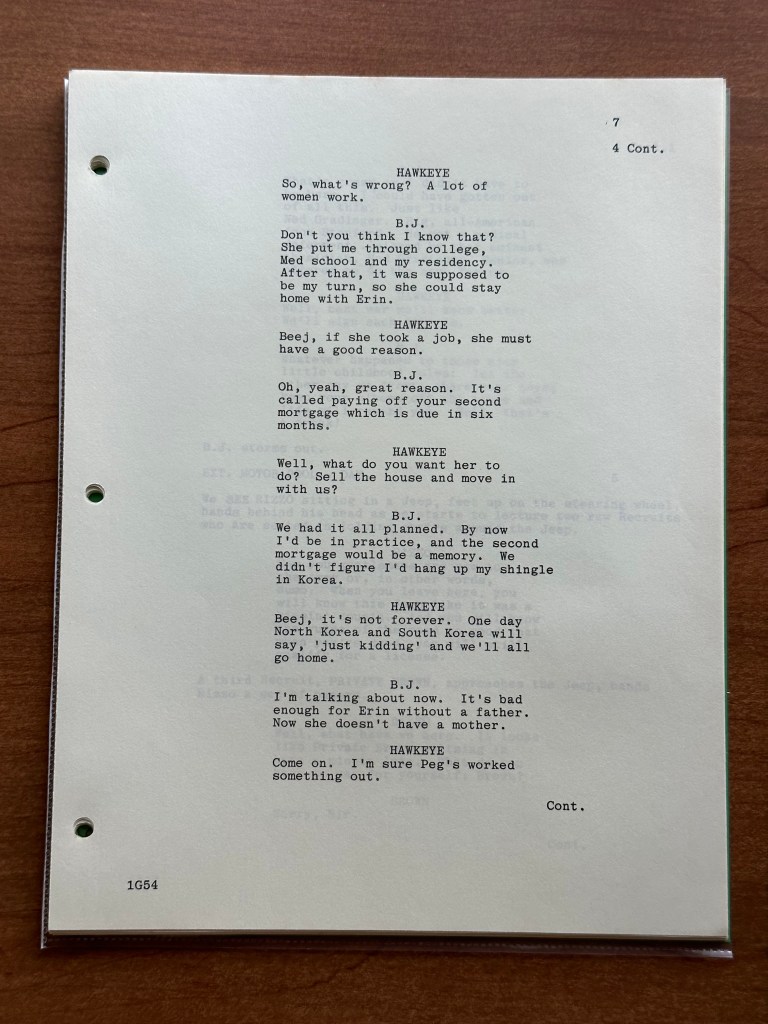
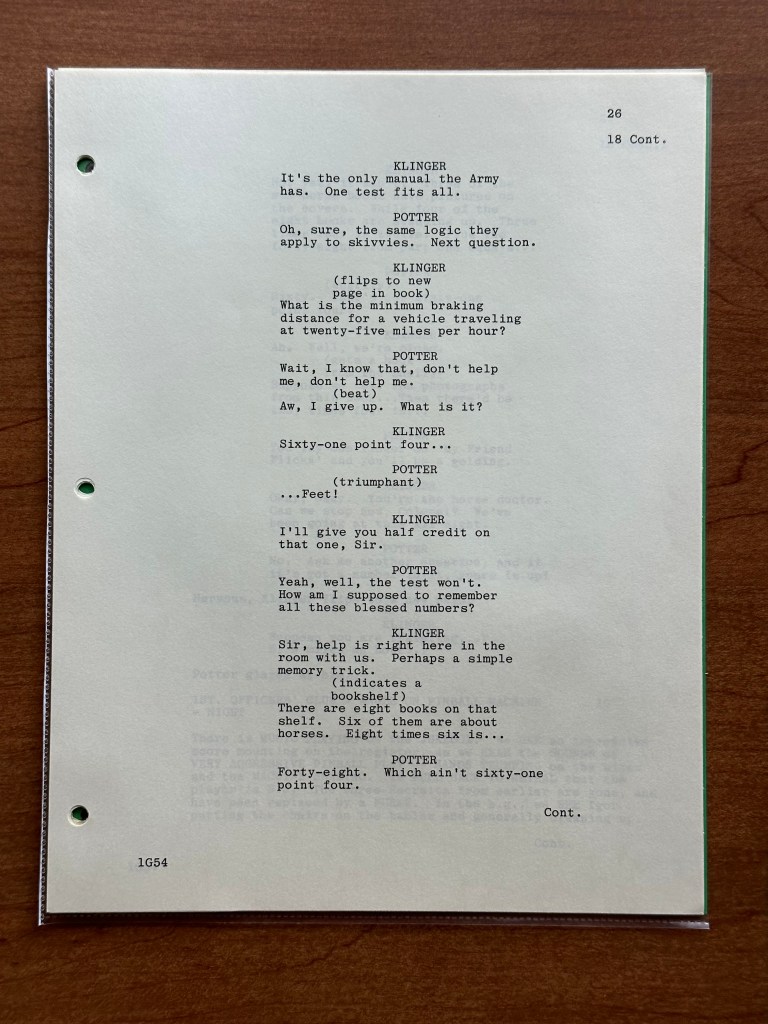
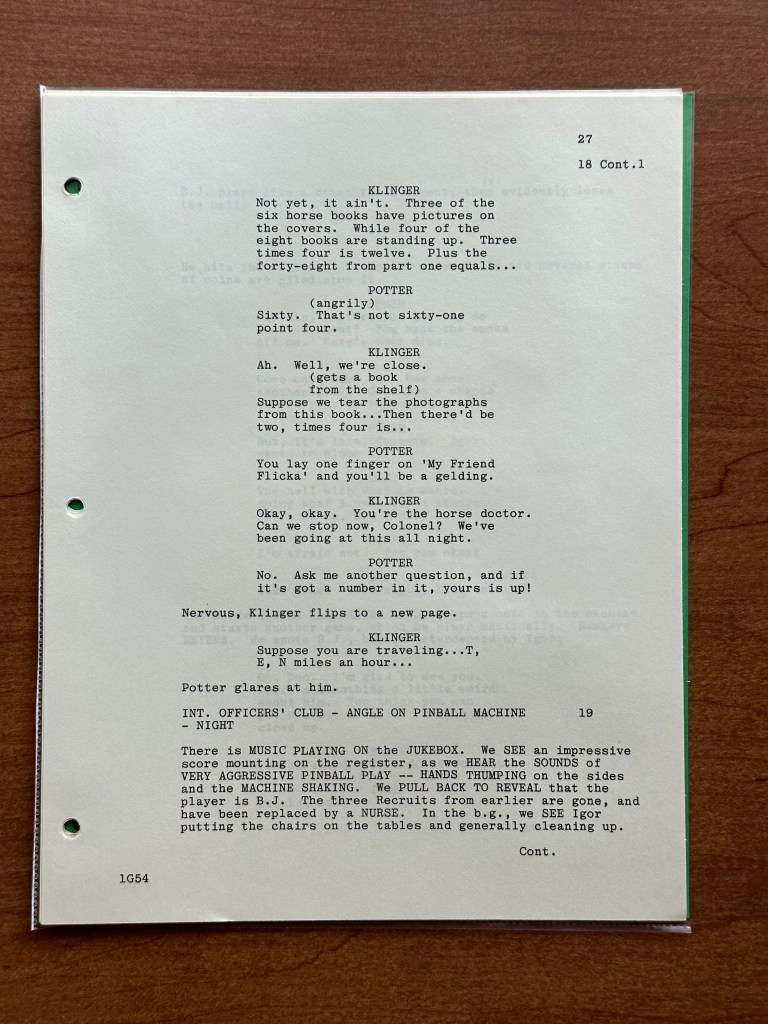
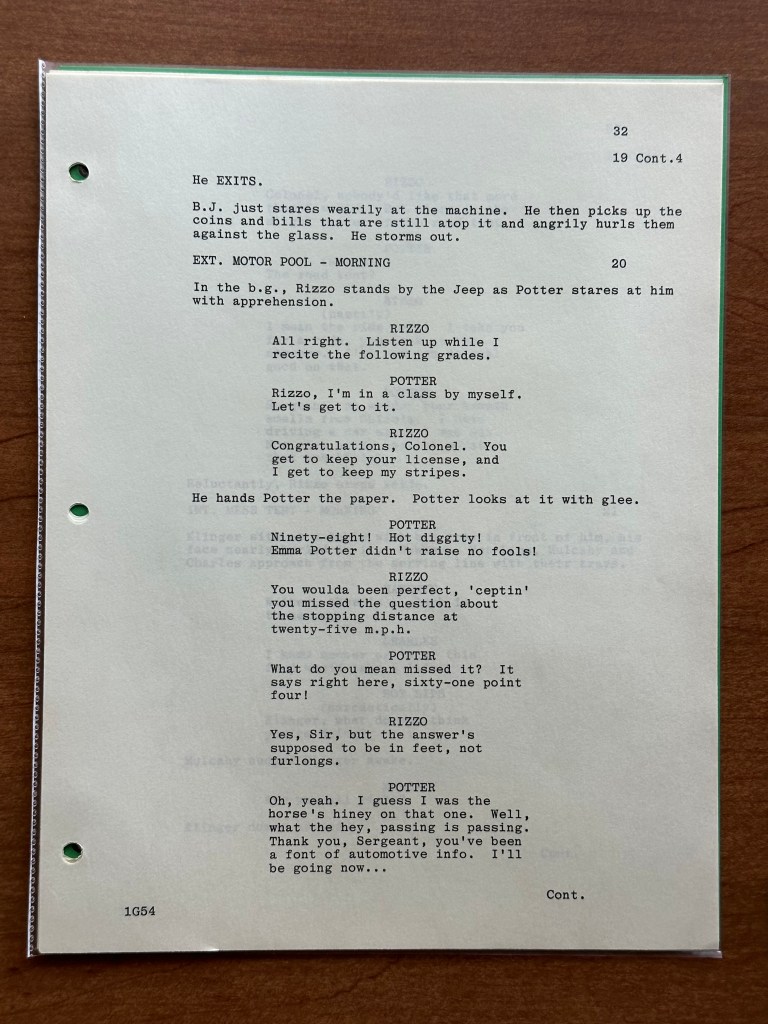
There are a few interesting changes from this draft of the script to what we saw on tv. At the beginning of the episode, Potter pays a bill for their new tv set, but in the script, he is paying his mortgage. Then, there is a difference in the exchange between Hawkeye and B.J. when he tells Hawkeye about his letter from Peg (page 7). Later, when Klinger is helping Potter study, Klinger teaches Potter a trick for remember numbers (pages 26-27). This scene is not part of the final episode so it was either cut for time or never filmed. The trick Klinger teaches him comes back to haunt him, however, as Rizzo explains the only question he missed on the test involved numbers (page 32). Overall, there are very few changes between the lines as written and delivered. Again, that goes back to the strength of the writing and acting M*A*S*H had.
This episode is a great example of what made M*A*S*H work so well. There was a serious A story with a comedic B story. The balance between comedy and real-world drama is masterful in many M*A*S*H episodes, and it is well handled here. B.J. struggles with being a husband and father away from his family all while the exchanges between Rizzo and Potter leave you laughing. Bailey’s performance in this episode, as with all of his episodes of M*A*S*H, is great! He brought the character to life and this episode illustrates that well. It is a great way to honor him during his birthday month!


One thought on “Script Spotlight 23: “Wheelers and Dealers””