
What is it?
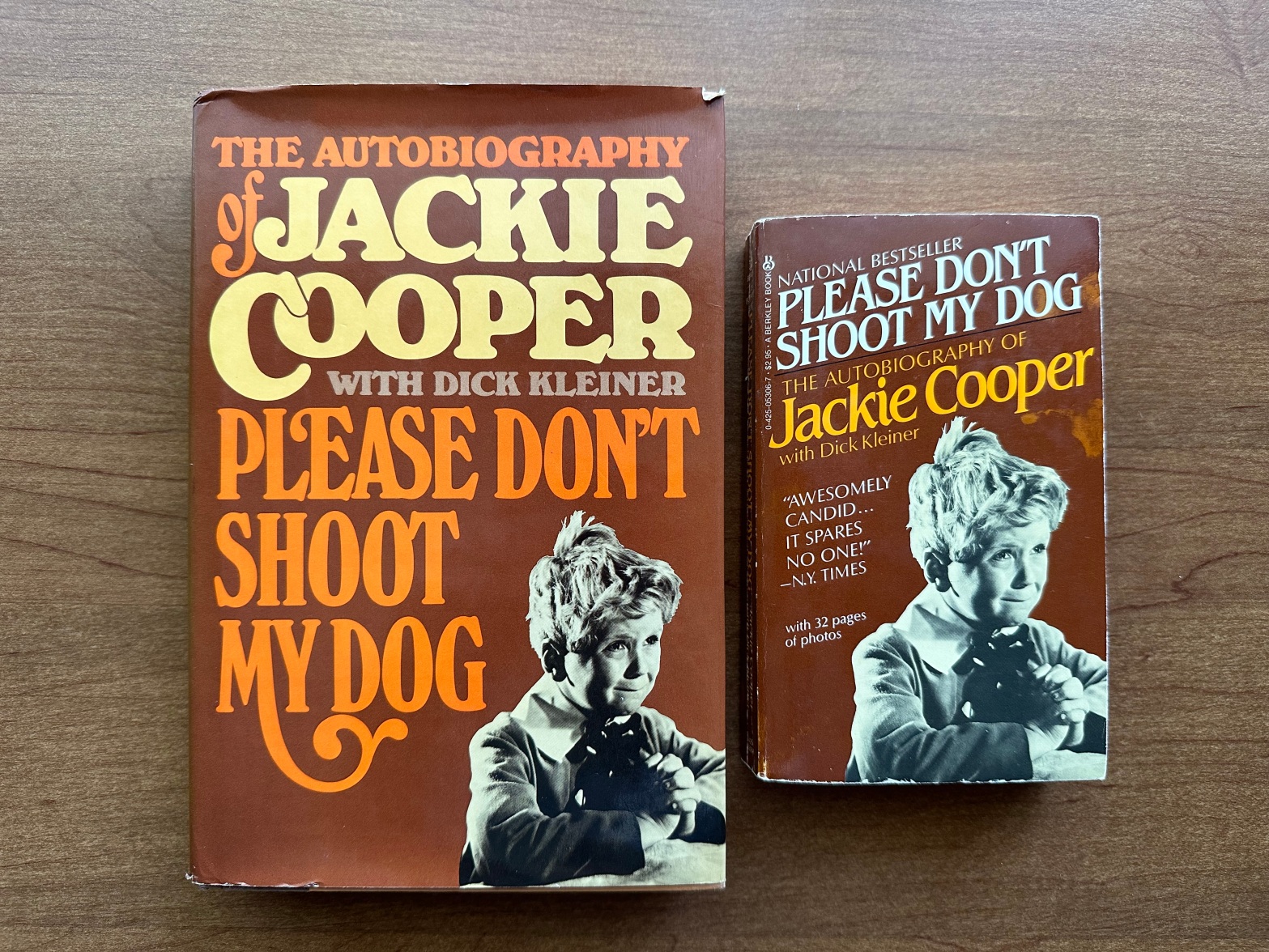
Cooper, Jackie with Dick Kleiner. Please Don’t Shoot my Dog: The Autobiography of Jackie Cooper. New York: Berkley Book, 1981.
Why should M*A*S*H fans care?
Jackie Cooper directed 13 episodes of M*A*S*H in seasons one and two, and he won an Emmy Award for his direction of the episode “Carry On, Hawkeye” (02×11). Some of his episodes are iconic, and despite the well documented friction between Cooper and the cast, the episodes he directed were well received and many are fan favorites.
As a M*A*S*H fan, what part(s) should I read?
Since Cooper does not remember his time with M*A*S*H fondly, he doesn’t spend a great amount time discussing the series. He discusses the show in chapters 35, 36, 45, and 48. As I always, I recommend reading the full book for context.
TL;DR Review
Cooper had a long and successful career as an actor and a director in both film and television. His autobiography dives into his long career (up to 1981), included M*A*S*H. While he describes his experience on M*A*S*H as “one of the greatest disappointments of my life,” he won an Emmy for his direction on the series, and he directed several fan favorite episodes. Cooper is proof that two things can exist at once: an experience can both be difficult and successful.
Full Review
While many people know Jackie Cooper as a successful movie star, M*A*S*H fans know him as the difficult to work with director in the early seasons of the series. I recently reviewed one of Cooper’s M*A*S*H scripts, so I wanted to read his autobiography as well. After reading Please Don’t Shoot my Dog: The Autobiography of Jackie Cooper, it is clear that Cooper could be both successful and difficult to work with at the same time. When you look at a list of the episodes of M*A*S*H that he is credited with directing, there are some fan favorites from seasons one and two. You cannot deny that the episodes he directed were well made, but the turmoil behind the scenes between Cooper and the cast is legendary. He does not mince his words about his time on M*A*S*H, but he’s also very honest about his time as a child actor and breaking into the television world from film.
Cooper began his acting career as a child actor in the early 1930s. The film industry was new and harsh. He learned quickly that many directors would do virtually anything to get him to act. In fact, that’s where the title of his book comes from. In the movie Skippy (1931), to get him to cry on screen, Cooper was told by a security guard (at the direction of the director) that he was going to shoot his dog. It was a harsh technique, but it was one that clearly stuck with Cooper since it was the title of his memoir 50 years later. That experience didn’t discourage him from acting, and he went on to star in several movies as both a child and teenager. Throughout the book, he discusses his career, personal life, and branching out to work behind the camera as television became a more popular medium. He was an early adopter of television by joining several series in the 1950s. When he wanted to branch out and direct more television shows, he had made two connections in the television world that would prove to be helpful: Gene Reynolds and Burt Metcalfe.
Cooper met Metcalfe when they acted in Hennesey, and he had known Reynolds since they were both child actors. That was how Cooper got connected with M*A*S*H. He was hired to direct a stint of episodes at the end of the show’s first season and into its second. While Cooper praises the series for its blend of comedy and drama, and he respected its producers (Reynolds, Metcalfe, and Larry Gelbart), he did not have kind things to say about many of the cast members. Cooper did praise the professional attitudes of Larry Linville and Wayne Rogers, but the rest of the cast…He called McLean Stevenson “unprofessional,” Gary Burghoff a “pain in the ass,” and Loretta Swit a “terror.” In interviews since, all three actors have said that they didn’t appreciate Cooper’s directing style, which Cooper himself admits that he “ran the set on M*A*S*H as I’ve always done.” Adding that he was open to suggestions from actors, but “I have, however, found that in most cases actors like to be told what to do.” In the book, Reynolds describes Cooper as “strong and aggressive,” and that style did not go over well on set. The M*A*S*H cast was used to Reynolds and Gelbart’s open style, but Cooper was more aggressive about keeping the set in order.
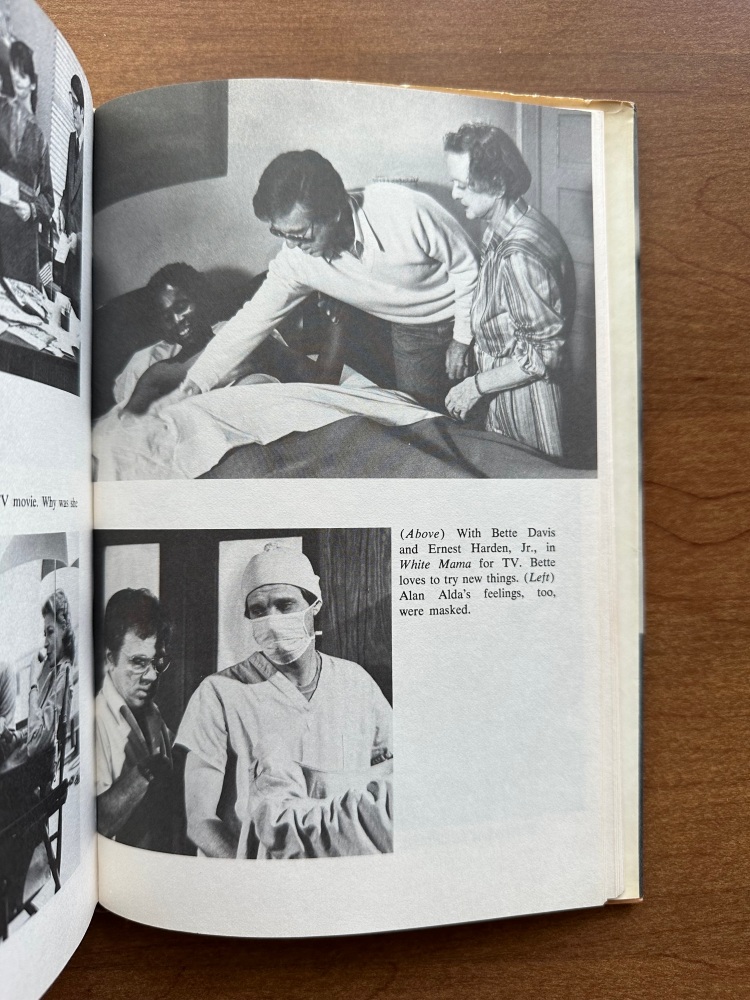
Cooper directs most of his ire at Alan Alda calling him “a contradictory personality.” As the star of the show, Cooper expected Alda to help him when the rest of the cast was being difficult. He describes several situations where he asked Alda to help him with other cast members who he believed were being unreasonable, but Alda would walk away. I am sure this was difficult for Cooper since he felt that he didn’t have the support of the show’s primary star, but Alda had to be on set each week with his cast mates, and Cooper did not. So I can see both sides of the situation. Cooper wanted Alda’s support and seemingly didn’t get it. Meanwhile, we know now that Alda was going home to New Jersey on weekends since he was away from his family. They each had their struggles working on the series. Cooper does praise Alda acting ability saying that he was “in awe of him [Alda] as an actor” and that “he was also a joy to direct.” Again, we see that dichotomy where the tension behind the scenes didn’t come out on camera, and that is what earned Cooper an Emmy for directing the episode “Carry On, Hawkeye.”
After reading his autobiography, it is possible for two things to be equally true: Cooper was a successful and accomplished actor and director while being difficult to work with as his directing style (and ego) wasn’t for everyone. One aspect of this book that I greatly respect is that Cooper allowed other people to contribute to it, and there are writings from both Reynolds and Gelbart. The impression I get after reading Cooper’s memoir is that he was not the right fit for M*A*S*H, and he seemingly accepts that. But was also cannot deny that he got results from the cast on camera as is 13 episodes are all strong episodes. I have said before that season two is my favorite season, and he directed 10 episodes out of 24. He is undeniably part of the show’s early success, and he is also part of the show’s folklore for being difficult to work with.
The episodes directed by Cooper are:
- “The Ringbanger” (01×16)
- “Dear Dad, Again” (01×18)
- “Showtime” (01×24)
- “Divided We Stand” (02×01)
- “Radar’s Report” (02×03)
- “For the Good of the Outfit” (02×04)
- “Dr. Pierce and Mr. Hyde” (02×05)
- “The Sniper” (02×10)
- “Carry On, Hawkeye” (02×11)
- “The Incubator” (02×12)
- “Hot Lips and Empty Arms” (02×14)
- “Officers Only” (02×15)
- “The Chosen People” (02×19)
 The M*A*S*H Historian
6 thoughts on “From the M*A*S*H Library 27: The Autobiography of Jackie Cooper”