
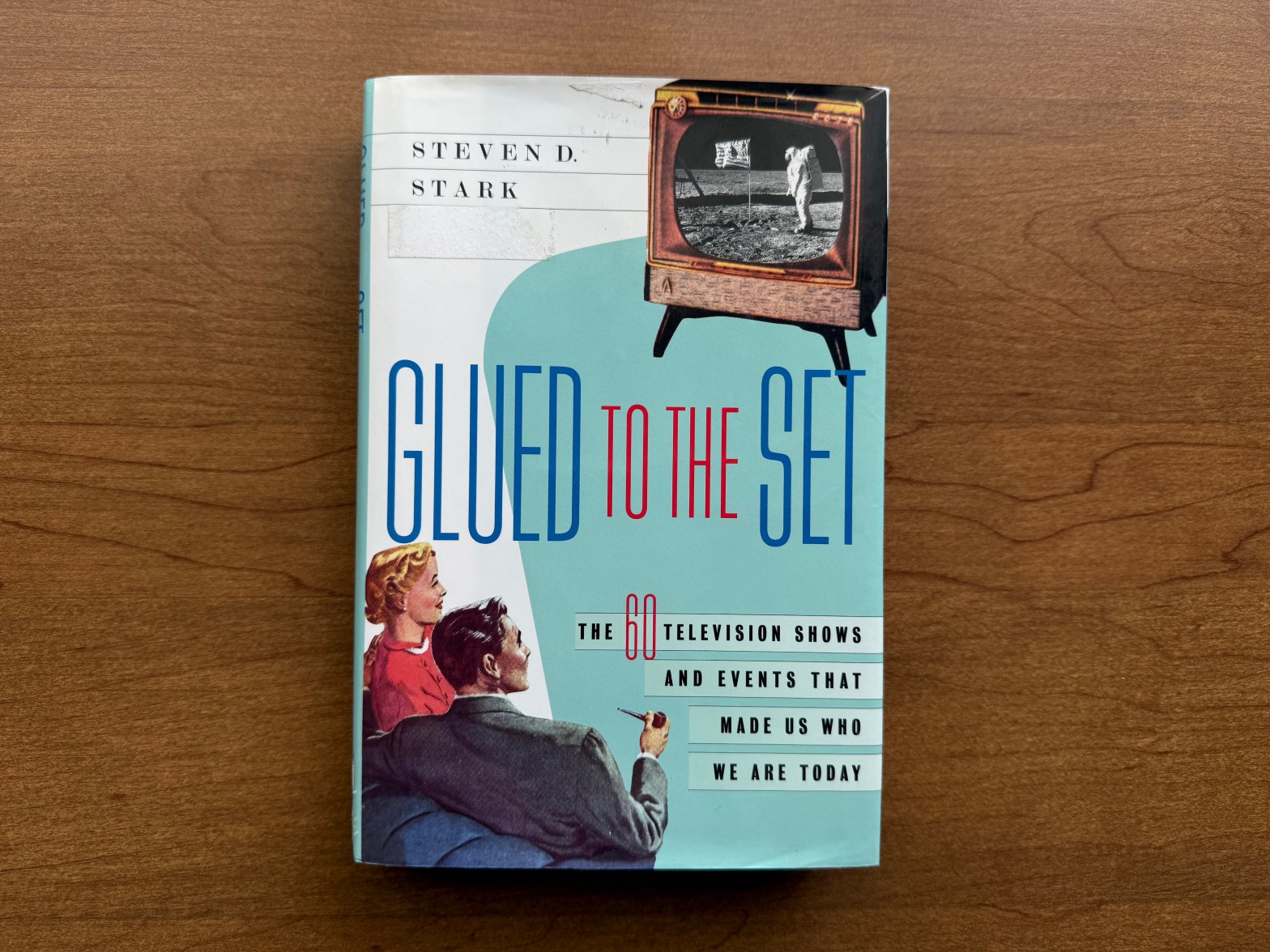
What is it?
Stark, Steven D. Glued to the Set: The 60 Television Shows and Events that Made Us Who we are Today. New York: The Free Press, 1997.
Why should M*A*S*H fans care?
M*A*S*H is part of what is now considered to be the “golden age of television.” In his book, Stark argues that it is just one of the television shows and events the defined the cultural impact of television.
As a M*A*S*H fan, what part(s) should I read?
As always, I recommend reading the full book. However, Stark features about five pages per show, including M*A*S*H, in which he discusses their contribution the history of television and society.
TL;DR Review
There are few inventions in history that have had such a profound effect on society as television. Television not only shaped society and pop couture, but it reflected it. Over the decades, television has morphed and become more and more fragmented. However, there are some shows and events that broke through the noise and captured large audiences. In his book, Steven D. Stark highlights 60 of the key shows and events in the history of television, including M*A*S*H.
Full Review
As I write this review in 2025, it is hard to believe that television hasn’t even been around for 100 years. Yet, its impact has been felt worldwide across sports, news, and entertainment. There are certain shows and events that became key moments in popular culture, and those events have had societal impacts. Events such as the assassination of President John F. Kennedy in November 1963 and the first moon landing in July 1969 have becoming lasting images in our collective memories because of television. It is just news that has left its mark as scripted television shows have had lasting impacts. I Love Lucy, the CBS Evening News, All in the Family, The Tonight Show, All My Children, and Wheel of Fortune are just a few examples of shows that either defined or changed genres of television. Steven D. Stark discusses the defining shows and moments in television history in his book Glued to the Set: The 60 Television Shows and Events that Made Us Who we are Today. His book was published in 1997, so it does not take into account the current state of television with streaming content, but the book was written just as the age of network television was coming to a close.
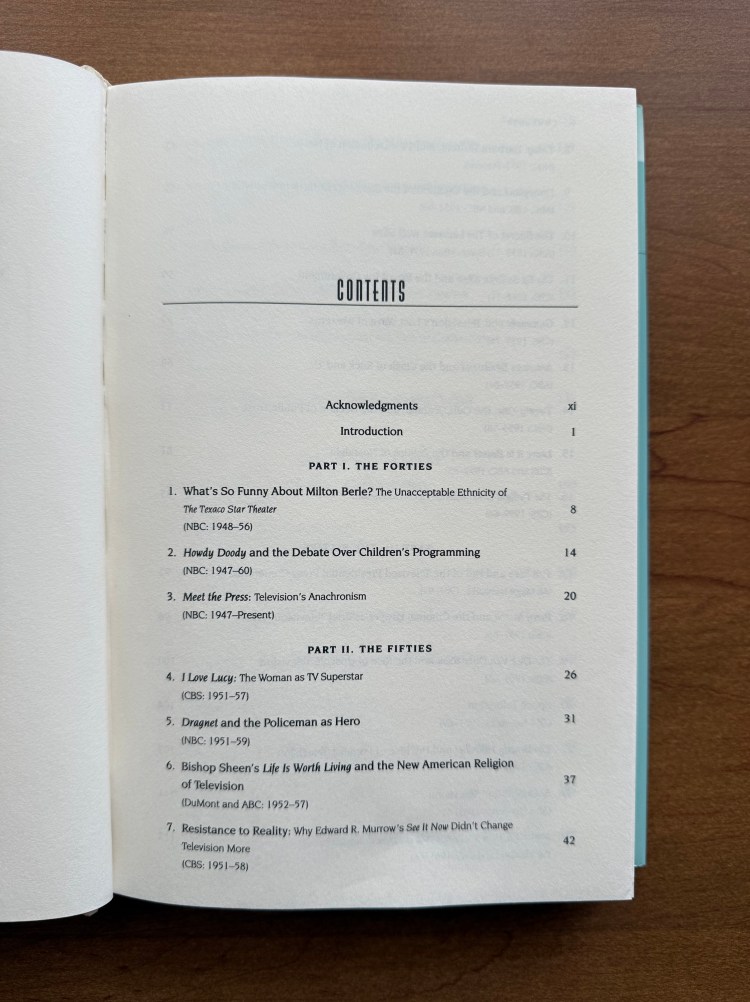
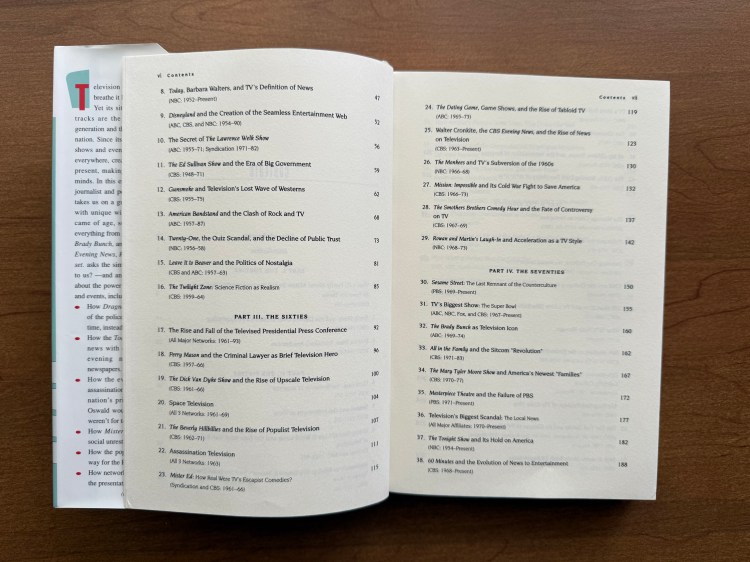

As the title suggests, Stark’s book highlights 60 shows and events that contributed to the history of television. For each one, he dedicates four or five pages describing how it impacted society. The shows he focuses on cover a wide range of topics including news, historical events, sitcoms, dramas, game shows, late night talk shows, soap operas, and more. As he explained in his introduction, the amount of content available on television became as diverse as the American population itself. That is what made television a powerful medium. It reflected American culture as much as it influenced it. Over time, however, television has impacted us just as much as society impacted television. When the book was published more than two decades ago, Stark discusses how many people admitted to keeping the television on in the background as a distraction or background noise. We still do that today, but we now have shows on demand and on more screens. He also discusses how commercialized television became. Shows began to be influenced by the advertising they could sell in commercial blocks, and saying something bad about a sponsor was not allowed. While television could be a positive force for change and good, it was also a product of capitalism.
The majority of the book is dedicated to the 60 shows that Stark reviews. Of course, one of the shows he discusses is M*A*S*H. He argues that M*A*S*H struck a nerve in a way that no other show has since. It has sometimes been referred to as the comedy that wasn’t funny because it explored topics that a sitcom wasn’t supposed to. M*A*S*H killed off a man character, it successfully changed cast members, and it experimented with different types of episodes (such as “Point of View” (07×11) and “The Interview” (04×24)). His primary focus is on the record breaking finale and how, even though M*A*S*H was never a #1 rated show (although mostly solid top-10), its finale produced the highest rated episode of television ever recorded. When M*A*S*H began in 1972, television standards were very strict, so the writers had to be careful with their portrayal of the operating room and the type of comedy. By the end of the series, and the early 1980s, television had evolved and M*A*S*H evolved along with it. That, along with its stellar ensemble cast, was the key to its success. In fact, Stark points out that the M*A*S*H cast could be seen as a, “microcosm of American society itself – the liberal, the member of the upper crust, the religious figure, the feminist woman, and the dissenter – all serving together in a collage that could reassure the anxious audience that melting-pot America still worked, even during the stress of an unpopular war.”
I agree with Stark’s assessment of M*A*S*H for the most part. The landscape of television changed fairly quickly in the 1970s, and M*A*S*H kept up. That didn’t please everyone in the audience, and there are M*A*S*H fans to this day that prefer the early seasons over the later seasons. But society changed because of television and the portrayal of different points of view. That allowed M*A*S*H to morph and experiment as well. The one disagreement I have with Stark’s assessment of M*A*S*H is that the show was really about Vietnam. While it may have expressed the attitudes that society had toward Vietnam, the show was about a MASH unit in Korea. Larry Gelbart and Gene Reynolds made sure that they represented the Korean War surgeons and nurses to the best of their ability by interviewing them and using that material to drive storylines. So, the anti-war/pro-human storylines that M*A*S*H presented weren’t exclusive to the Vietnam War era. They would have been relevant in the 1950s, during the Korean War, and they are still relevant today. That is why M*A*S*H still has a following today because its attitudes about war and humans in war are universal. Sadly, Glued to the Set: The 60 Television Shows and Events that Made Us Who we are Today is no longer in print, but you can pick up used copies online.
 The M*A*S*H Historian
One thought on “From the M*A*S*H Library 50: “Glued to the Set””