
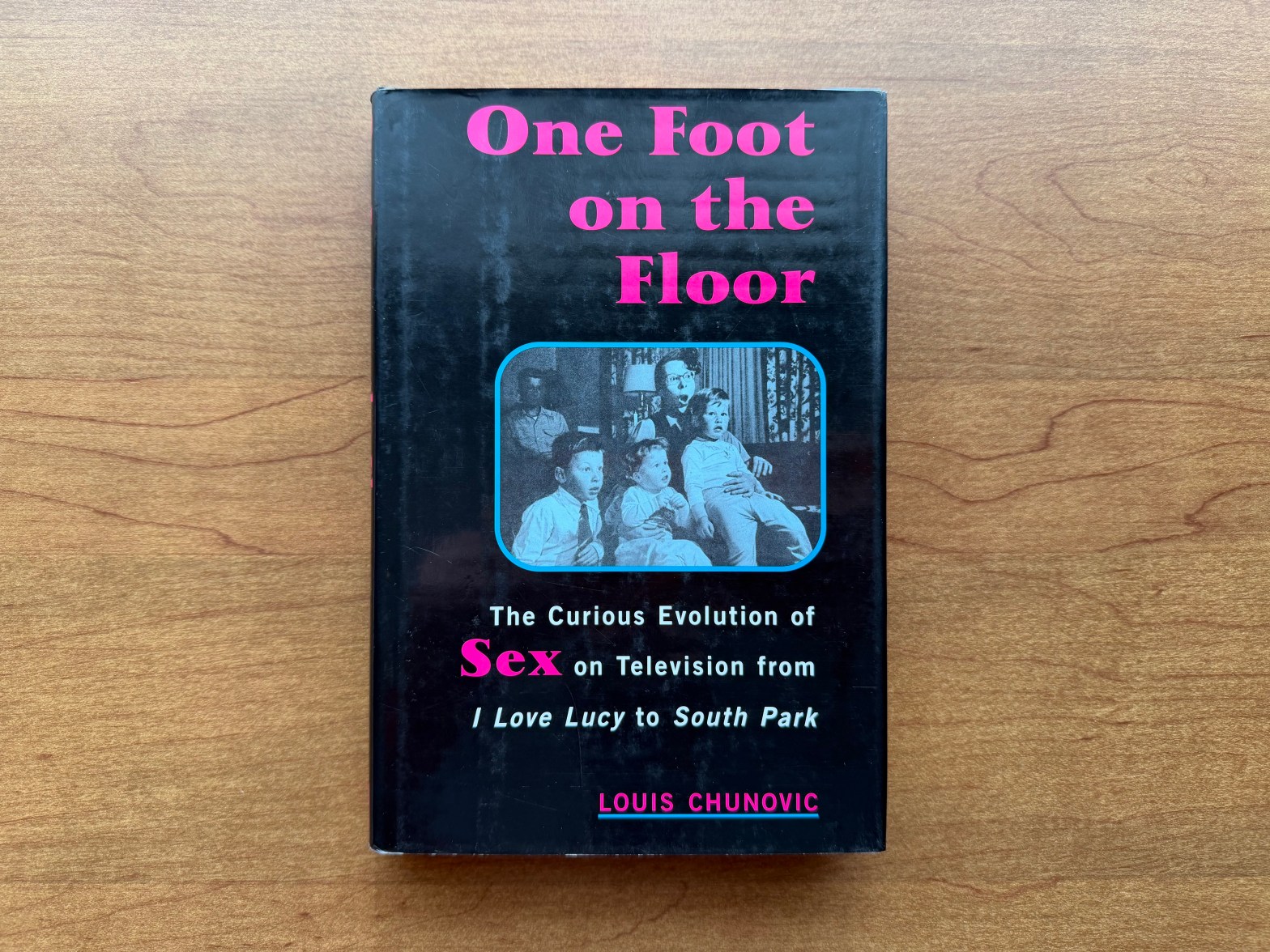
What is it?
Chunovic, Louis. One Foot on the Floor: The Curious Evolution of Sex on Television from I Love Lucy to South Park. New York: TV Book, LLC, 2000.
Why should M*A*S*H fans care?
I’ve been reading books on the broader history of television, and I think this book offers a unique angle. As the saying goes, “sex sells,” and M*A*S*H aired at a time when attitudes towards sex and television censorship was changing. In fact, M*A*S*H pushed back on some the boundaries set by television networks.
As a M*A*S*H fan, what part(s) should I read?
Since this book offers a narrative history of sex on television from the 1950s through the 1990s, I recommend reading the whole book. There is a section on M*A*S*H in the chapter on the 1970s, however.
TL;DR Review
In his analysis, Louis Chunovic looks back at the portrayal of sex on television from the 1950s through the 1990s. Originally very strict, the networks began to loosen standards as shows pushed back and with the introduction of cable television. Chunovic couldn’t have possibly foreseen the streaming world today when he published this book in 2000, but he does talk about the rise of high quality content of HBO, which has become the standard bearer for today’s television content. As television grew as a medium, what it portrayed expanded, and Chunovic only focuses on the sex.
Full Review
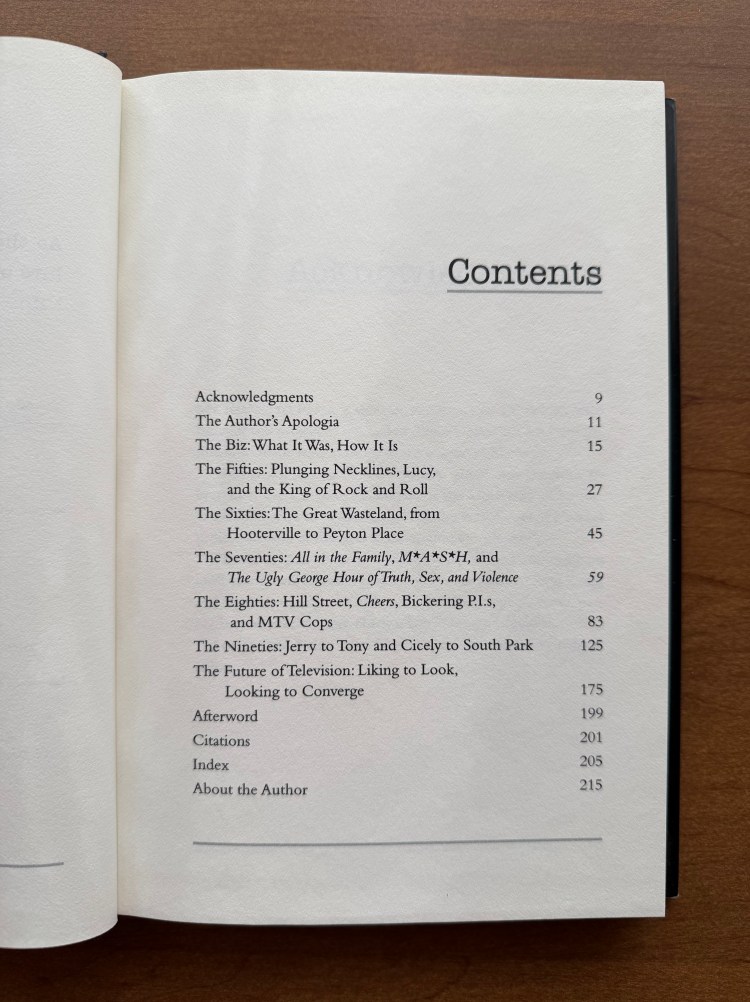
There is a bookstore that I really like in Fayetteville, Arkansas, and they have a section dedicated to television. This book caught my eye, so I flipped to the index, and there are mentions of M*A*S*H on several pages. After reading Glued to the Set: The 60 Television Shows and Events that Made Us Who we are Today last month, I decided to continue my journey on the broader “history of television” theme of books with One Foot on the Floor: The Curious Evolution of Sex on Television from I Love Lucy to South Park. Sex sells, and the attitudes towards sex on television have changed dramatically since its widespread adoption in the 1950s. Louis Chunovic traces that journey in this book, and it is a fascinating read.
Chunovic does a great job of setting up how the standards of broadcasting on television began. And he would know being a former television reporter. The Federal Communications Commission controls the airwaves in the United States, and they set the standards for what can and can’t be shown on broadcast TV. Initially television shows weren’t rated like they are today, in fact, a rating system for television (similar to ratings for movies) would not be introduced until the late 1990s. Chunovic only discusses the television rating standards briefly since his book was published shortly after its introduction. The primary exploration of his book is the portrayal of sex on television from the 1950s through the 1990s. The book is broken down by decade, and Chunovic explores a series of shows that exemplify the attitudes towards sex in each of the decades. In the 1950s, for example, he looks at popular shows such as I Love Lucy, where there were concerns about using the term “pregnant” because of the implication that pregnancy is caused by sex (shocking, I know). By the 1990s, however, HBO and other cable networks were much more liberal with their portrayal of sex, and that brought network television along with them. In order to stay competitive, the big networks had to be more open as well.
Chunovic discusses M*A*S*H in his chapter on the 1970s. He highlights the early censorship of M*A*S*H, and how the producers had to fight to include the word “virgin” in one episode. Of course, M*A*S*H was not a sex-free show. In fact, sex plays a central role from the beginning when, in the pilot episode, Hawkeye and Trapper cook up the scheme to raffle off a weekend in Tokyo with a nurse. There are other attitudes towards sex in M*A*S*H such as infidelity of Frank with Margaret and Col. Henry Blake’s affairs. Chunovic explores these examples by looking a few episodes. One of the other themes that runs throughout the book is sexual tension. A number of shows in the 1970s and 1980s had “will they or won’t they” storylines between main characters. That tension was explored between Margaret and Hawkeye, and Chunovic uses the two-part episode “Comrades in Arms” to explore the tension in more detail. Disappointingly, that is as far as Chunovic goes with M*A*S*H. I can think of other examples that were left out regrind the changing attitudes towards sex in the series. After Frank and Col. Blake left, infidelity was featured far less, and even Hawkeye’s womanizing was called in to question on a number of occasions. Since M*A*S*H aired from 1972 – 1983, it spanned the changing attitudes towards sex, homosexuality, and feminism. Chunovic doesn’t explore any of these topics.
Being a 25 year old book, Chunovic’s chapter on the “future of television” is very dated. The idea of streaming television shows over the internet would have been a foreign concept at a time when most people had dial-up internet. But he does discuss how HBO was having an effect on the quality of television. When TV was introduced, movies and TV were separate. A movie was a serious production with a single camera on a sound stage or on location. The early television shows were filmed in front of an audience with multiple cameras, and it was seen as a less serious affair. Actors rarely bridges the movie/television gap. But M*A*S*H aired at a time when that was starting to change as well. It was a single camera show, and that made it feel more cinematic and less like a sitcom. Today, more shows are filmed like movies, and that has blurred the line between movie and television. HBO played a role in that when it began original programming in the 1990s with shows like The Sopranos. So while parts of this book may be a relic of the pre-streaming version of television we all know (and have a love/hate relationship with) today, it is a great insight on how the television standards changed as the medium of television grew and matured.
 The M*A*S*H Historian