
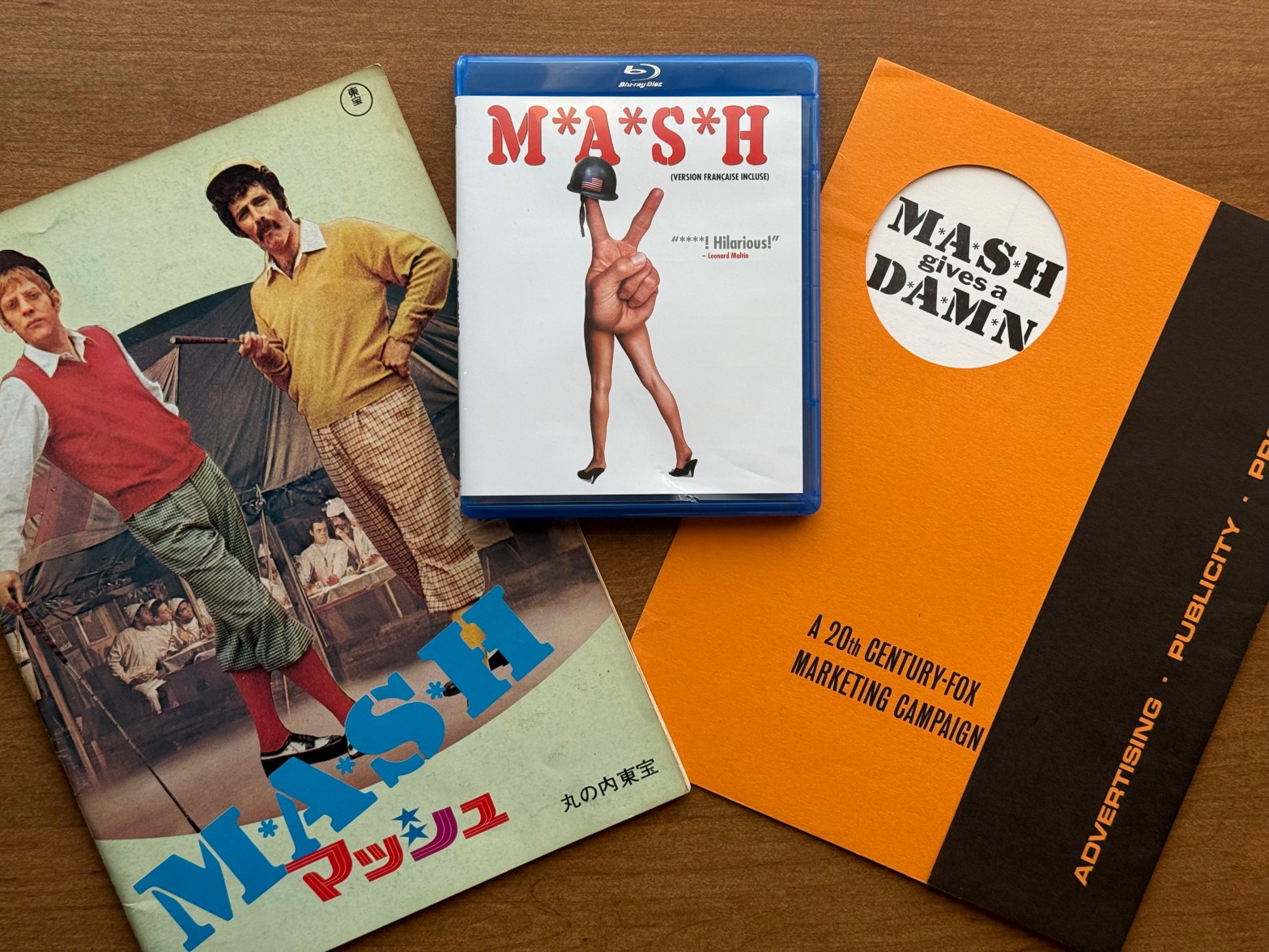
Throughout 2025, I will rewatch M*A*S*H and review each season on the final day of each month. I am rewatching the episodes in broadcast order using the DVDs from the 2000s with the laugh track left on. You can find an archive of these rewatch posts here.
The first time I watched the original M*A*S*H movie was in 2008. By that point, I had seen the series multiple times on both TV and on DVD. I knew the series backwards and forwards, so when I first watched the Hawkeye, Trapper, Frank, and Margaret from the Robert Altman classic, I was shell shocked. The tone and characters were…different. The humor was darker, the tone was darker, and the war was bloodier. But that made sense for an “R” rated movie, so it wasn’t a fair comparison to a television series from 1972. After reading the original novel, I realized that the movie was toned down from what Richard Hooker had written in 1968. Altman was able to get away with more in a feature film than Larry Gelbart and Gene Reynolds could, initially, on CBS. It’s fair to say that I wasn’t initially a fan of the movie, but as the years have passed, my opinion has changed. I have come to appreciate what M*A*S*H represented in 1970. The tone of M*A*S*H matched the mood of the American people and their attitude towards the Vietnam War. The movie proved to be a success, and was so popular that it was banned from being shown on American military bases. This month, I wrap up my 2025 rewatch of M*A*S*H by rewatching the original movie.
Things from the Movie we see in the Series
There are several character traits and storylines in the movie that were reused in the series. Although, they weren’t necessarily a one for one match to the scenes from the movie, some concepts were borrowed.
- The opening title sequence with the helicopters bringing in wounded and the theme song are reused in the series.
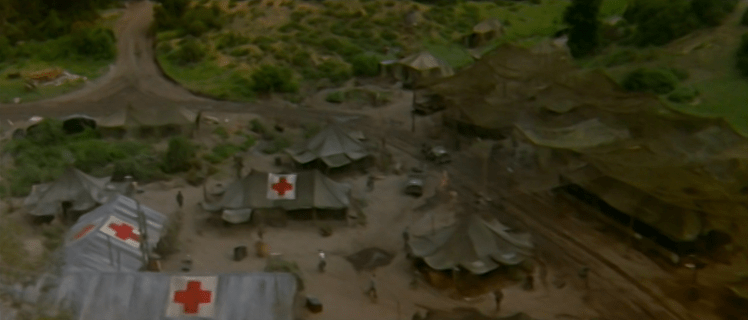
- The outdoor sets at Malibu Creek State Park are used, but they do rearrange the set slightly for the show.
- Gary Burghoff is Radar in both. In the series, Radar starts off as the Radar from the movie, but he became more naive and innocent as the series went on.
- The style of hat worn by Hawkeye in the movie does make an appearance in the pilot episode and a few other season one episodes.
- A few characters carried over to the series at first (Ugly John, Jones), but they were written out fairly early in the first season.
- The music over the PA system and the announcements play an important role in the movie and series.
- There is a sign post in the movie! I had never noticed it until this rewatch.
- Several of the characters’ mannerisms carry over from the movie to the series (Frank, Margaret, Henry), but Margaret does soften towards the other members of the 4077th in both the movie and series.
- Col. Blake is having an affair in the movie, and we know he is having an affair with Leslie in the series.
- Hawkeye and Trapper run the unit in the absence of Henry’s leadership in both the movie and series.
- Hawkeye and Trapper broadcast an intimate moment between Margaret and Frank in the movie, which is something they also do in “Major Fred C. Dobbs” (01×22).
- In the movie, Radar takes blood from Henry without him knowing it. Hawkeye and Trapper do the same thing to Frank in “Germ Warfare”(01×11).
- Margaret’s shower tent is dropped in the movie, and exposing different characters is a theme in the series. Frank, Hawkeye, and B.J. are all victims at one point.
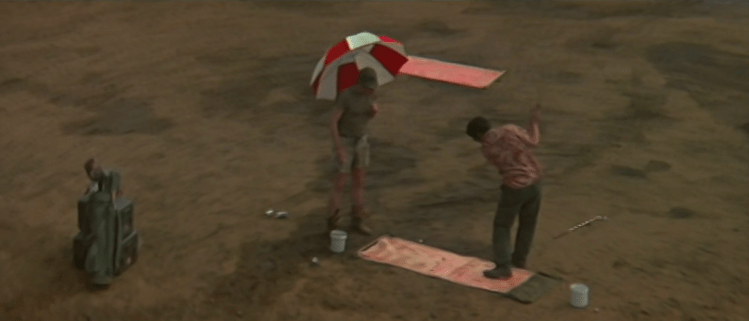
- Hawkeye and Trapper are avid golfers in both, and at there is a scene in the movie of Hawkeye and Trapper hitting golf balls off the helicopter pad. Just like Trapper and Hawkeye do in the pilot episode of the series.
- In Japan, Hawkeye and Trapper get revenge on a colonel by photographing him with a prostitute for blackmail. In the series, Hawkeye and Trapper blackmail a lieutenant in a similar way (“L.I.P. (Local Indigenous Personnel)” (02×07)).
- Also in Japan, Hawkeye and Trapper perform an illegal operation on a baby. In the series, Hawkeye and Trapper perform a bris ceremony, which Frank and Margaret protest (“Life with Father” (03×08)).
- During the football game, the 4077th uses drugs to take out the best player to ensure they win. Hawkeye and Trapper cheat in a similar manner during a boxing match in “Requiem for a Lightweight” (01×03).
Things from the Movie we Don’t see in the Series
There are several main characters or themes from the movie that never made it to the series.
- In the movie, Hawkeye is married with children. That is dropped completely for the series.
- Duke Forrest and Private Boone play a big part in the movie, but they aren’t in the series.
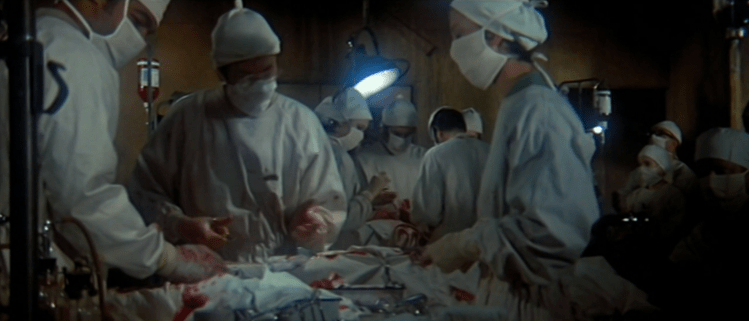
- The operating room scenes are much more graphic. There is more blood, and in one scene, Hawkeye saws a bone. While they don’t show it, you can hear the sound to dramatic effect. The series shows very little blood at first due to network censors.
- It is clear that Hawkeye knew Trapper before they were both at the 4077th. This really isn’t established in the series.
- Speaking of Trapper, his character is severely diminished in the series. In the movie (and book), Trapper was a thoracic surgeon, not Hawkeye. Trapper was chief surgeon. And Trapper is the one who punched Frank!
- Football isn’t as big of a theme in the series as it was the movie. We see Trapper throw a football in the pilot, but beyond that, we don’t see them play football.
- Henry is actually shown fly fishing in the movie! In the series, Henry wears the hat with the flies, but we never actually see him fish.
Mistakes
As I rewatched the movie, I tried to note some mistakes or anachronisms that were present. Unlike the series, the movie doesn’t really have continuity errors!

- The Jeep that Hawkeye and Duke “steal” at the beginning of the movie has “MASH 4077” stenciled on the front bumper.
- Henry introduces Margaret as “Major O’Houlihan,” and she is later referred to as “O’Houlihan” by the general. Every other time, she is “Major Houlihan.”
- In Seoul, Hawkeye is drinking a Pabst Blue Ribbon beer, but it is clearly a can from the late 1960s and not a can from the 1950s.
- In some of the camera angles during the football game, you can see an interstate highway in the background.
M*A*S*H Wrap-up
I have a new appreciation for M*A*S*H after learning more about the making of the movie and the work that Robert Altman put in to getting the film made. By today’s movie and streaming standards, the language, dark comedy, and bloody O.R. scenes are tame, but for 1970, they were cutting edge. Altman used the Richard Hooker novel, M*A*S*H, to exemplify the insanity of war. Like in the series, the Hawkeye and Trapper in the film are dedicated to saving lives, but they are not dedicated to the Army. That is an acceptable, and relatable, point of view, and it reflected a growing frustrating with the Vietnam War amongst the American public. The anti-war and anti-authority attitudes in M*A*S*H perfectly match the culture of the late 1960s and early 1970s. The 1960s was a tumultuous decade in American history, and M*A*S*H summed that up in a package portraying events from twenty years earlier.
The movie opens with Hawkeye and Duke arriving in Korea, and then going to the 4077th. They immediately push back against Henry’s authority, and use their influence to get a thoracic surgeon transferred to the unit. When Trapper John McIntyre arrives at the unit, Hawkeye realizes that he knows him from their college football days. Major Frank Burns proves to be an annoyance as does the new head nurse, Major Margaret Houlihan. After Trapper and Hawkeye embarrass Frank and Margaret, they rile him up to the point he attacks Hawkeye and he is taken away in a straight jacket. The Swamp rats (Hawkeye, Trapper, and Duke) always get their way. After further escapades by Hawkeye and Trapper in Japan, they plan for a football game against the 325th Evac. hospital. The game is fixed in two ways: 1. they bring in a ringer in the form a former football player for the San Francisco 49ers (who happens to also be a surgeon), and 2. they inject the 325th’s star player with a drug that takes him out of the game. The 4077th gets better odds after keeping their star player out of the game the first half. In the second half the game, they clean up! The movie then ends with Hawkeye and Duke getting their orders to go home.
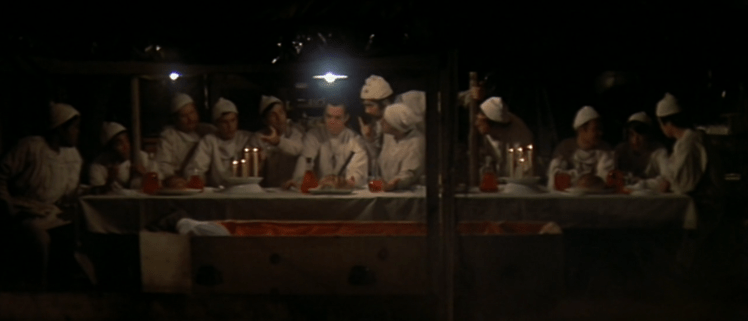
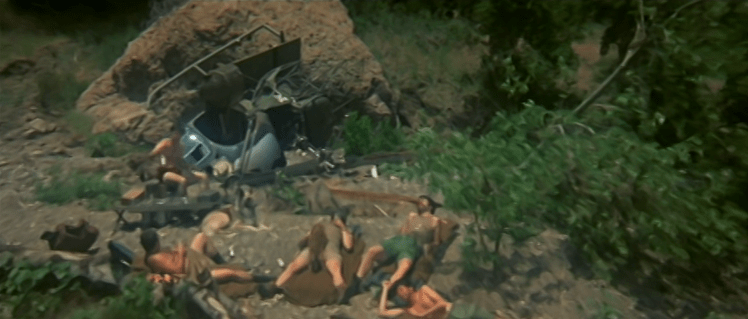
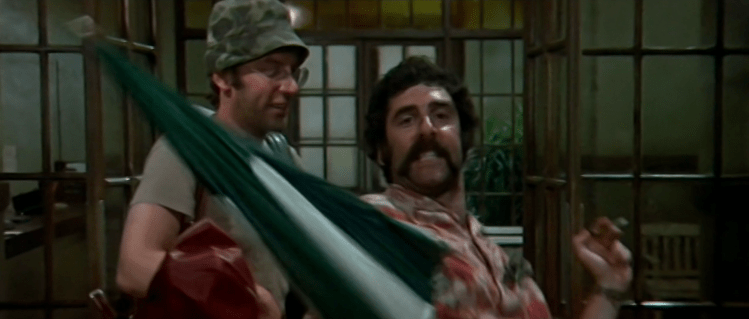
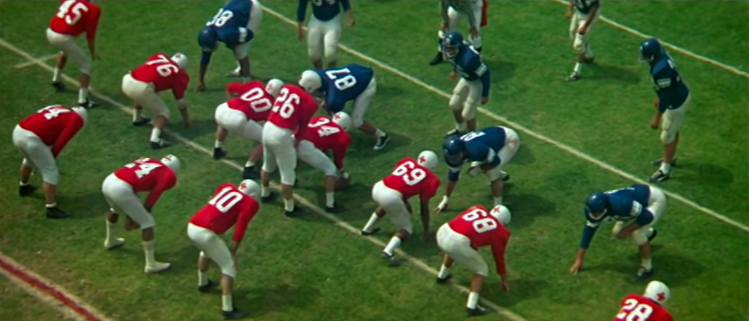
If you’ve read the original Hooker novel, then the movie will be familiar. Most of the stories from the novel are in the film. But while rewatching, there were several things that I had forgotten. Hawkeye and Duke both arrive at the 4077th before Trapper and Margaret. Whether this was true in the series, we never find out. There are several similarities to series. The relationships between the surgeons and nurses, especially Hawkeye, are a common thread in both. So is going to Japan for R&R and golf. One of the biggest differences between the two is how infrequently Frank is featured in the movie. He is quickly disposed with after Trapper punches him, and Frank attacks Hawkeye. In the movie and series, Frank is a one dimensional character, and that is what made it more difficult to deal with Frank as the series went on. There is one interesting side note in that Captain Ray Poss flew (and owned) the helicopters in both the movie and series. In his book, he discusses how the crashed helicopter shown in the film was real. They really did crash a helicopter during production. Thankfully no one was hurt, and Altman decided to keep the crashed helicopter in the movie.
My relationship the M*A*S*H movie has changed in the last two decades. When I first watched it, I was struck by how different it was from the series. But as the collection has grown to include M*A*S*H movie press material and even an original script, I have a new appreciation for it. I prefer the series over the movie because of the character growth, but I realize that isn’t a fair comparison because the creators of the M*A*S*H series had eleven years to develop characters while Altman only had 115 minutes. M*A*S*H was a groundbreaking movie that broke the mold of the traditional war movie. Its anti-war and anti-authority message found a receptive audience in 1970, and it is still finding audiences today. I contend that M*A*S*H has an extended universe that includes the original novel, Altman film, series, and AfterMASH. When taken together, they tell the story of surgeons at a MASH unit during and after the Korean War. Altman started the story with the movie, and Gelbart and Reynolds picked up the football and allowed character growth, added new characters when needed, interviewed real doctors and nurses from MASH units, and brought the horrors of war to a larger audience on television. Without this movie, there is no series, and I am grateful that Twentieth Century Fox gave Altman a chance to make M*A*S*H what it is today.
 The M*A*S*H Historian