
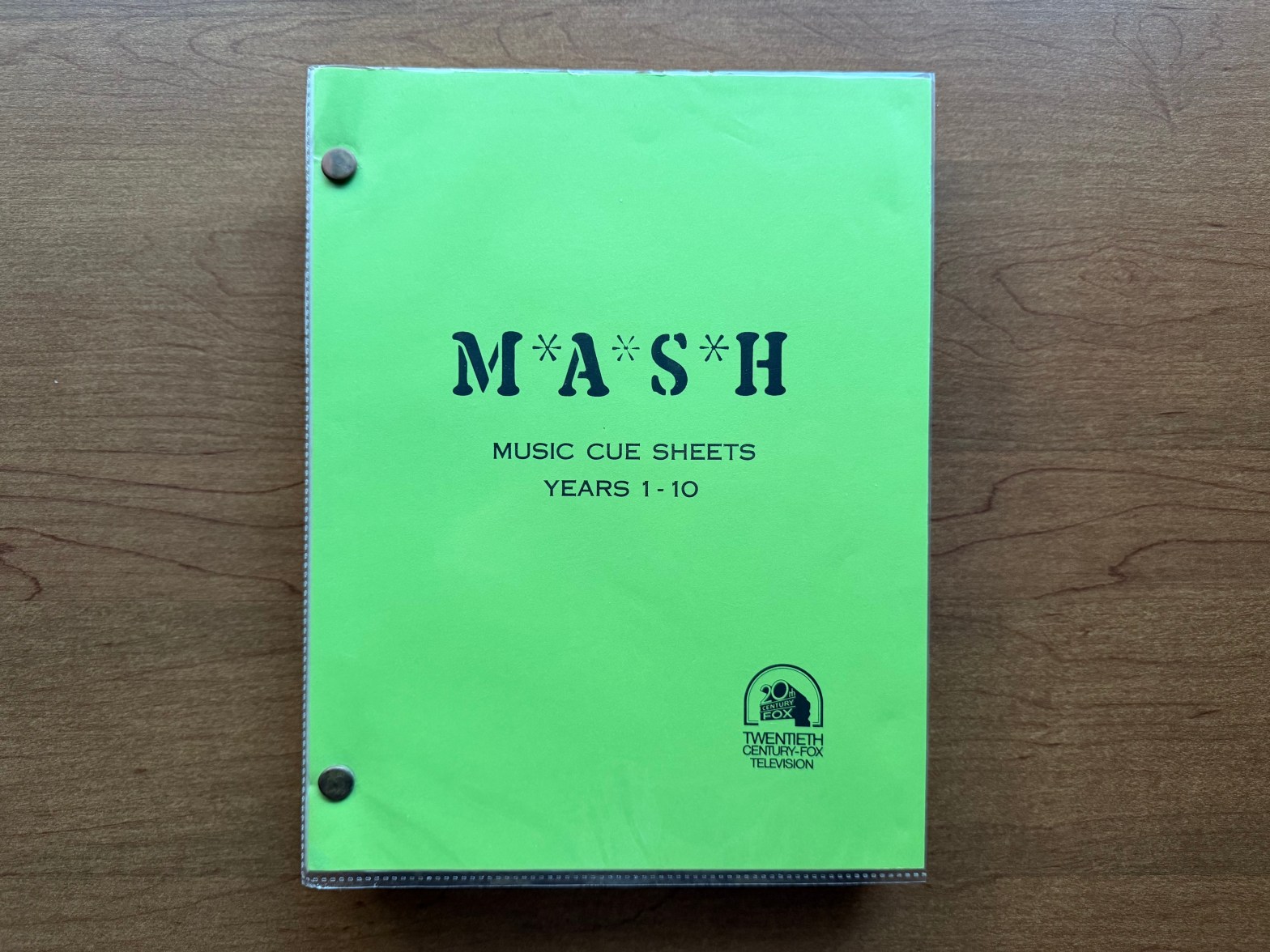
Have you ever watched an episode of your favorite television show and wondered what song was playing the background? It’s a common question, and one that the internet has helped solve over the last twenty years. There are sites dedicated to listing song titles and artists in episodes of popular television shows, and some shows have helped launch the careers of independent bands. Back in the 1970s and early 1980s, the internet wasn’t around to help fans of television programs discover music. Even though this collection of music cue sheets from M*A*S*H‘s first ten seasons looks a lot like the popular websites from today, these documents weren’t created for or by fans. Instead, they were created for the Twentieth Century Fox legal department to track the music used, ensure rights were secured, and ultimately, ensure the proper parties were compensated. While these documents don’t go into the detail of payment, they do offer a lot of detail about every piece of music played in each M*A*S*H episode.
In the Script Spotlight posts, I have written about several different types of production documents that were often included with scripts. While these music cue sheets can be classified as production documents, they aren’t the same as the Call Sheets or Shooting Schedules that were often included with scripts. While the Call Sheets and Shooting Schedule were produced and updated during the filming process, the music cue sheets were generated after the episode was edited. When each M*A*S*H episode was edited, the recorded audio and video had to be put together. The editors also added music tracks that appeared in the opening and closing credits, during scene transitions, and even over the 4077th’s P.A. system. In order to play any music in an episode, the legal department had to ensure that the rights to that music had been secured, and that would have led to the rights’ holder being properly paid. The artist or writer of the song may have been paid depending on their contracts.
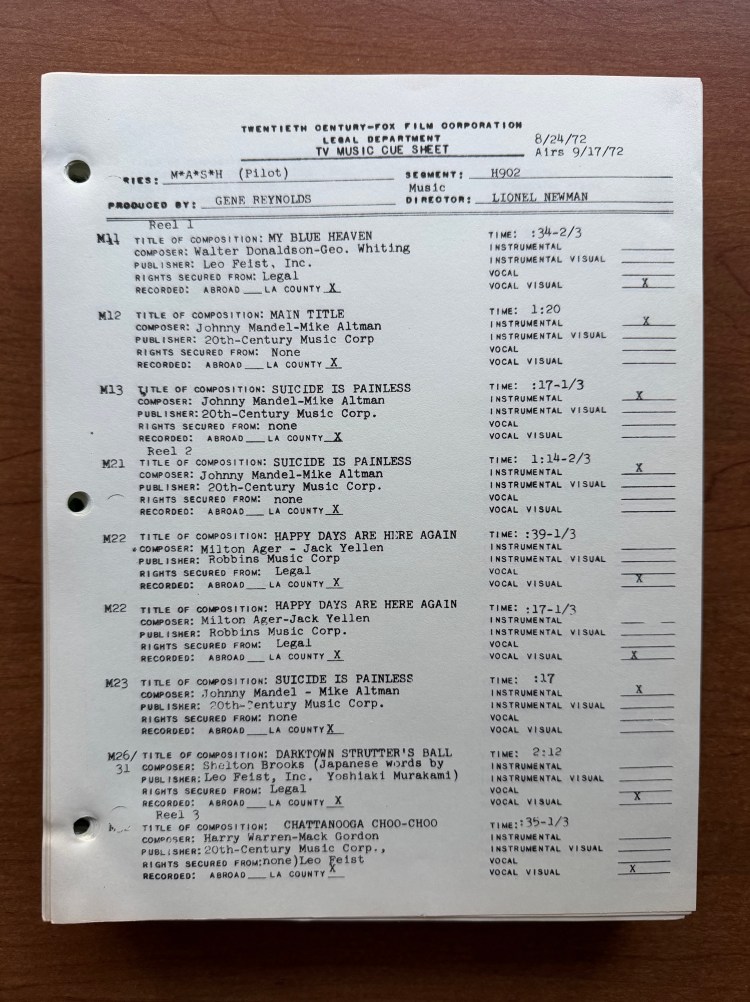
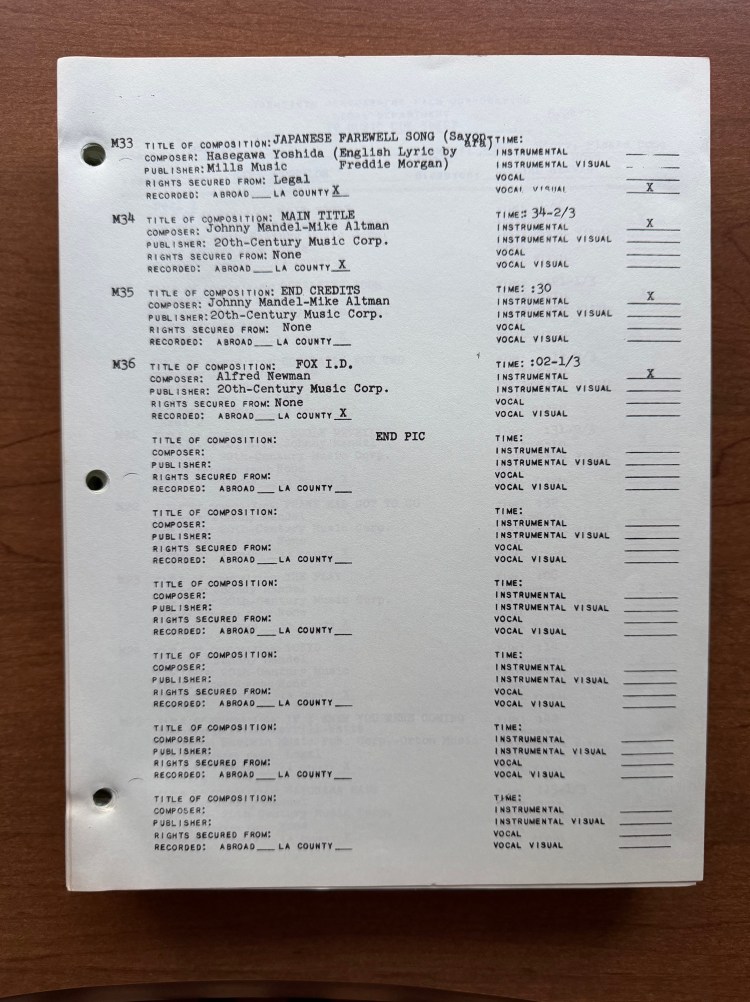
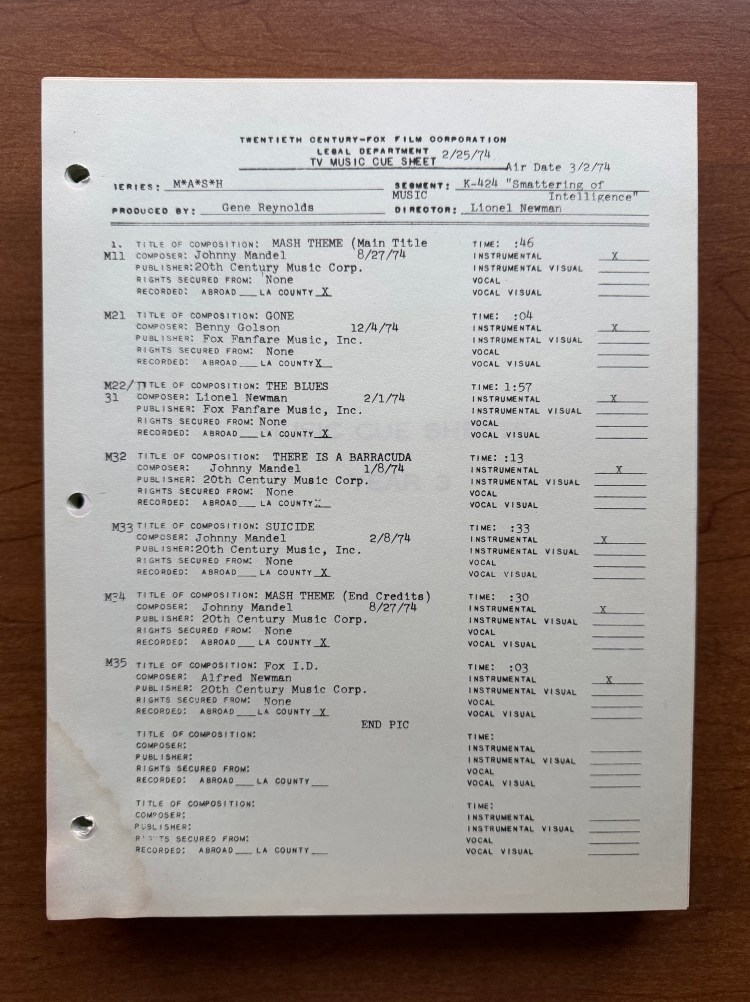
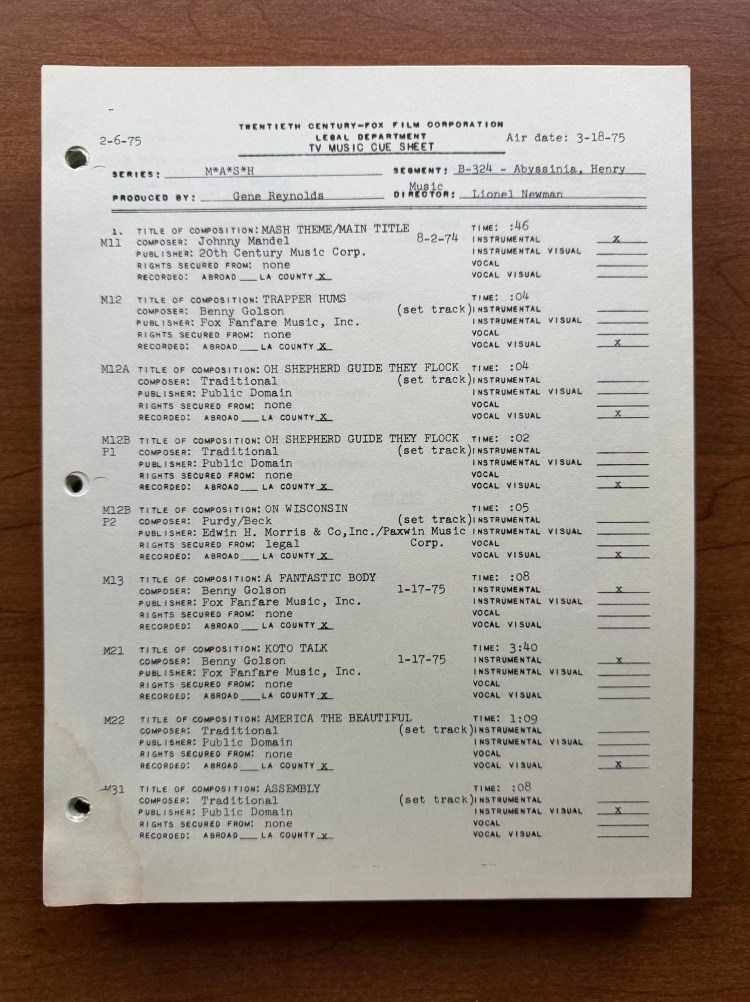
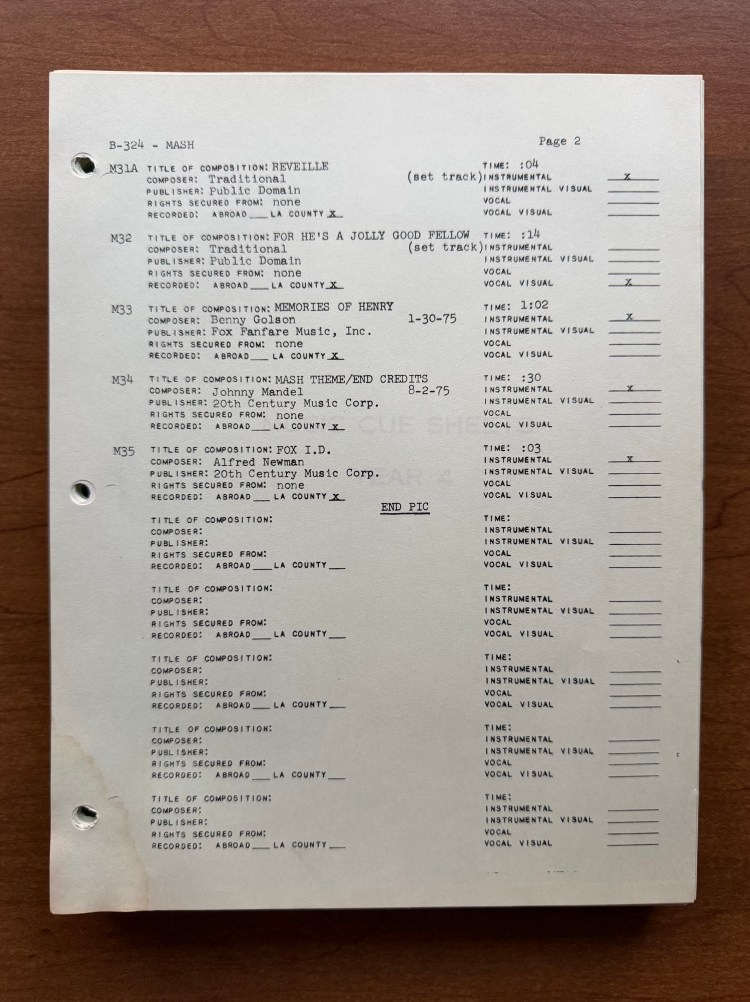
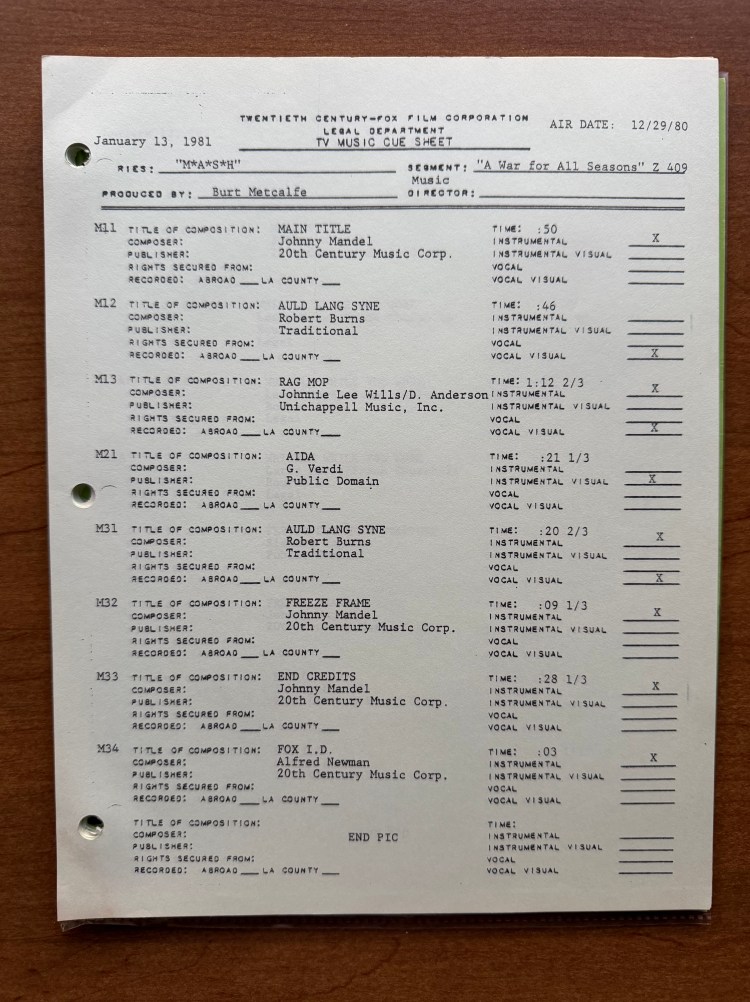
As I mentioned in the introduction, these documents do not record any compensation for the use of each piece of music, but it offers a lot of detail about the music used. There is a page (or two) for each episode of M*A*S*H for seasons one through ten (I do not have season eleven, unfortunately). Each sheet has fields that were filled in with information about each piece of music used in the episode from the opening theme song to the closing credits theme song. The details included for each song include:
- Title of Composition: The title of each song is listed. The most common is “Suicide is Painless” in each of these documents. But there are several others in the earlier seasons.
- Composer: The composer of the song is noted because they are often the ones being compensated for the use of the instrumental music. For “Suicide is Painless,” Johnny Mandel is listed since he composed the music. But Mike Altman, the son M*A*S*H director Robert Altman, is also listed because he wrote the original lyrics.
- Publisher: Which music company owned the work? For some of the music, that was 20th Century Fox. But others were licensed from other labels.
- Rights Secured From: This line is interesting because it lists who they had to got permission from to use the song. Sometimes it lists “none” since the music was owned by 20th Century Fox. Other times it just says “legal” because Fox’s legal department would have worked out an agreement with the holder of the rights.
- Recorded: There are two options in this field. Whether the song was recorded “abroad” or in “LA County.” Most often, the music was recorded locally.
- Time: This is the time stamp in the episode during which the music is played. How long the music played is important because it determined how much (if anything) was owed in royalties.
- Music Type: Finally, the sheet has a field to indicate whether the music was “Instrumental” (played in the background only), “Instrumental Visual” (the piece of music was shown being played on screen), “Vocal,” or “Vocal Visual.” I could not find clear definitions of the royalty rules in the 1970s and 1980s, but there were likely different royalty fees depending on how the music was portrayed.
M*A*S*H ran for 251 episodes, and there is a sheet for every episode (I hope to find a set of cue sheets for season eleven someday). These sheets contain a lot of information, and they have been very useful in my own research. I have used the music cue sheet to find out a title of a song when asked by fellow fans, and I have used them when I am curious for myself. In collecting and preserving the production history of M*A*S*H, these documents are invaluable because they list more detail about the music used in the series then you can find in the closing credits of each episode. They also tell a fascinating story of how Fox’s legal division had to track the usage of all the music the series used to ensure proper royalties were paid to the owners of the music. The one story that these cue sheets remind me of is that Mike Altman, who wrote the lyrics to “Suicide is Painless” as a teenager, earned more in royalties from writing the music then his father did for directing the movie. It’s easy to see why. The theme song was played twice per episode, and he would have likely been paid royalties each time an episode is re-broadcast. These documents are part of the paper trail that ensured that Altman, and every other composer of a piece of music used in M*A*S*H was paid their royalties.


I have been a musician for 35 years, including running the local 4-H Band during the summers for over 20 years. Working with kids, and loving the show, I often wished I could have the kids play the theme song for a concert. Unfortunatly, the title and lyrics have prevented that. Beautiful music throughout the show series, and I always loved listening to the cast sing as well.
I regret that I did not meet David Ogden Stiers in person to discuss/play music (I would have loved a French horn duet!), and I would have loved to hear Arlene play clarinet (I think Alan said in an interview that she no longer plays due to losing the breath support needed, but that she still plays piano!).
Anyone out there a musician as well? Maybe someone who makes videos can splice us all together playing Suicide is Painless for the cast!
(I should mention I am an amateur and just play locally in various groups for fun and recreation)
LikeLiked by 1 person