
What is it?
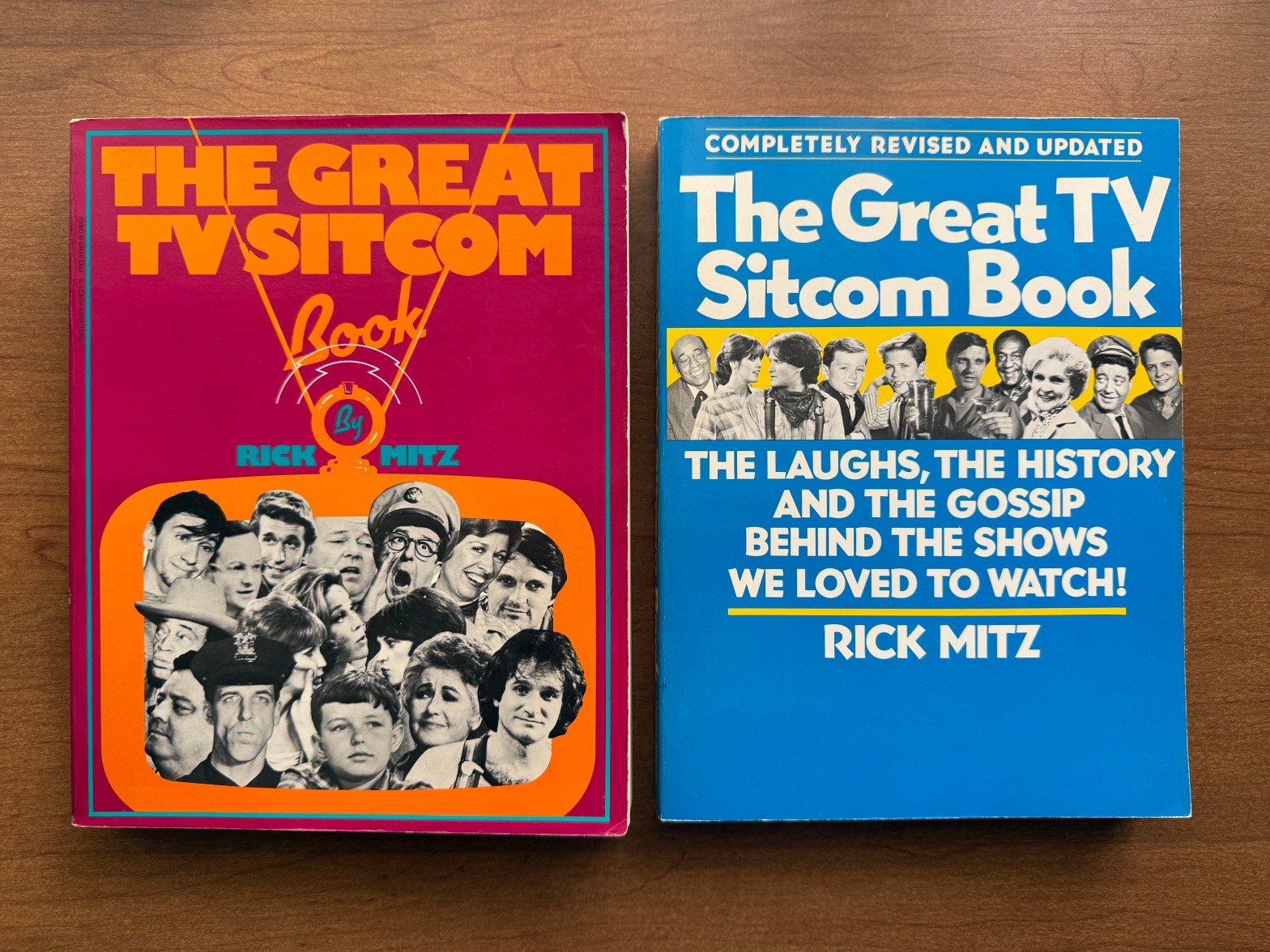
Mitz, Rick. The Great TV Sitcom Book. New York: Richard Marek Publishers, 1980.
Mitz, Rick. The Great TV Sitcom Book: Expanded Edition. New York: The Putnam Publishing Group, 1988.
Why should M*A*S*H fans care?
The Great TV Sitcom Book is a collection of sitcoms prior to its publication date of 1988, and M*A*S*H is included! But if you are a fan of classic TV, you will appreciate this book.
As a M*A*S*H fan, what part(s) should I read?
M*A*S*H is featured on ten pages of the book, but as always, there is a lot of great information beyond M*A*S*H. The majority of sitcoms are included, and it’s a great reference tool.
TL;DR Review
For 1988, The Great TV Sitcom Book is a very unique item. Today, you can readily find information about your favorite shows online including cast information, episode titles, season information, and more. In the 1980s, that was more difficult. Shows ran once, and if you were lucky, you might catch an episode of your favorite show again when it ran in syndication. The Great TV Sitcom Book was a great way to learn more about your favorite shows and have information that was not readily available to the public.
Full Review
Today, we often take for granted our access to information. If you want to know who starred in Bewitched, you can Google it. When you can’t remember the title of a show, you can describe the show to ChatGPT, and it will likely know the answer. Before the internet and artificial intelligence, fans of television had to rely on TV Guide and books such as The Great TV Sitcom Book to learn more. This book was popular, and after being first published in 1980, it was revised in 1988. It gave fans what they wanted: more information about their favorite TV sitcoms.
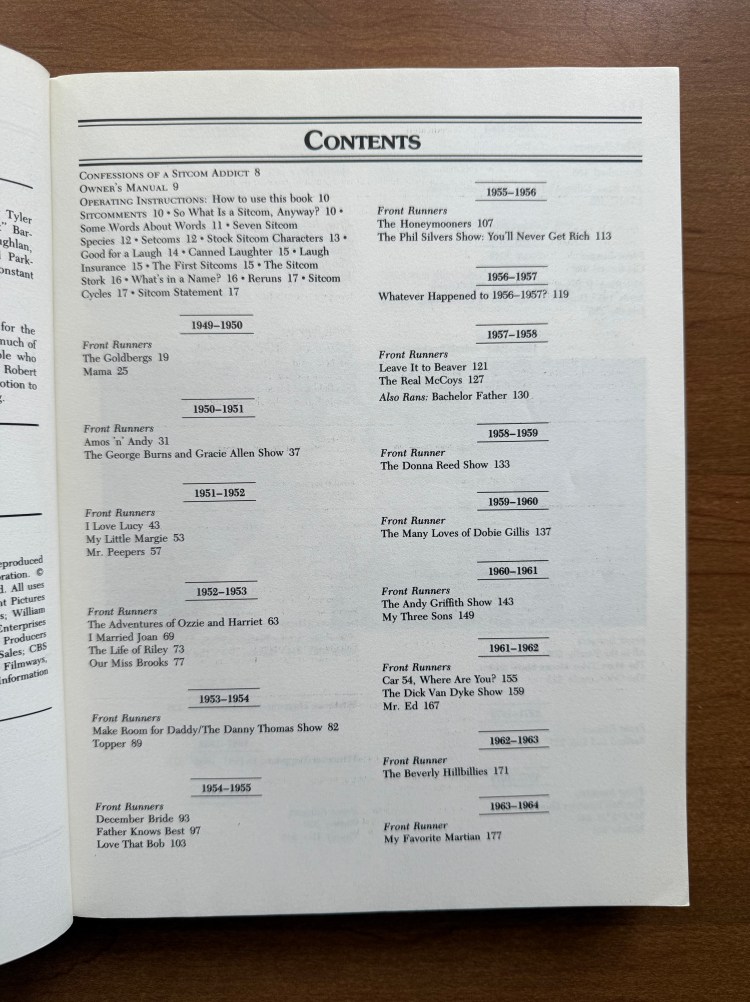
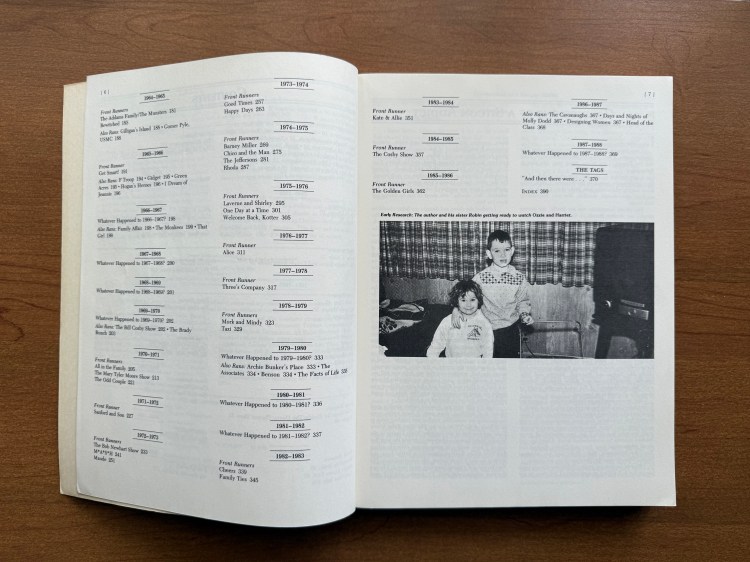
Rick Mitz was a writer for a number of television series in the 1980s and into the early 2000s, but in the 1980s, he also put together a book that collected the major American sitcoms that were organized by the year they debuted. For each year, he lists the new shows and highlights the “front runners” that were more successful. For each series, he includes technical information including the network on which it aired, the dates it ran, and the major cast members. There are a lot of TV fans in the 1980s who would have been happy with that, but for each series, he went further by including an overview synopsis of the show. For the more successful shows, Mitz included longer narratives and quotes. This book is a labor of love by someone who deeply cared about the sitcom and television as a medium. The shows on the list include some of the most popular such as I Love Lucy, The Beverly Hillbillies, All in the Family, Sanford and Son, Maude, Happy Days, Cheers, and The Golden Girls. There are more obscure shows listed as well, but they don’t have as much detail. This book can be thought of as the “encyclopedia of sitcoms.”
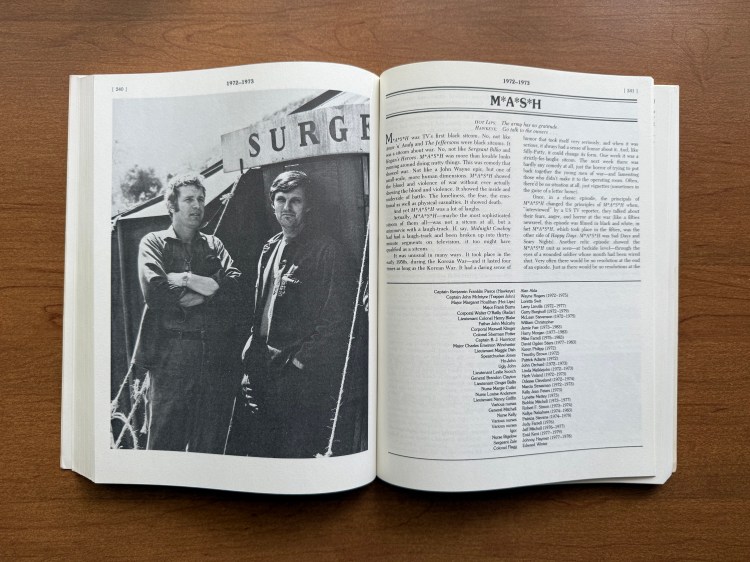

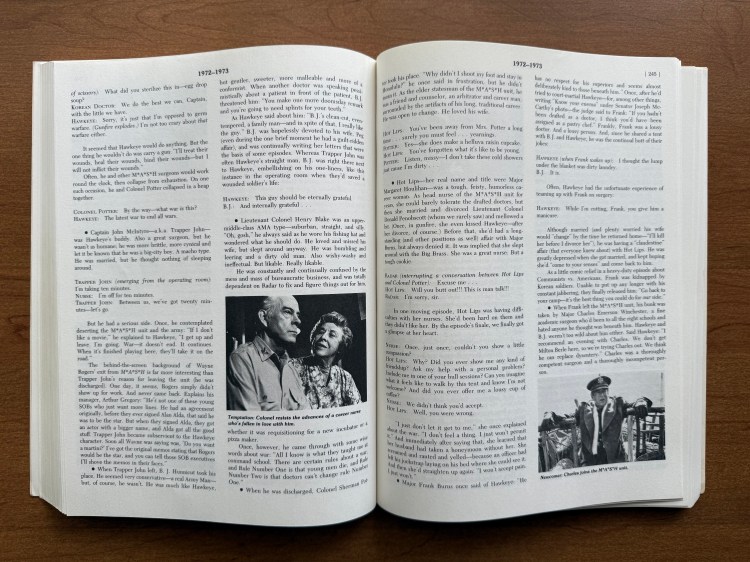

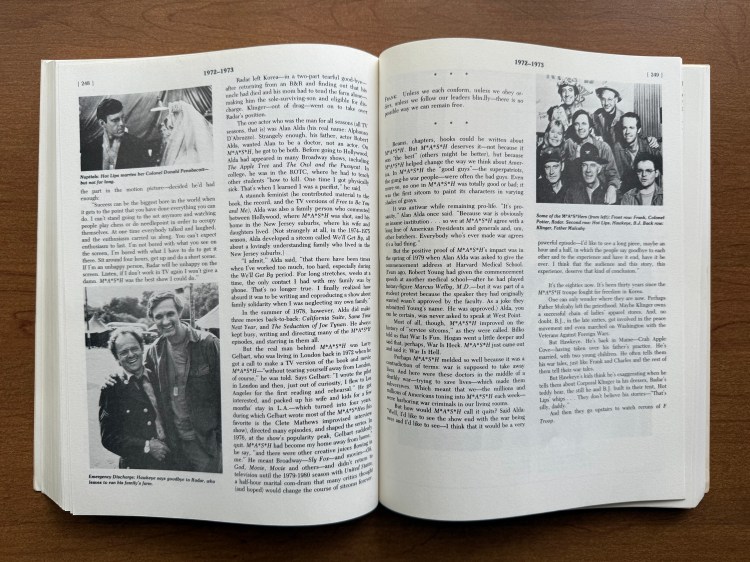
Mitz features M*A*S*H on ten pages. In those pages, he lists the cast members and the dates in which they appeared on the show, and includes all of the information you’d expect. But he went beyond the typical information about the series. There are photos and quotes from the series, but it is his insights that provide the most interesting reading. It is clear that Mitz understood what M*A*S*H achieved. He wrote, “This was comedy that showed war. Not like a John Wayne epic, but one of small-scale, more human dimensions. M*A*S*H showed the blood and violence of war without ever actually showing the blood and violence. It showed the inside and underside of battle. The loneliness, the fear, the emotional as well as physical casualties. It showed death. And yet M*A*S*H was a lot of laughs.” He goes on to contend that M*A*S*H “was not a sitcom at all, but a mini-movie with a laugh-track.” We know the amount of effort and research that went into the writing of the series, and M*A*S*H was filmed with a single camera like many motion pictures of its day. It felt more cinematic than other shows of the time, and that is what made it more real. I completely agree with his conclusions, and only five years after the series ended, the impact of M*A*S*H was already well understood.
If you like what you’ve seen about how Mitz breaks down M*A*S*H for readers, you’ll greatly appreciate this book for more than the technical details it provides. You can tell that Mitz worked in the business and appreciated television from an insider’s point of view. I do wish that the book was updated again in the early to 2000s to document the sitcoms of the 1990s. Perhaps that is my bias since the 90s were my formative years, but I would love a book like The Great TV Sitcom Book that included shows like Home Improvement, Seinfeld, Frasier, and the lineup of ABC’s TGIF. Then I think about today’s world of network TV, hundreds of cable channels, and countless streaming platforms. It would be nearly impossible to write a book like this today! There are hundreds of new shows every year across the platforms. It’s a good thing we have the internet today to keep track of it all otherwise a similar book today would be the size of the Encyclopedia Britannica! These books have been out of print for decades, but used copies are available on several online shops including Amazon and eBay.
 The M*A*S*H Historian
I bought the edition of this book that was released in 1983. That was an unfortunate time for sitcoms, as they were in a lull in the early 1980s. The book chose 1 or 2 (on average) “Front-Runners” for each tv season (MASH was one of these for 1972-73.) that it covered in depth and smaller summaries for all sitcomes. Mitz would title seasons for which he had no front-runners as “Whatever Happened to …” (for instance 1979-80). The 1983 version in my memory was the 4th consecutive season of “Whatever Happened to …”. He published his book at least once more after THE COSBY SHOW revitalized the genre of sitcoms in 1984-85. He also retroactively promoted CHEERS and FAMILY TIES to Front-Runner status for 1982-83.
LikeLiked by 1 person
The copies I have are from 1980 and 1988. I like the book and its layout. I just wish it was easier to find all of the different editions of the book. Since most sites only have one listing for the book, you never know which edition you’re going to get! I only learned that they were different because the book I received didn’t match the book in the listing photos.
LikeLiked by 1 person