
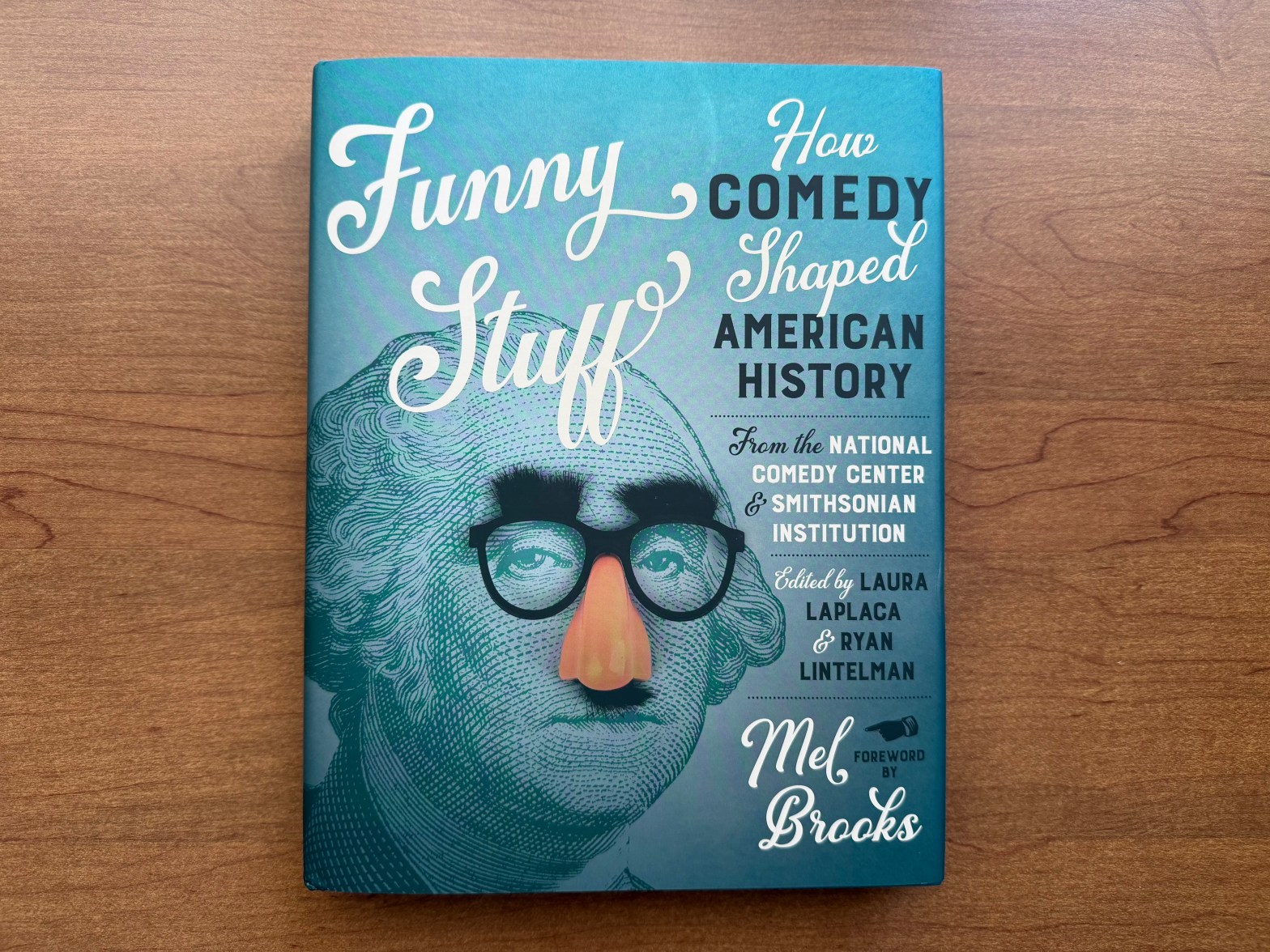
What is it?
LaPlaca, Laura and Ryan Lintelman, eds. Funny Stuff: How Comedy Shaped American History. New Brunswick, NJ: Rutgers University Press, 2026.
Why should M*A*S*H fans care?
M*A*S*H is part of the long history of television and comedy in American culture. This book places M*A*S*H in context of the long history of comedy in the United States.
As a M*A*S*H fan, what part(s) should I read?
The section on M*A*S*H features great photos of items from the Smithsonian collection! Despite being a small part of the book, M*A*S*H played an important role in the development of American comedy on television. As always, I recommend reading the entire book.
TL;DR Review
Comedy has played an important role in the history in the Untied States. From the early theater to television, Americans have turned to comedy and it has become a part of culture. In their book, Funny Stuff: How Comedy Shaped American History, editors Laura LaPlaca and Ryan Lintelman tell the story of American comedy through a series of stories and objects from the collections of two iconic American institutions.
Full Review
Disclosure: I have met and corresponded with Ryan Lintelman as part of my M*A*S*H research for my collection and for this site, and he alerted me to the release of this book. I purchased a copy of this book myself, and all the opinions expressed here are my own.
The magazine Reader’s Digest has a long running feature titled “Laughter is the Best Medicine” that features funny anecdotes and quips, and comedy has long been a part of American culture dating back to the founding era. Beginning with early publications and stage productions to modern streaming platforms, comedy has been a key part of culture over the 250 years of American history. In this new book, editors Laura LaPlaca and Ryan Lintelman explore comedy’s tight integration with American culture in their new book Funny Stuff: How Comedy Shaped American History.
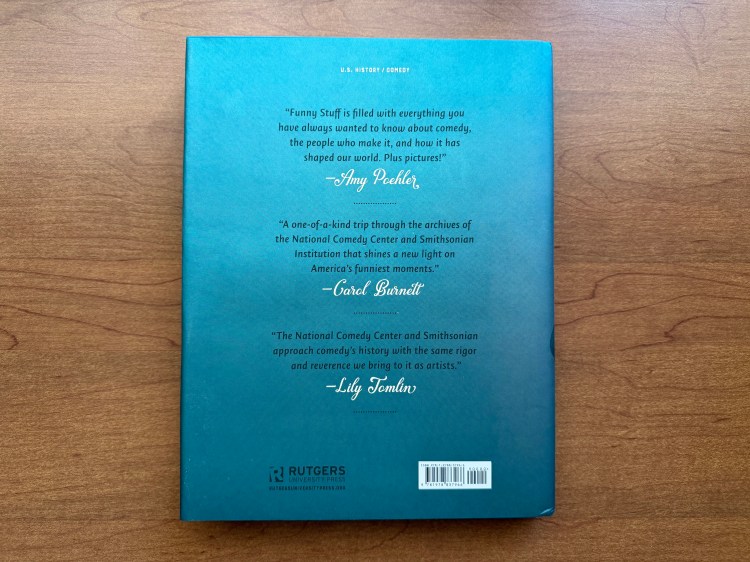
This book was produced as the result of a unique partnership. LaPlaca is the founding director of the National Comedy Center in Jamestown, New York. Lintelman is a curator of entertainment at the Smithsonian National Museum of American History. Each of these institutions has something to say about American comedy and American culture. As co-editors, they focus on where the two collections overlap, and that is long history of comedy in American history. Before I go further, I want to assure readers that this book is not a typical “museum book.” This book does contain a lot of photos of historical objects and historical photos, but it is not a museum catalog. There are dozens of thoughtful mini-essays discussing how a show, person, object, or publication contributed to comedy and American culture. Parts of this book could have been published as a historical monograph, but the inclusion of the photos only helps illustrate the point.
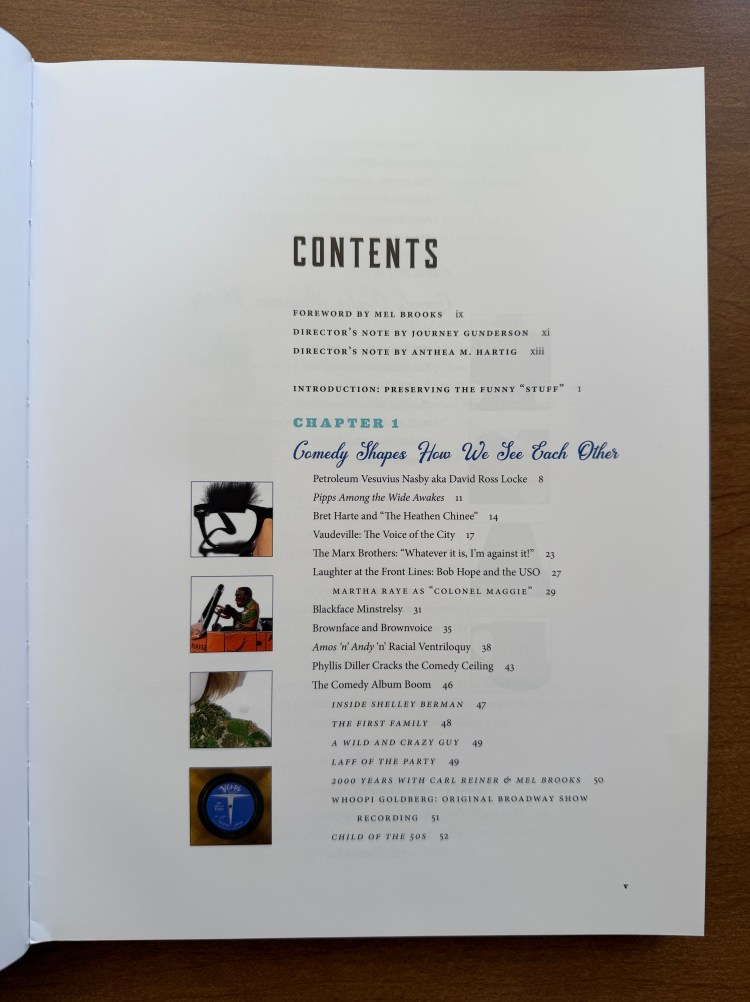
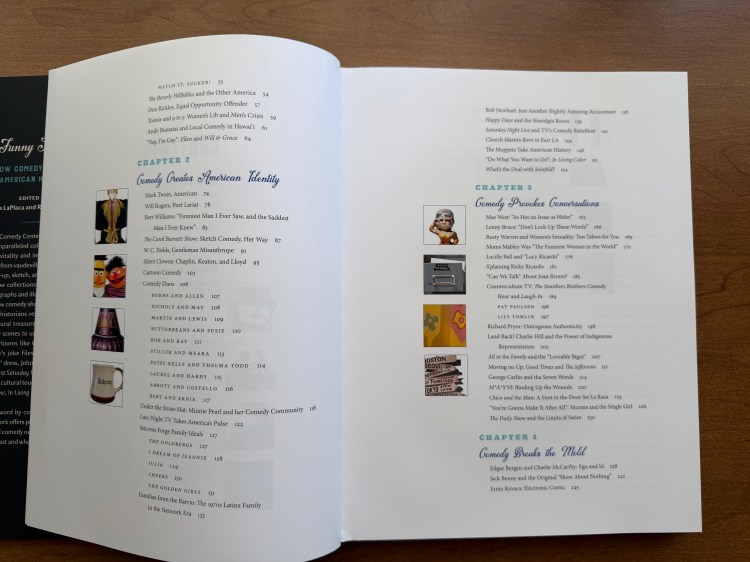
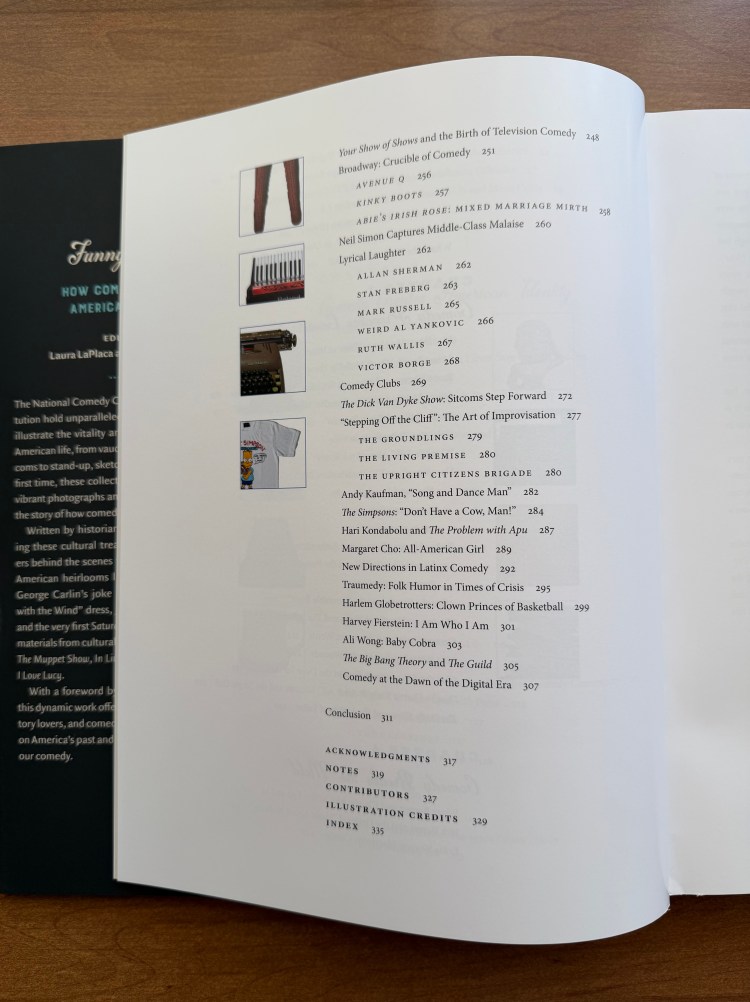
So what is in this 300+ page book? The truth is that it has a little of everything! Comedy has been present in American society from the beginning. In the beginning of the nation, satire and political cartoons appeared in early American newspapers. This commentary on society continues today with stand-up comedians or television shows that appear on streaming platforms such as Netflix. Over the last 250 years and across multiple mediums, comedy became intertwined within culture. There truly is something for everyone in this book because it discusses a number of mediums from vaudeville, theater, the novels of Mark Twain, USO shows, stand-up comedians, cartoons, sit-coms, and movies. The book is organized thematically and is organized into four major sections: “Comedy Shapes How We see Each Other,” “Comedy Creates American Identity,” “Comedy Provokes Conversation,” and “Comedy Breaks the Mold.” While the majority of the book focuses on aspects of comedy and culture that unite Americans, the authors don’t shy away from how comedy can be controversial. Comedy and satire were often used to highlight and criticize American culture and divisions.
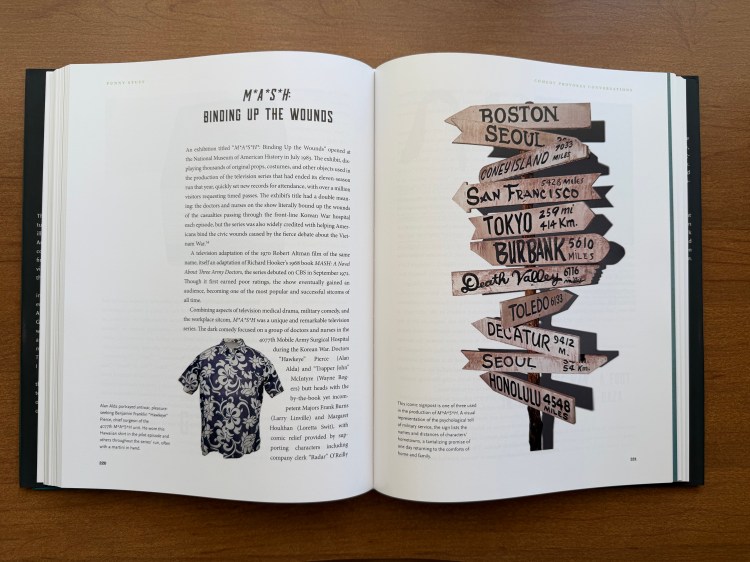
It would be impassive to write a book on American culture and ignore the impact of television. Television shows play a role in this book and include shows from I Love Lucy to The Big Bang Theory. In the “Comedy Provokes Conversation” section of the book, there is an essay dedicated to M*A*S*H. Written by Lintelman himself, he discusses the realism of the show depicting a Mobile Army Surgical Hospital during the Korean War. The show was both funny and poignant in that the characters relied on comedy to cope with the reality and hell of the war around them. Produced at the time of the Vietnam War, M*A*S*H had an anti-war message that resonated with American audiences. As Lintelman points out, series creator Larry Gelbart worried that M*A*S*H could make war look “fun.” I can certainly understand how someone watching the first four seasons of M*A*S*H could draw that conclusion because the series was more comedic than dramatic. That shifted as the series went on, and that changed the tone of the show. M*A*S*H began as anti-war, pro-human comedy, but it used its platform to make commentary about current American events despite being set in the 1950s. In its second season, M*A*S*H was on the same night as other cultural comedies mentioned in this book including All in the Family, The Mary Tyler Moore Show, and The Bob Newhart Show. Lintelman’s essay includes photos of several objects from the Smithsonian’s M*A*S*H collection including the signpost, Hawkeye’s Hawaiian shirt, a script from the finale, and one of Klinger’s dresses.
Funny Stuff: How Comedy Shaped American History combines cultural studies, material culture, and oral history to tell the story of how comedy has played a role in American history. In 2023, I went to the Smithsonian and explored the newly installed “Entertainment Nation” exhibit that explores how entrainment has shaped American culture, and it is easy to see the connection from that exhibit to this book. And that makes sense because Lintelman is a curator of that exhibit. In fact, he is the one who gave me a behind the scenes look at the Smithsonian’s M*A*S*H collection. He has a passion for history, and especially for the history of entertainment. As the United States of America celebrates 250 years, there are sure to be countless books released reflecting on aspects of our history. I am glad LaPlaca and Lintelman took the time to explore comedy and how it shaped American culture, and how culture has shaped comedy. This is a well written book with great photos, and it has the added bonus of a forward written by Mel Brooks! I recommend it for fans of comedy, television, theater, or history in general because there is truly something here for everyone. You can order a copy of Funny Stuff: How Comedy Shaped American History at your favorite local bookstore or online at one of these retailers: Rutgers University Press, Barnes & Noble, Books-a-Million, Target, or Amazon.

