
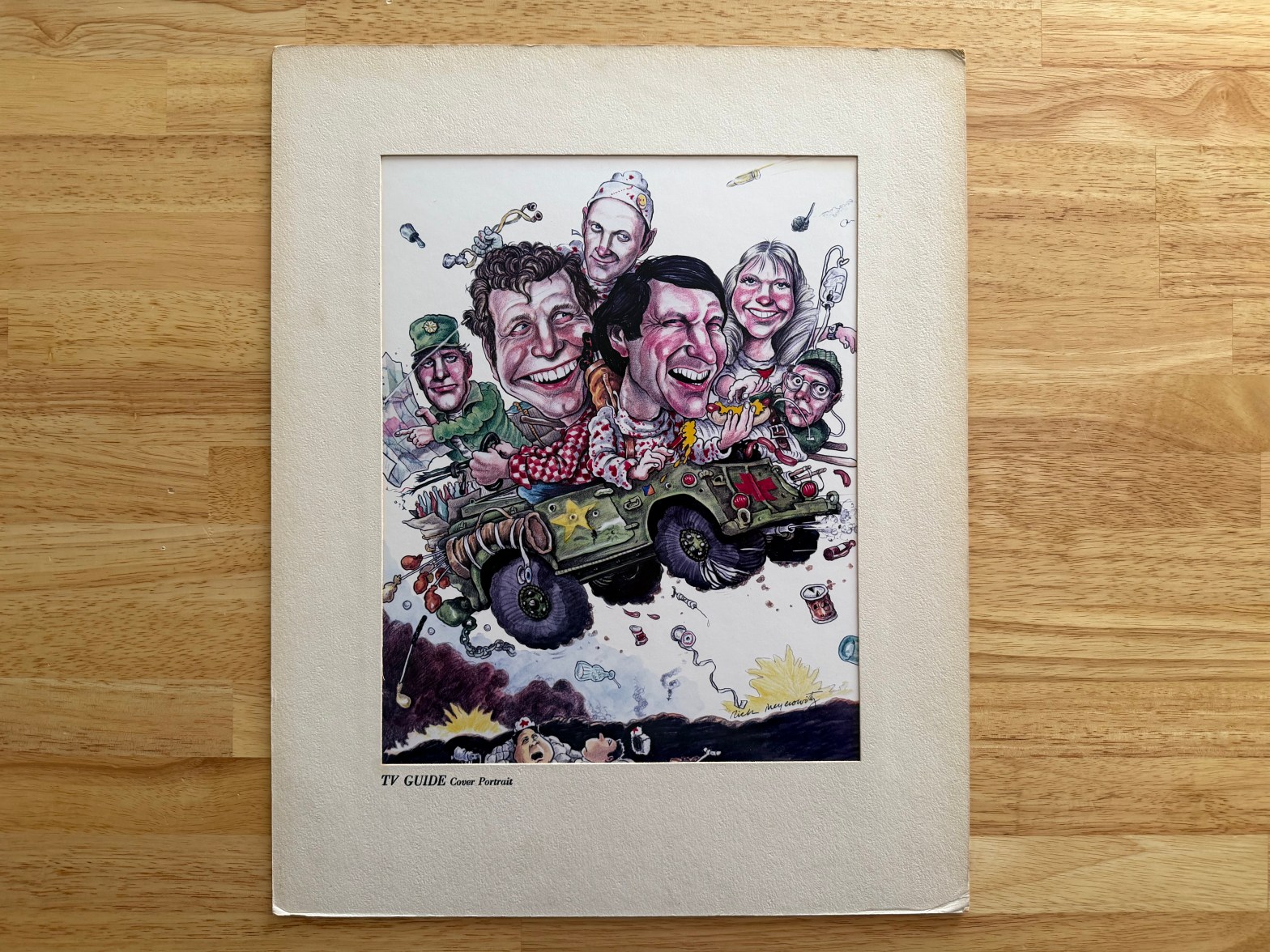
In the 1970s, television fans primarily had two ways to find out what was going to air each week: their local newspaper and TV Guide magazine. TV Guide has been around since the 1950s, and it is still published today. Each issue listed what would air each night in local markets on each of the main channels. The magazine also included articles about popular tv shows and actors, but what became iconic about TV Guide were the covers. Being featured on the cover was great publicity for a show, and M*A*S*H was featured on the cover of TV Guide several times between 1973 and 1983. The covers featured either photos of the cast or illustrations, and one of the most famous illustrations of the M*A*S*H cast was featured on the November 2, 1974 issue of TV Guide. In the collection, I not only have a copy of the magazine with this cover, but I have a printed reproduction of the cover that was made at the time. The print features the early M*A*S*H cast in a fun caricature style, but it also tells a number of stories about the illustrator, the printing process, and the company that created these TV Guide reproductions.
As a M*A*S*H fan, there is a lot to like about this TV Guide cover. It features caricatures of the early cast including Trapper, Col. Henry Blake, Frank, and Radar. Many of the M*A*S*H licensed products don’t feature the early cast because they weren’t released until later in the show’s run, but this cover offers a unique depiction of the cast. When this cover appeared, M*A*S*H was in its third season on CBS, so there were several reoccurring themes that the artist could have picked from to illustrate. The cast is in an Army Jeep, and there are various easter eggs hidden in the illustration including golf clubs, alcoholic beverages, and medical instruments. The more I looked at the TV Guide cover, the more details I picked out. Then, I acquired the print, which is approximately 20 inches by 16 inches matted, and that level of detail allowed me to pick out even more details in the image.
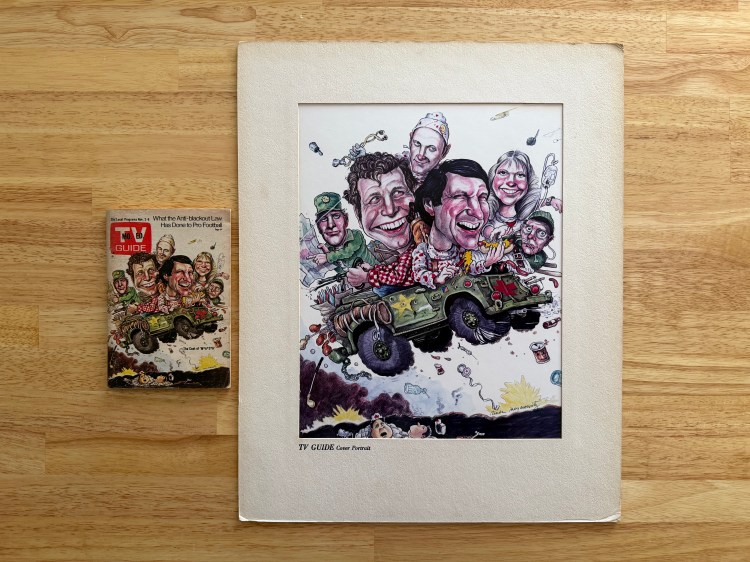
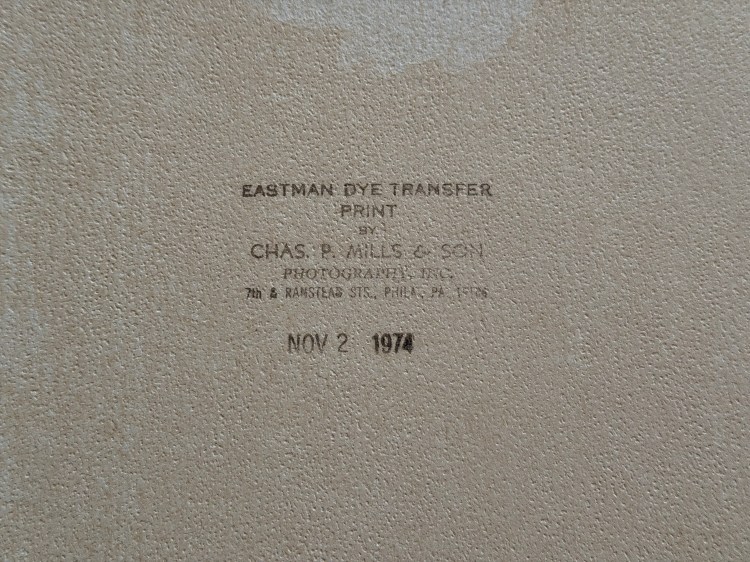
After acquiring this print, I became fascinated with several details about it. First, the artist is Rick Meyerowitz. He is a well known illustrator and is most famous for his work in the National Lampoon magazine. The magazine was well known for its humor, and ran from 1970 to 1998, and Meyerowitz’s unique style was widely featured. Then, there was an intriguing stamp on the back of the print saying that it was an “Eastman Dye Transfer” printed by Charles P. Mills and Son in Philadelphia. The stamp led me on several other searches! Charles P. Mills & Son was a well known photography studio, and the building they worked out of still exists today. However, the company has gone out of business. Then, there was a the Eastman Dye Transfer print. What did that mean? The Eastman Museum features a few write-ups on the process. There is a dye-transfer process for Technicolor film that they detail. But there was also a shorter article on the printing process. The process is similar to lithography but shares some traits with photography. There is a YouTube video that demonstrates the process. So what makes an Eastman Dye Transfer print unique? Its longevity. The print of this TV Guide cover was produced over 50 years ago, but the colors are still just as bright and sharp as they were then. How the print was stored plays a role in its longevity, but lithographs on standard paper do tend to fade over time in the light. This print has more in common with a photograph, so it has stood the test of time.
When I purchased this TV Guide cover print a few years ago, I never expected to learn about a unique printing process produced by a family owned business in Philadelphia. And this TV Guide cover isn’t the only one that I have produced by Charles P. Mills & Son using the Eastman Dye Transfer process. I have another M*A*S*H print from 1978 and an AfterMASH TV Guide cover that I may feature in future posts. I find it interesting that there are TV Guide covers available for sale that were produced in period. That suggests that there were fans of the artwork who were willing to pay for high quality reproductions. And it’s hard to blame them. There are several M*A*S*H TV Guide covers that I would like to have in the collection that I have not seen printed like this one. In M*A*S*H‘s era, TV Guide was an ephemeral weekly publication. It told you what would be on television each night for one week, and then you got the next issue for the next week. But there are some TV Guide covers that are suitable for framing, and I am grateful that people had the foresight to hang on to the ones that were.
 The M*A*S*H Historian
That is off the charts cool! Do you keep it stored in a special place or in a plastic sleeve to preserve it? Did you take this out of a frame? I’d be afraid to handle it.
As always, thanks for sharing!
LikeLike
Thanks! I keep it stored in a flat, archive box. When I got it, it was in a frame, but not a good one. It had a cardboard backing and no padding, so I got rid of the frame because the acid in the backing will eventually bleed through and damage the print. The prints are actually pretty robust, but I am careful to be sure it is stored properly and out of direct light!
LikeLike