
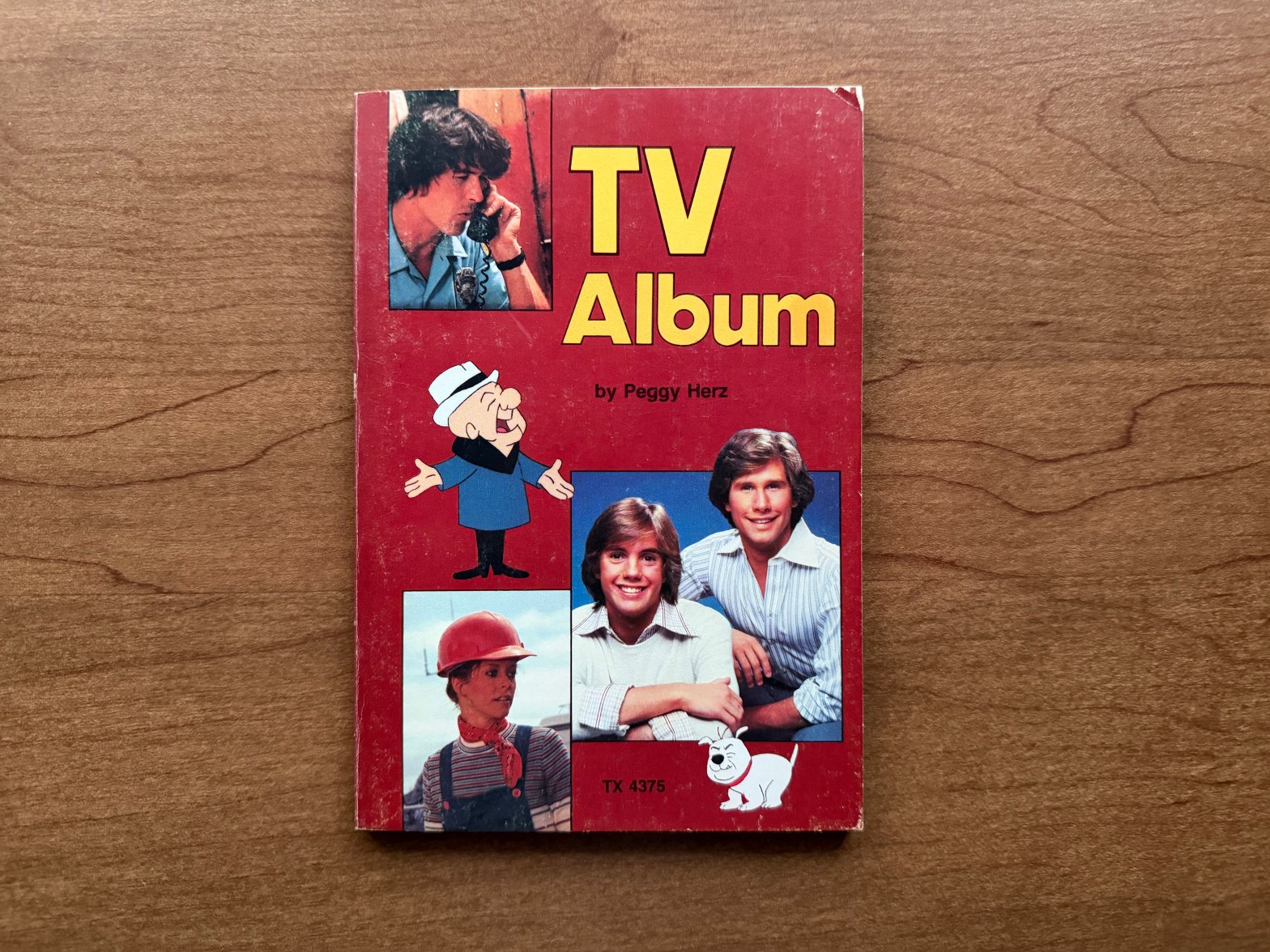
What is it?
Herz, Peggy. TV Album. New York: Scholastic Book Services, 1978.
Why should M*A*S*H fans care?
M*A*S*H was part of a rich era in the history of television, and children and teens made up a large part of the television audience. Herz places M*A*S*H in the context of the other top shows and gives us a glimpse into the popular culture of the time.
As a M*A*S*H fan, what part(s) should I read?
As always, I recommend reading the whole book because it is a quick read, and it is interesting to see the shows that are featured that have not stood the test of time. M*A*S*H is featured in chapter of comedy shows, however, if you only want to read about M*A*S*H and its fellow sit-coms.
TL;DR Review
Peggy Herz once again discusses television for children’s audience, but this book is different from the others I’ve reviewed. Instead of offering insights into the stars of a small grouping of shows, Herz offers a thematic review of the popular shows on television in 1977 and 1978. There is a wide variety of shows presented in this book, including M*A*S*H.
Full Review
Peggy Herz was a Scholastic writer known for her television writing for classroom magazines and her Book Club books. I have written about several of her books the last several months (All About M*A*S*H, TV’s Top Ten: Shows and their Stars, TV Time ’74, and TV Close-Ups), but this book followed a different formula. Instead of featuring one of the primary cast members from a dozen shows, she reviewed a wide selection of shows by theme (family, comedy, detectives, animals, etc.). The book is a wider survey of the popular television shows of the late 1970s, and, of course, she included M*A*S*H.
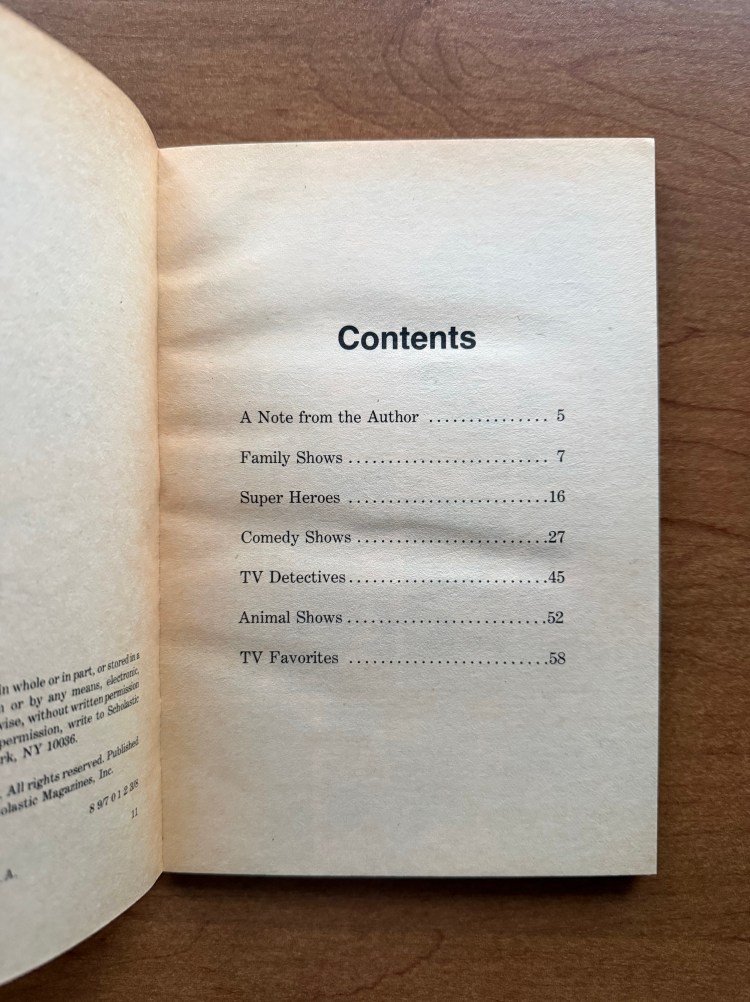
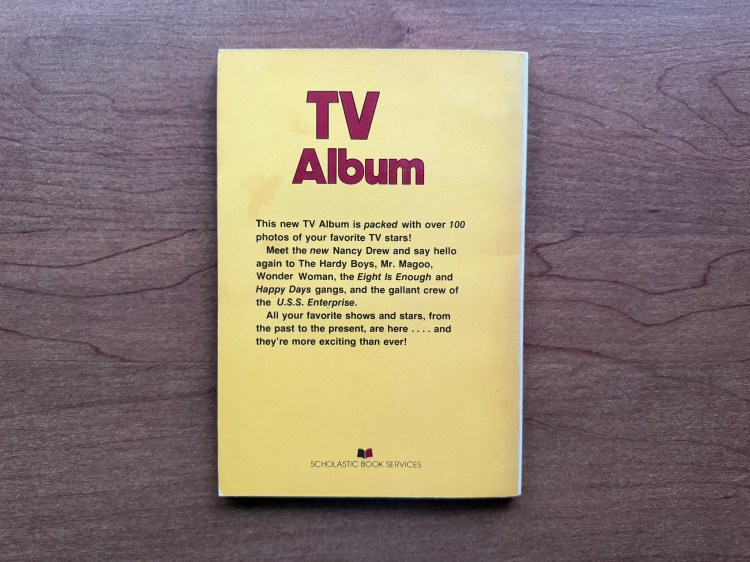
Herz’s books for Scholastic follow a familiar formula. While she wrote several books that focused on one show, the majority of the books I have are a collection of articles about stars from popular shows. TV Album is unique because, as its title suggests, it is rich with black and white images from each show, but it also has blurbs on a selection of shows and its cast members. She divided the shows in to several categories including family shows (Little House on the Prairie, What’s Happening!, Eight is Enough), super heroes (Wonder Woman, The Bionic Woman, The Six Million Dollar Man, Star Trek), comedy shows (Laverne & Shirley, Happy Days, The Flintstones, etc.), TV detectives (The Hardy Boys, Columbo), animal shows (Grizzly Adams, Black Beauty), and TV favorites (The Waltons, Emergency, I Love Lucy, The Brady Bunch, etc.). Herz presented a mix of shows that were still produced in 1977, and several shows that had ended but remained popular in syndication.
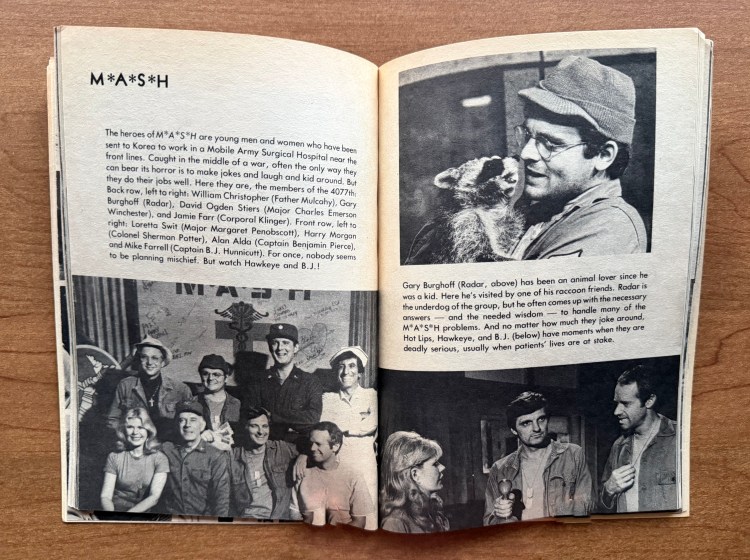
When I first acquired this book, I tried to guess in which chapter of the book M*A*S*H would appear. I suspected it would either been the chapters focused on comedy shows or TV favorites. M*A*S*H started as comedy, but by 1977, it had morphed into what became known as a “dramedy”. It could have easily fit in either chapter. Herz put M*A*S*H in the comedy chapter, and that isn’t a bad choice since the series was in its sixth season when the book was published. In the four pages of photos and information on M*A*S*H, we learn about the series and several of the actors. She highlighted Gary Burghoff’s love of animals, and she also discussed David Ogden Stiers, who was a new addition to the series in 1977. She also highlighted a few of the show’s recent episodes including “The M*A*S*H Olympics” (06×10) and the derby party the 4077th held in “Potter’s Retirement” (06×22). Since each show only gets a few pages, the details are light, but the photos do make up for it. In the four pages on which M*A*S*H appears, there are six photos!
As I have mentioned in all my previous reviews, I have a soft spot for Scholastic since I worked for them, and because of their mission to ensure that books get into the hands of children who need them. Reading is important, and when kids fall behind early, it can be hard to for them to catch up. Books about popular culture may not be “literature,” but they do encourage some kids to read who might be intimidated by other books. Herz’s books on television appealed to a wide variety of kids because they were likely fans of television. Scholastic understood the appeal of television, and they included popular shows and actors in their Book Club books and classroom magazines. In her introduction, Herz discusses what made television relatable to both adults and children in the 1970s. The television was in your home, and not in a public place. Families often gathered around the television to watch their favorite shows. Herz sums that up perfectly saying, “We turn on our TV sets to see what is happening to the people we care about — the Ingalls in Little House on the Prairie, the Cunnninghams in Happy Days, the doctors in M*A*S*H. We want to share their lives, to laugh and cry with them. They are like magnets, pulling us back, week after week, to share in their adventures.” That remains true to this day.

