I recently watched an episode of Cheers, and it was one of the infamous episodes featuring the rivalry between the Cheers gang and Gary’s Olde Towne Tavern. That led me to think about how, in M*A*S*H, the 4077th rarely challenged rival MASH units despite that being a central premise of the original movie. There were a few episodes that featured boxing and bowling, and the 8063rd did seem to be the camp’s primary friendly rival. When I really thought about it, there were a few episodes featuring the 8063rd that came to mind. One of those episodes was “Run for the Money” (11×09) which has a mix of rivalry, Klinger’s shenanigans, and trading favors. These became running storylines throughout M*A*S*H, and there are not many episodes that combine all three! In this week’s post, let’s take a deeper look at “Run for the Money.”
The Script
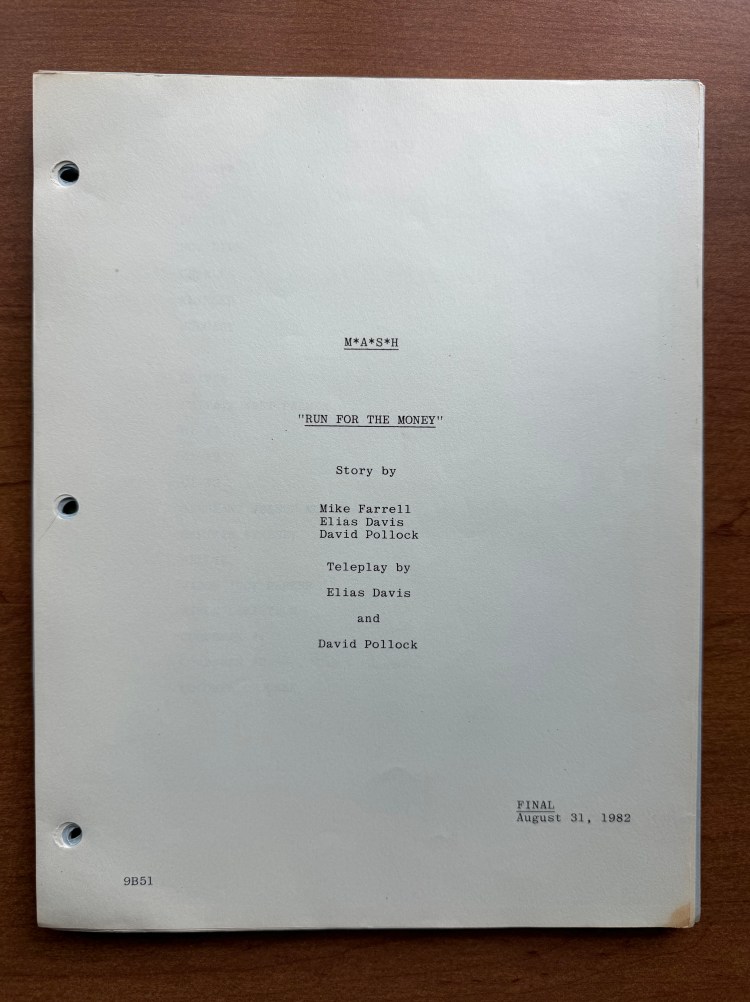
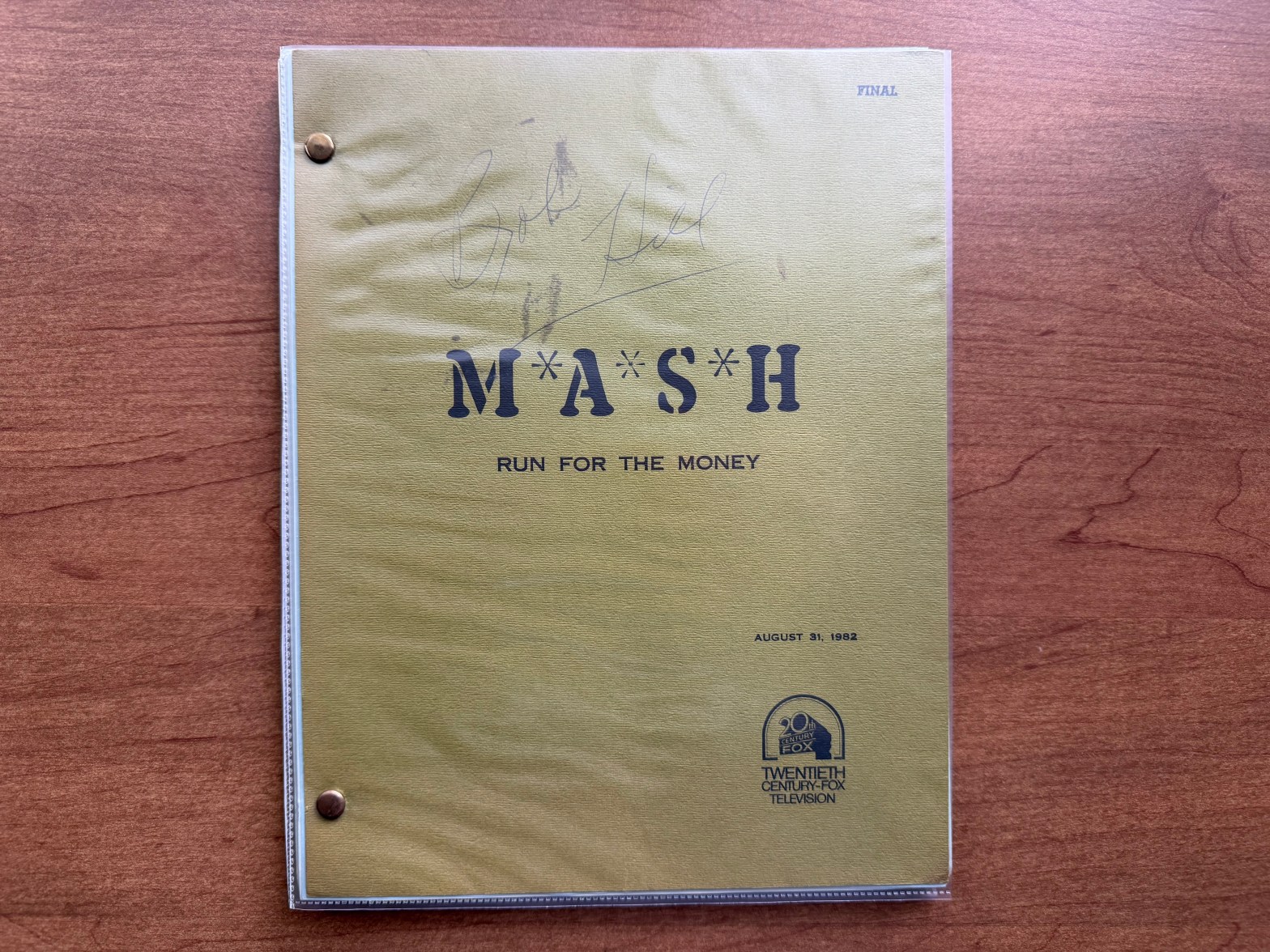
This script is a final draft dated August 31, 1982. The episode aired on CBS on December 20, 1982. As for the writing credits, the story is credited to Mike Farrell and the writing team of Elias Davis & David Pollock. Davis and Pollock also receive credit for writing the teleplay. Farrell, in addition to playing B.J., received credit for writing four episodes of M*A*S*H and for directing five. Davis and Pollock are credited with writing 18 episodes in the final four seasons. “Run for the Money” was directed by Nell Cox who was one of the few women to direct M*A*S*H. She is credited with directing three episodes, and she also served as a director on other series including Lou Grant, Falcon Crest, and The Love Boat.
Like a few scripts I have featured previously, this script belonged to Bob Hill. He worked on set as a stand-in for Mike Farrell in the final seasons of the series. Since he was on the set for filming, he received, and thankfully kept, the production documents. This script contains the Call Sheets and Shooting Schedule. As with most episodes of M*A*S*H, “Run for the Money” was filmed in four days, including a visit to Malibu Creek State Park for the outdoor scenes. Since there were so many outdoor scenes in this episode, two days were filmed outdoors with the other two days being filmed on Stage 9. In addition to those production documents, Hill also saved the cover page a set of revised pages dated September 22, 1982. That is the only set of revised pages in this script. Since that was the first day of filming, it is likely no other revisions were made because there were not any major differences between the script and the final episode.
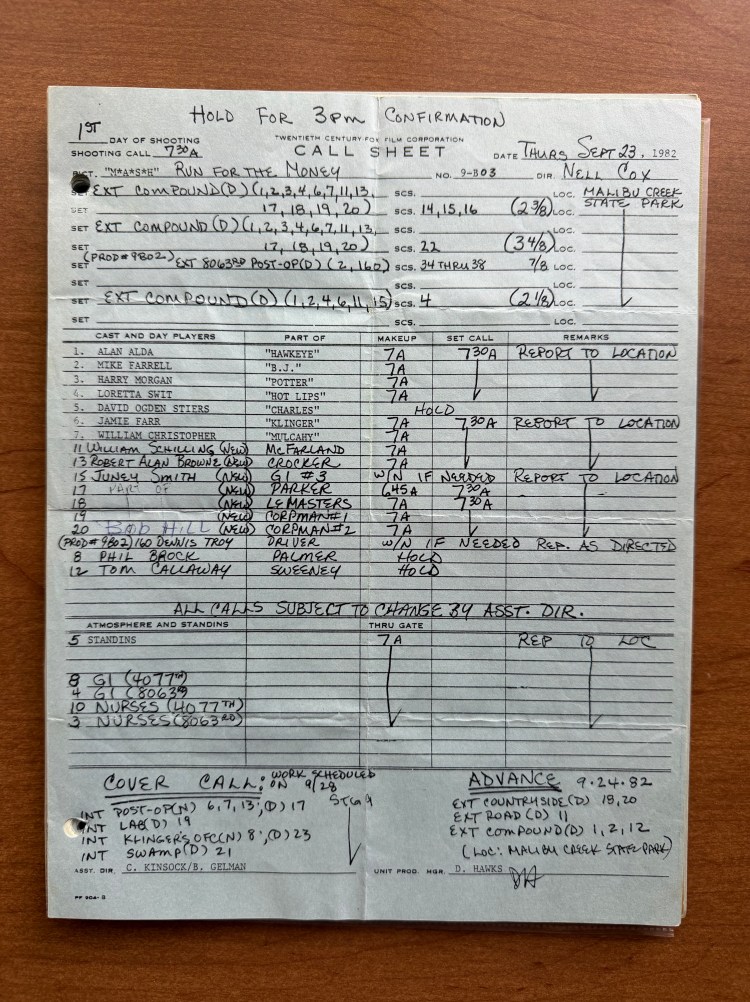
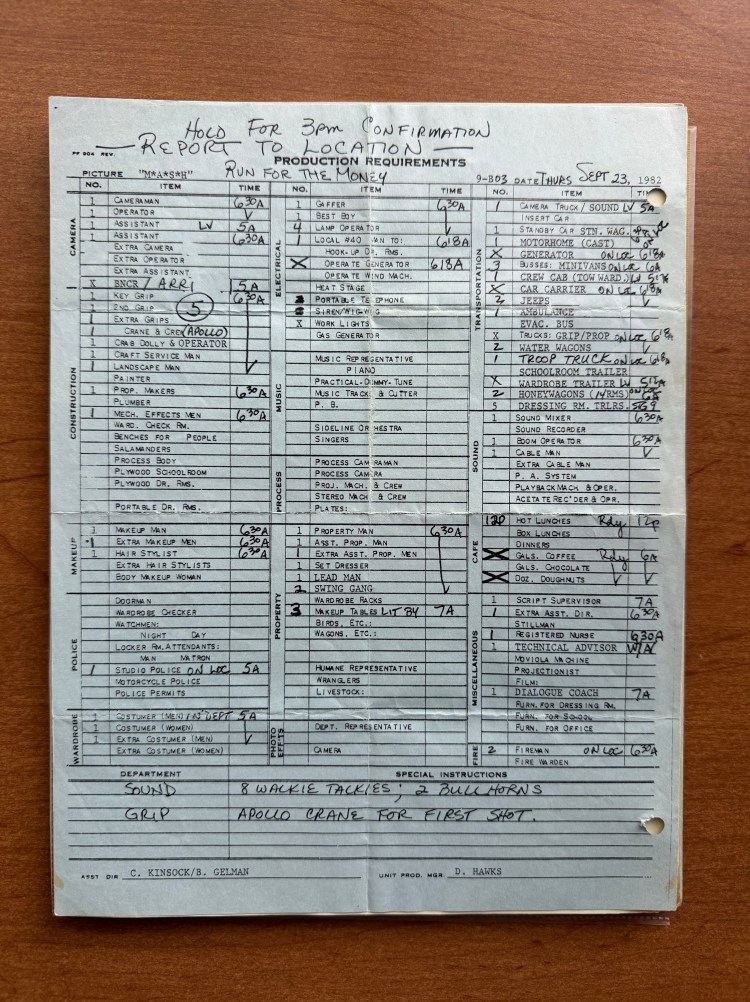
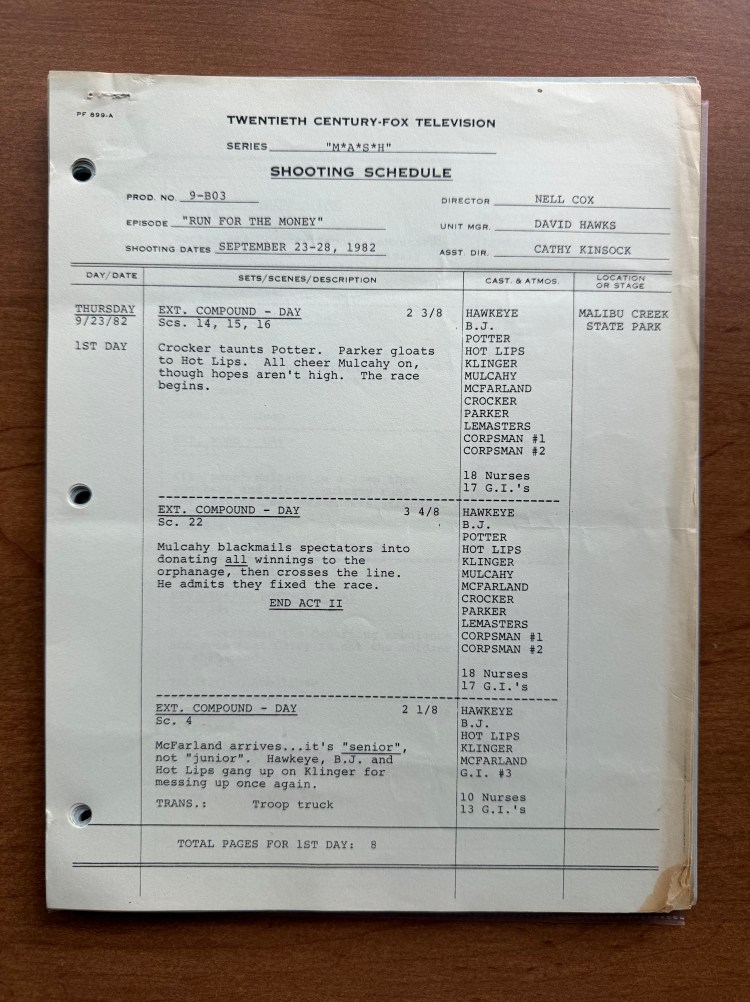
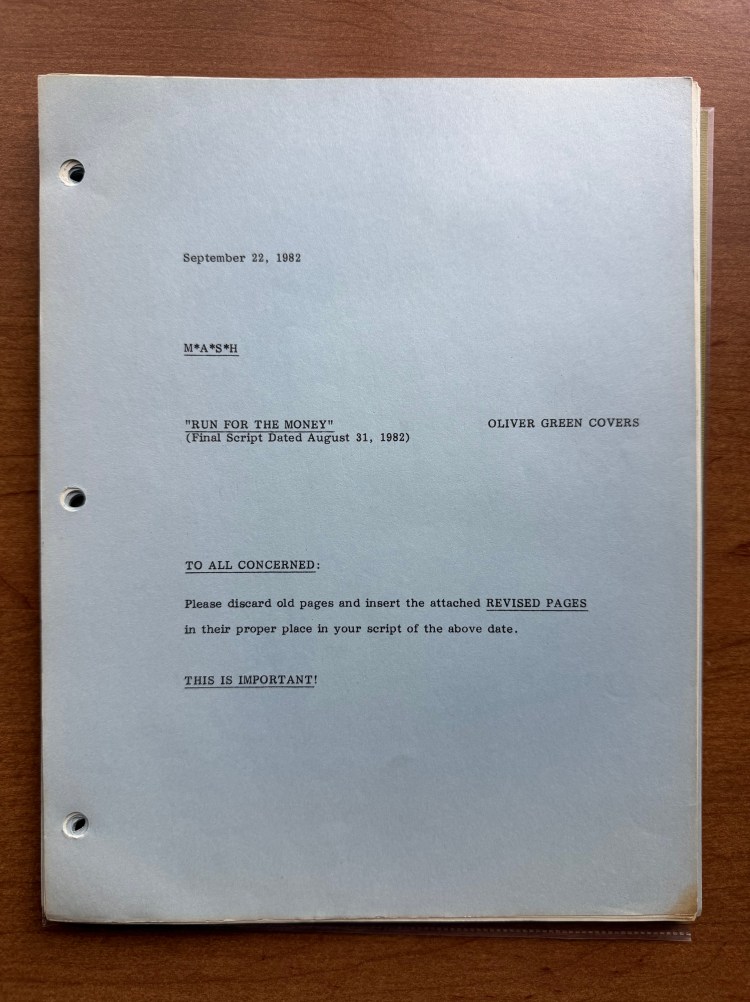
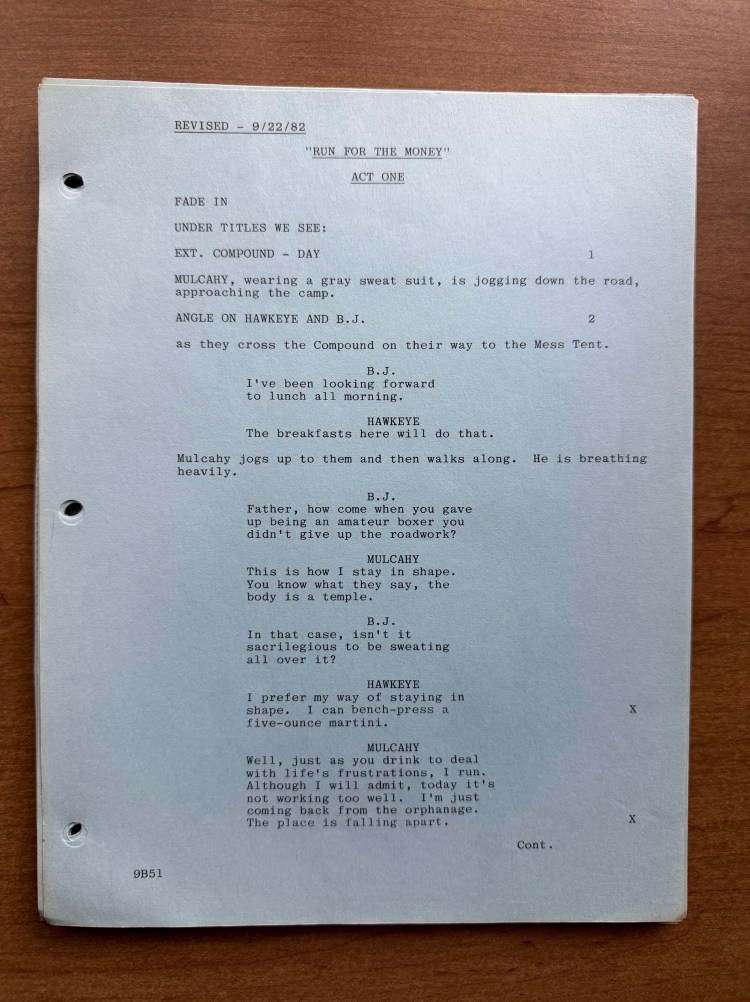
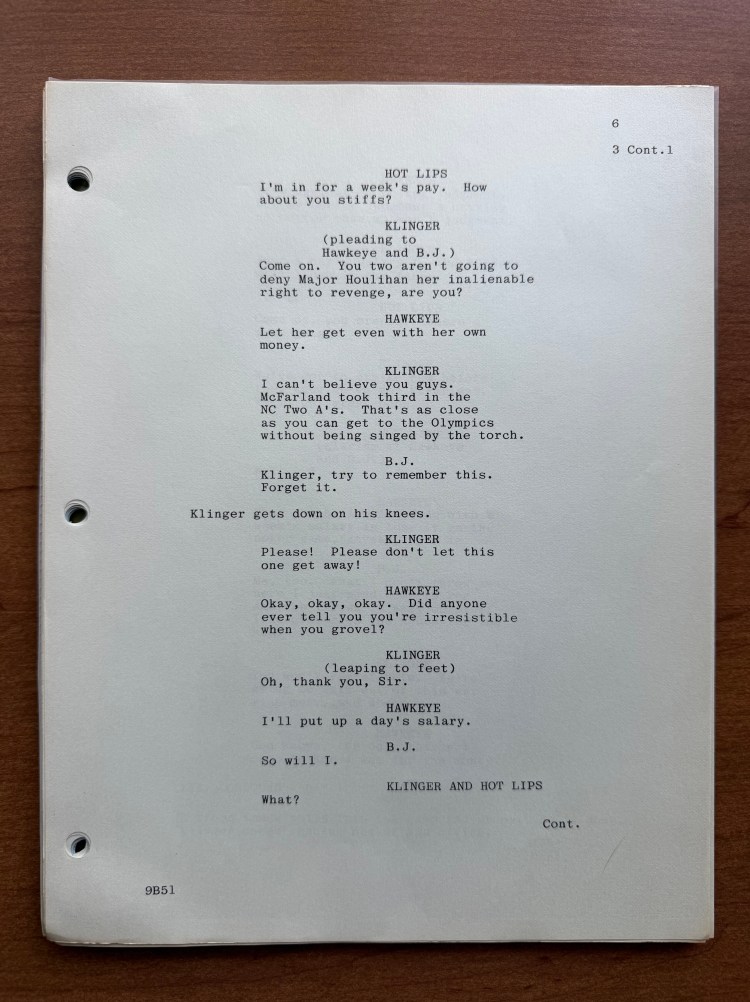
These scripts are my favorites to follow along with because they tell more of the story than just the words on the page. The Calls Sheets detailed who was present on set every day. The Shooting Schedule broke down which scenes were filmed each day. Since the scenes weren’t filmed in order, it’s fun to pay attention to the details and continuity that had to be preserved. The revised pages show the writers at work making changes and integrating the suggestions from the cast following their table read. By season 11, the M*A*S*H cast and crew had creating episodes down to a science! Many of them had worked together for years, or in some cases, for over a decade. They knew what to expect, and they also knew the expectations. Each script tells a story, and each person who worked on M*A*S*H has a story to tell, even if they weren’t someone you saw on screen.
Final Episode
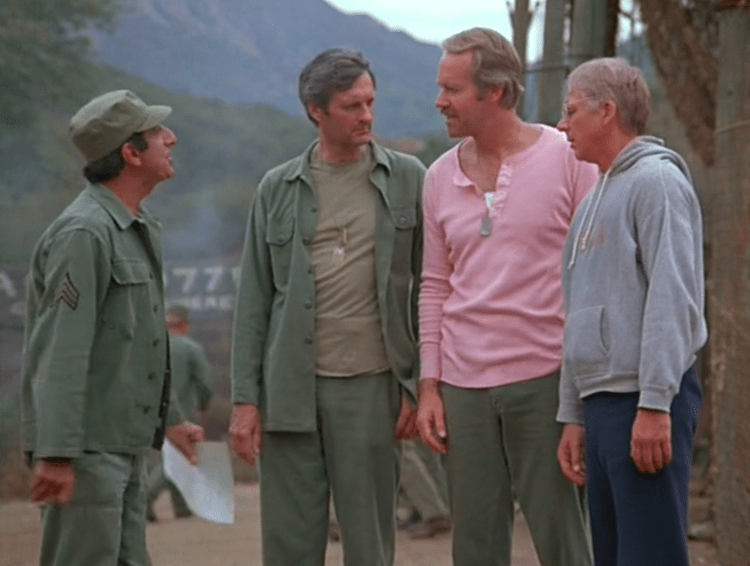
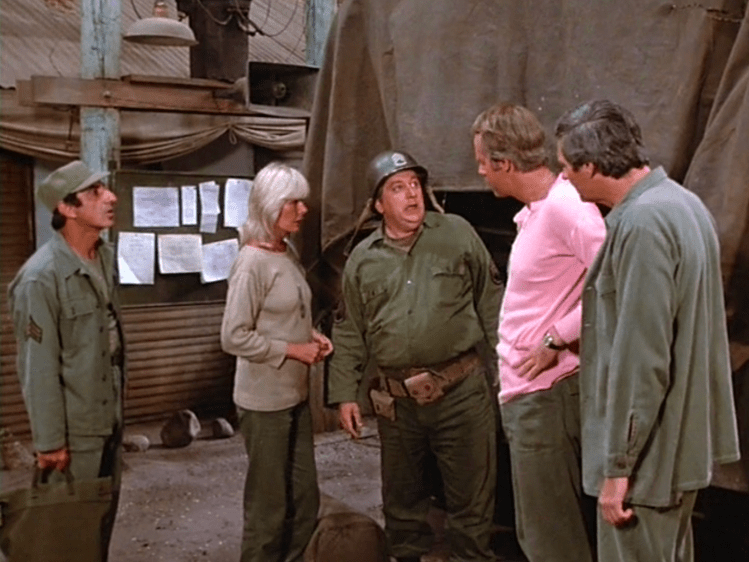
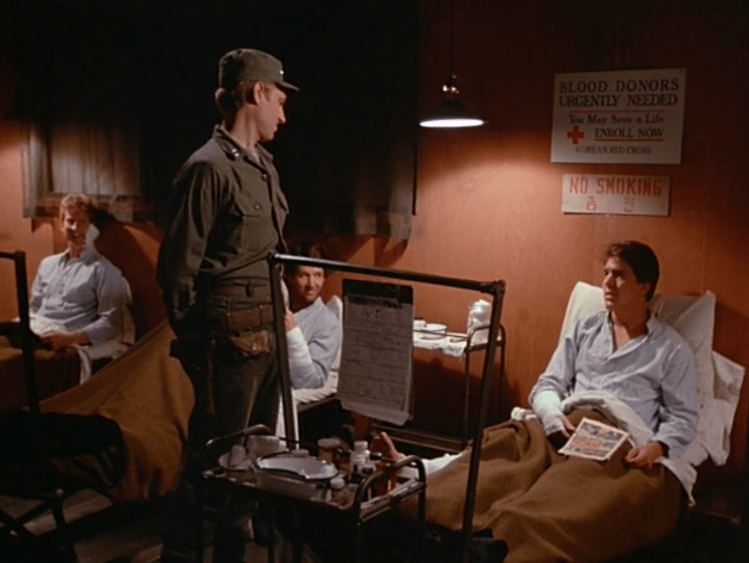
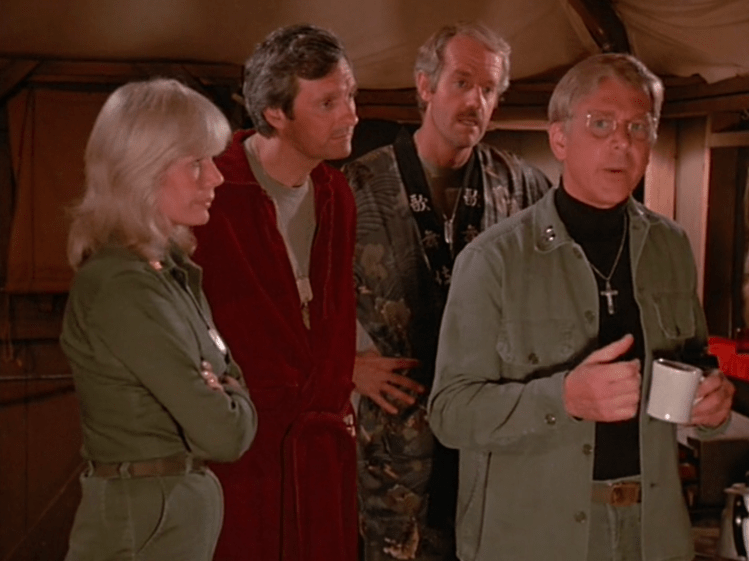
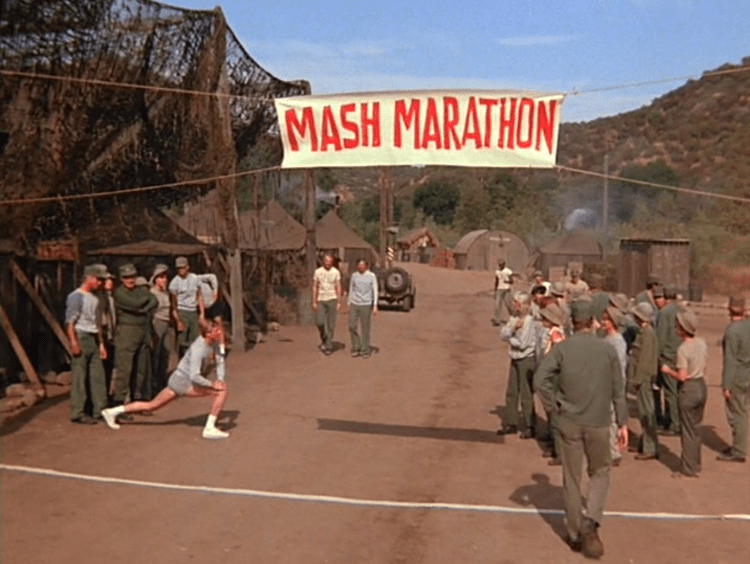
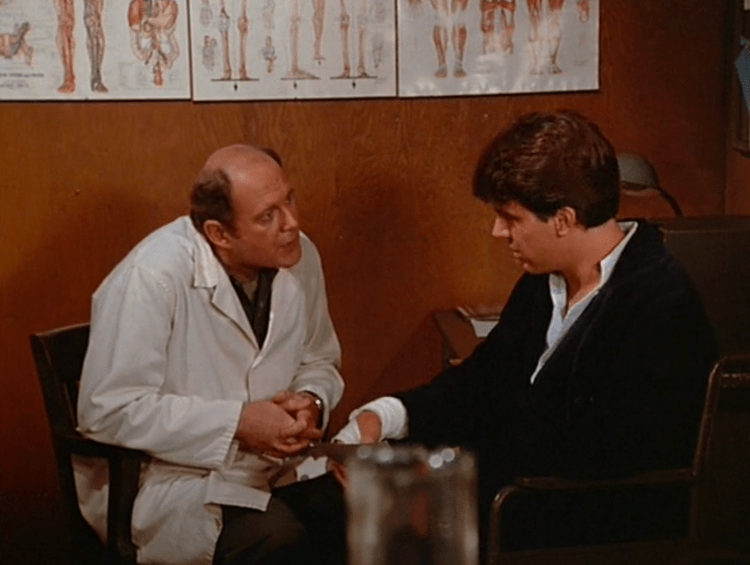
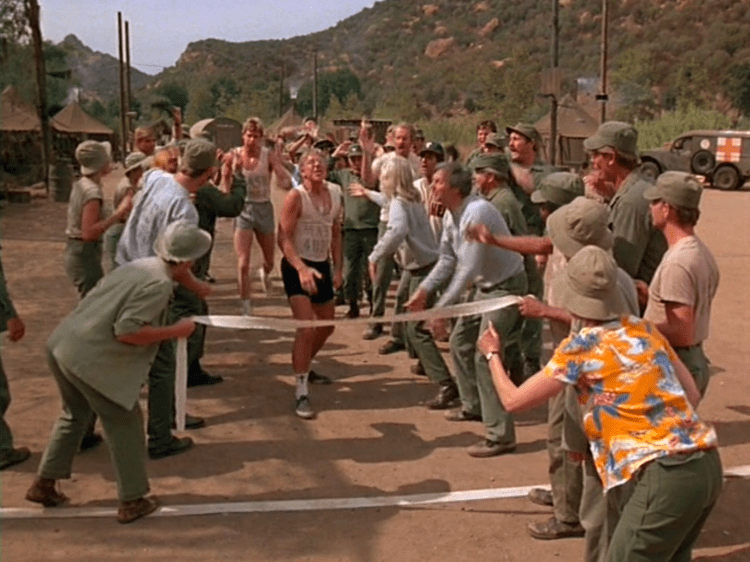
Klinger finds out that a world class runner, Jessup McFarland, is joining the 4077th, and he wants to challenge the 8063rd to a race before word gets out. He convinces Margaret, Hawkeye, and B.J. to place bets. When the runner arrives, it turns out to be Jessup McFarland Sr. Klinger and the gang have to find an alternative runner, and they convince Father Mulcahy to run as long as the orphanage gets a new roof. Mulcahy trains, and during the race, he talks to the 8063rd’s runner and gets him to throw the race. But Mulcahy will only cross the finish line if everyone agrees to donate their winnings to the orphanage. Meanwhile, a group of wounded engineers arrive, and one of the engineers has a stutter. Palmer’s fellow engineers, and even his commanding officer, make fun of him for it, blame him for the accident that caused them to be wounded, and call him “dumb.” Charles takes an interest in Palmer, and discovers that he has a very high I.Q. He talks to Palmer, and tells him that a stutter is not indication of intelligence, and several prominent historical figures stuttered. When Palmer asks Charles why he was helping him, Charles doesn’t answer. But later, Charles listens to a tape from his sister, Honoria, and she has stutter as well.
I like this episode. It has a great dichotomy between the A-story and B-story. The two storylines really only intersect at the beginning when the wounded arrive, but they quickly diverge and never meet again. That is a form of writing that can be difficult to pull off without the storylines feeling disconnected, but it works well here. The race between Father Mulcahy and LeMasters is good, and I found it a little confusing when Jessup McFarland Sr. said that he was the 4077th’s new supply sergeant. Are they just replacing Zale? But the storyline with Charles and Private Palmer steals the show because it is well written and incredibly acted. David Ogden Stiers never disappointed in his portrayal of Charles, and I really like when they feature the softer side of his character. There are several examples of Charles relating to patients in unexpected ways, but his connection to Palmer because of Honoria was a surprise to me the first time I watched it. Suddenly, you understand why Charles was so passionate about showing Palmer that a stutter is not a weakness or a sign that someone isn’t intelligent. It’s a poignant message that felt softer and more meaningful coming from Charles instead of Hawkeye. Also, I wonder, did Charles really secretly enjoy Captain Marvel? Or was he saying that to make Palmer feel better? I choose to believe that Charles does secretly enjoy the occasional comic book as an escape from high society Boston!
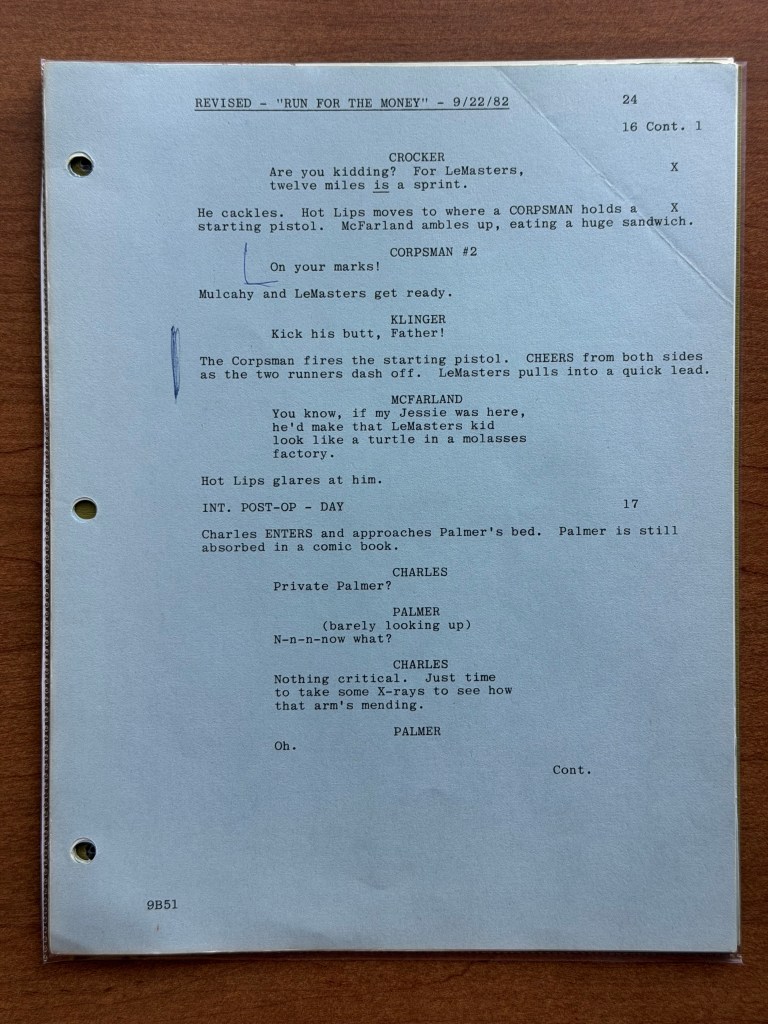
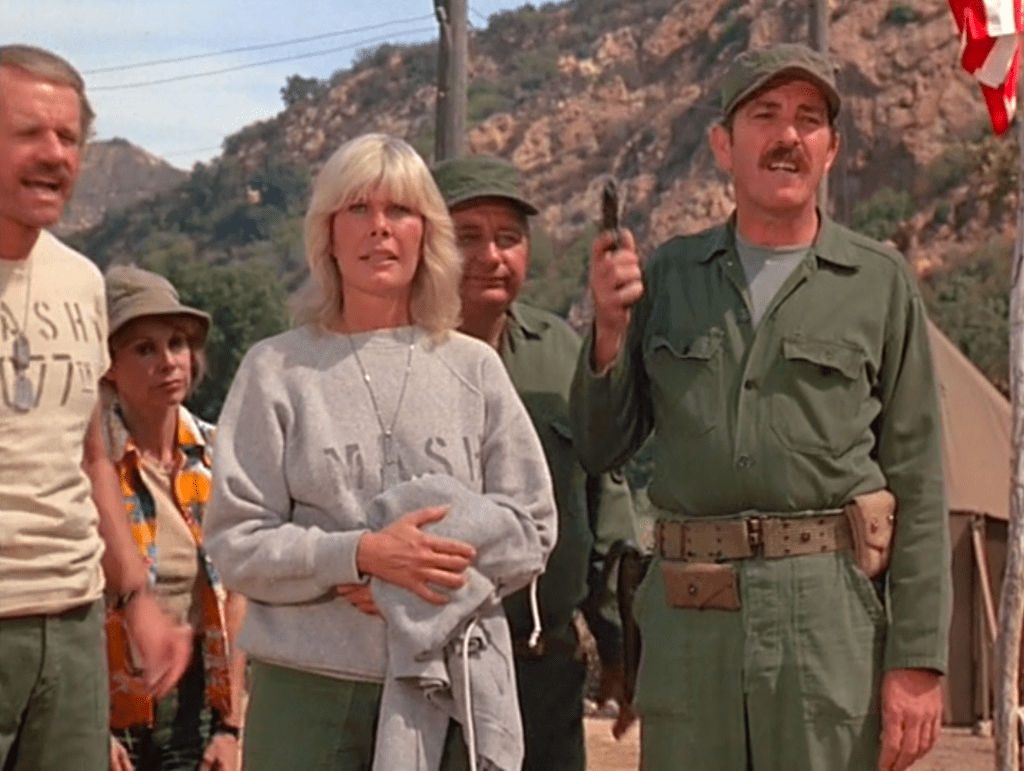
There weren’t many changes between the script and the final episode. But I did make an important discovery. As I mentioned, I have reviewed several of the scripts that belonged to Bob Hill (see the scripts for “War of Nerves” (06×04), “War Co-Respondent” (08×23), and “Strange Bedfellows” (11×11). As a stand-in, his job was to help get the scenes set up and set the actors’ marks which allowed Mike Farrell to step in to film the scene. A stand-in isn’t on screen and never appears in the credits; however, eagle eyed readers might have noticed that Bob Hill’s name is featured on the Call Sheet. He is listed as “Corpsman #2.” In the script, Hill marked the line for “Corpsman #2.” Unfortunately, IMDb or the closing credits do not credit Hill as “Corpsman #2,” but no one is credited with that role. After reviewing the scene, you can see Hill and Farrell in the same shot, and they do have a similar build and are about the same height, a key requirement for a stand-in. I feel confident saying that in the scene where the race between Father Mulcahy and LeMasters begins, Hill is portraying “Corpsman #2” and fires the starting shot. So, with this single script page, the Calls Sheet, and a screenshot from the episode, I can finally put a face with the name, Bob Hill!