
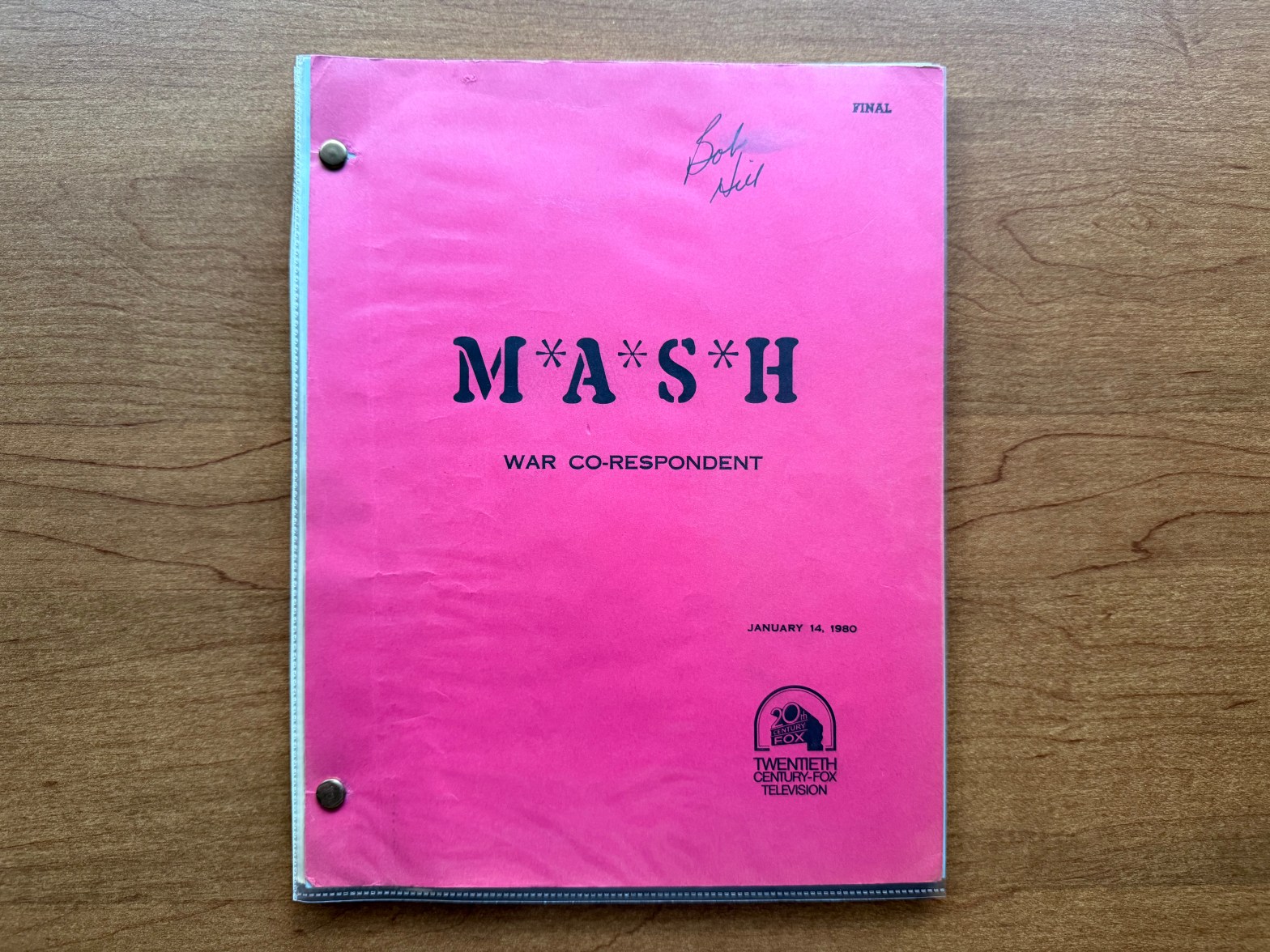
Finding episodes to review each month can be a challenge. For some months, it is easy to find a connection between a holiday or event and an episode of M*A*S*H. For June’s Script Spotlight post, the episode came to me in a different way. I listen to some podcasts that are M*A*S*H related, and several that aren’t. When I learned that Mike Farrell recently appeared on an episode of the Still Here Hollywood podcast, I knew I had to check it out. He spent most of the interview talking about his time on M*A*S*H, and one of the conversations that came up was about B.J. and his fidelity to Peg. We know that Trapper and Henry weren’t faithful to their wives in the series, and the writers consciously decided to make B.J. different from the doctor he was replacing. In the interview, Farrell talks about how a line from “The More I See You” (04×22) about B.J. never being “tempted” to stray from his marriage felt unrealistic. The fact that B.J. had never even been tempted didn’t ring true to Farrell, so the writers wrote a script in which B.J. fell off the fidelity wagon. That episode, “Hanky Panky” (05×18) left whether or not B.J. strayed from Peg open for the audience to decide because we never saw it happen. But there was another episode in which B.J. was tempted, and openly pursued by another woman. “War Co-Respondent” (08×23) was written by Farrell, and it shows how B.J. resisted the temptation of straying, and it is the subject of this week’s post!
The Script
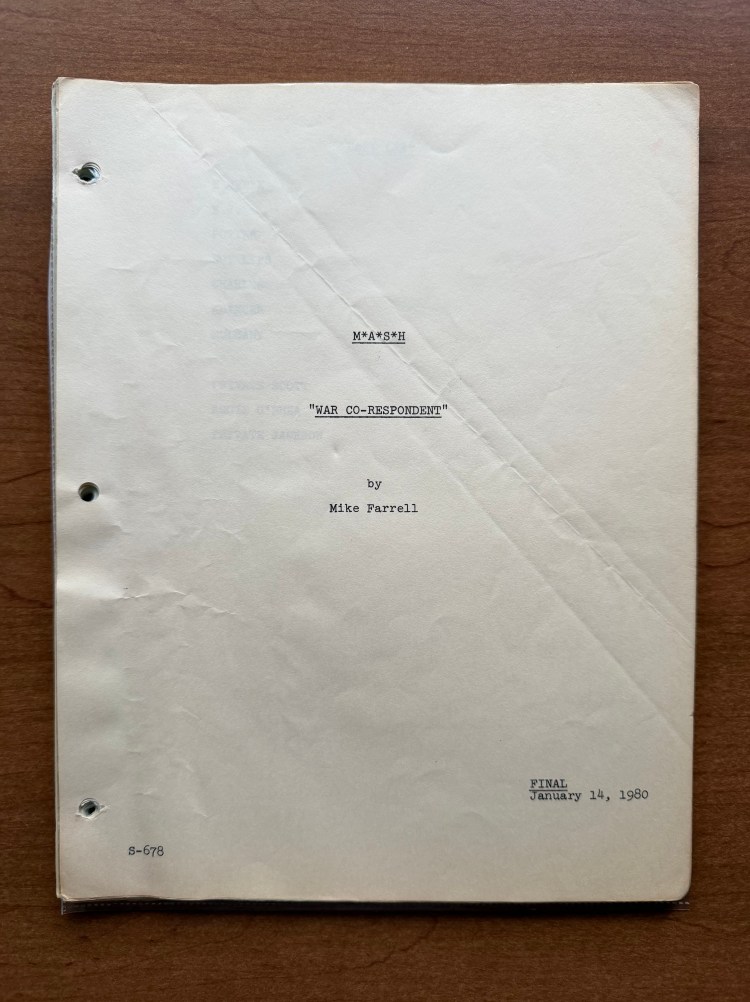
The script in the collection is a Final draft dated January 14, 1980. The episode was the 22nd of season eight, and it debuted on CBS on March 3, 1980. As I mentioned in the introduction, the episode was written by Farrell, who is credited with writing four episodes of M*A*S*H in seasons eight through eleven. Farrell also directed this episode, and it was his third time directing M*A*S*H. He directed a total of five episodes over the series run.
This script is one of the more interesting in the collection because it not only has several of the production documents, but I know who it belonged to. Bob Hill was the stand-in for Mike Farrell in the later seasons, and he would have been used to help with blocking scenes and getting the lighting established before each scene was filmed. Hill kept detailed notes in his scripts, and he marked out pages as scenes were prepared and filmed. The script only contains one set of revised pages dated January 15, 1980, and Hill would often keep the revised pages along with the originals. Unfortunately, he didn’t do that for this script, so I cannot compare what changed on each of the revised pages. He did save the production documents. There are Call Sheets for each day of filming which included January 16, 17, 18, and 21. Each Call Sheet listed the cast members needed each day, which scenes were to be filmed, and what equipment was needed. The equipment needs listed on the back of the Call Sheets were extensive from the lighting equipment down to the number of lunches and gallons of coffee needed each day! The script also contains the original Shooting Schedule which outlined which scenes were filmed each day, and the location to be filmed (Stage 9 or Malibu Creek State Park). None of this episode was filmed out at Malibu Creek State Park.
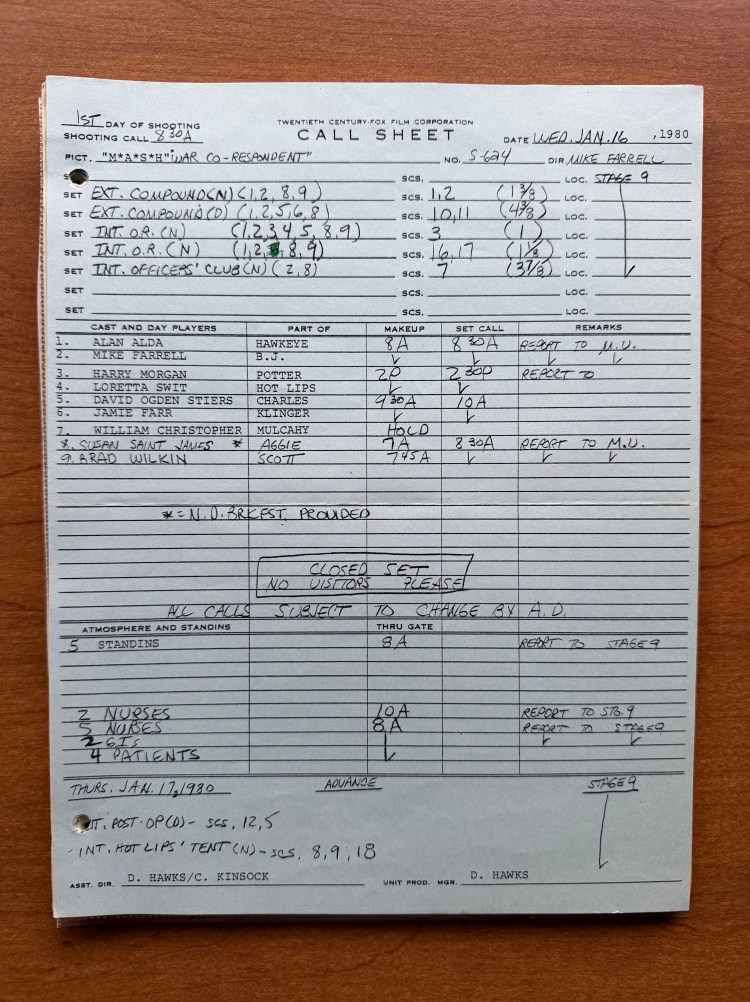
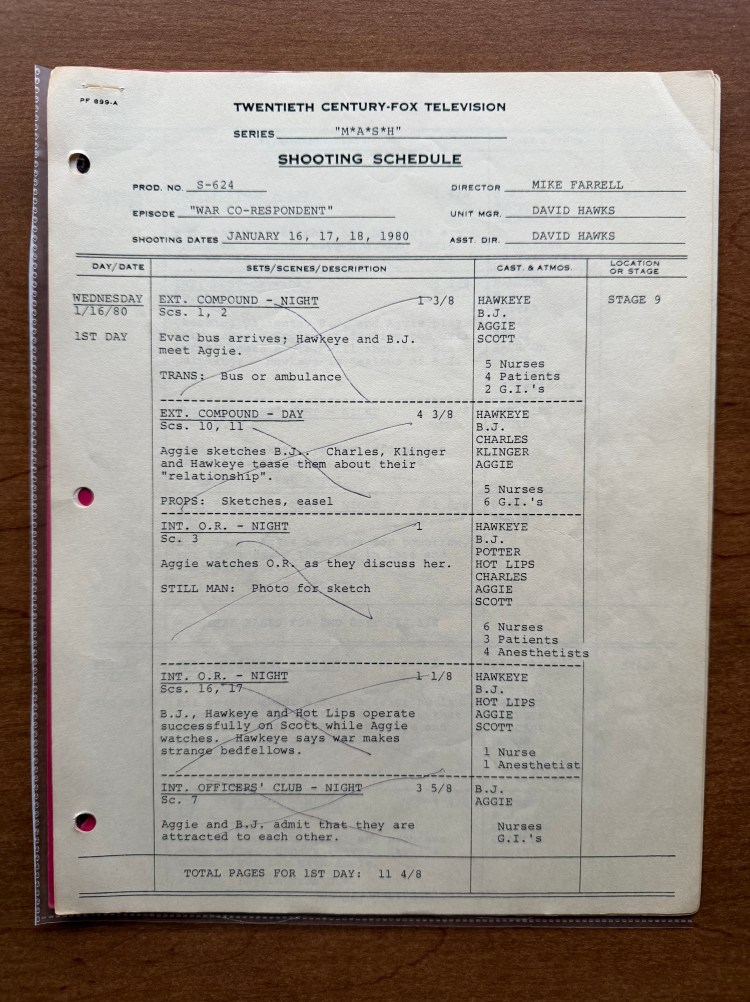
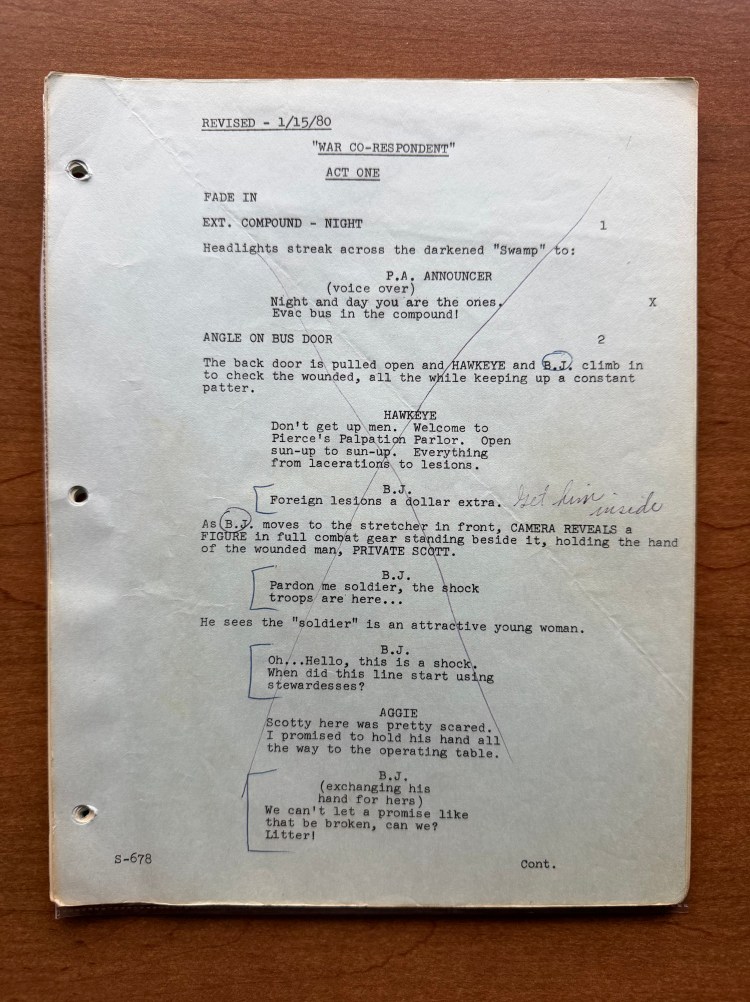
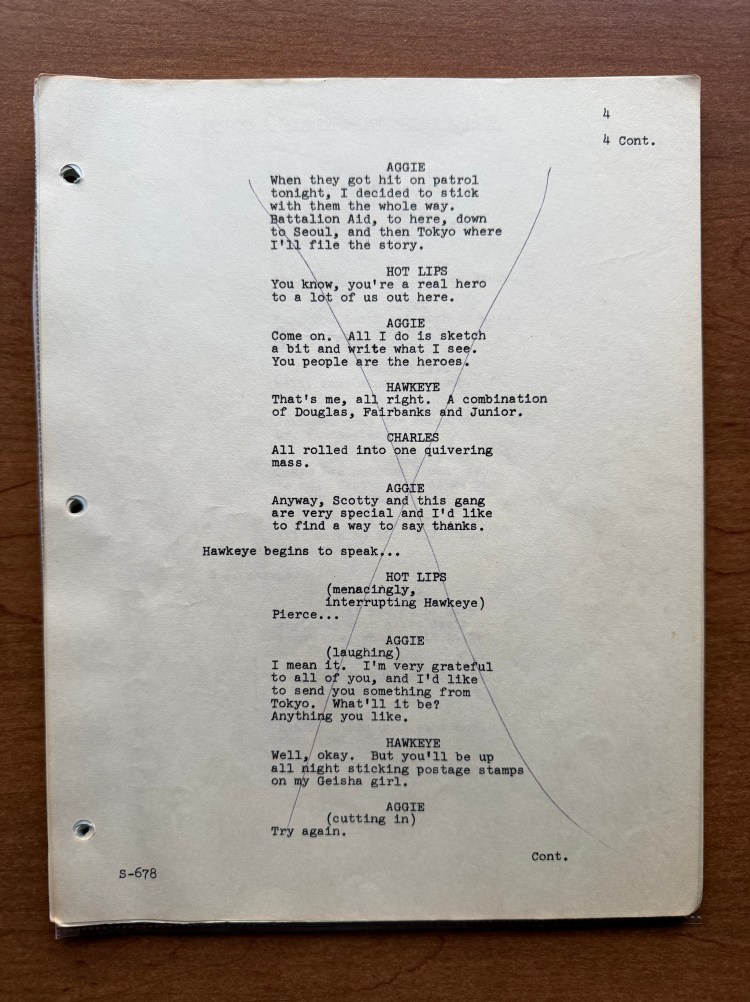
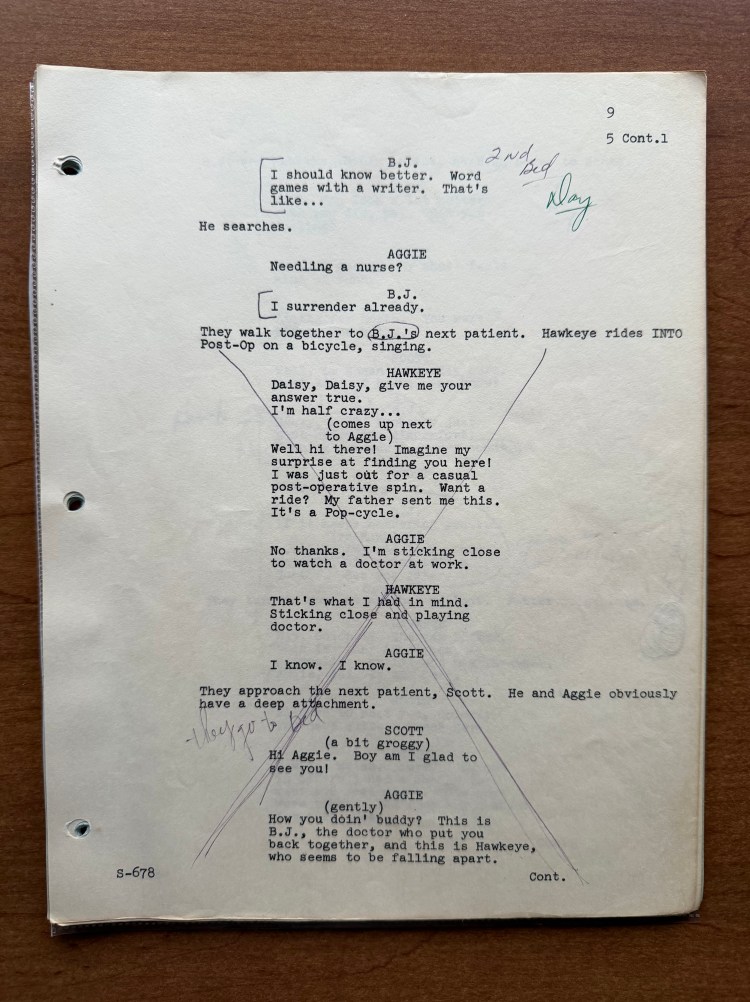
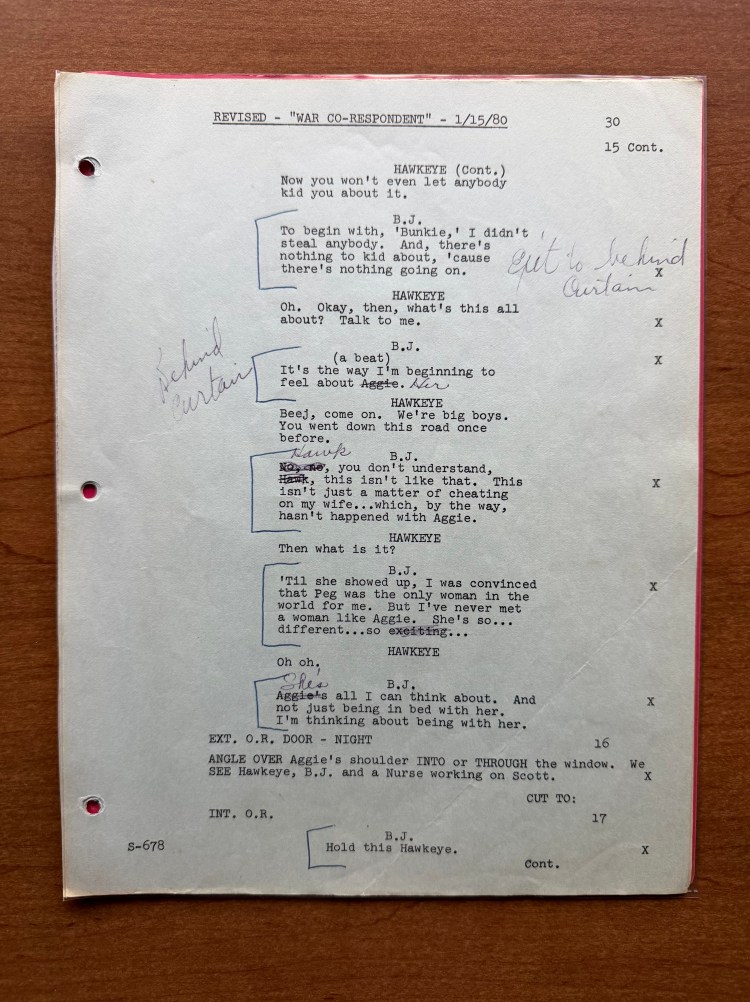
As I frequently say, each script tells the story of how an episode of M*A*S*H was produced. The Call Sheets and Shooting Schedule breaks down the amount of work that went in to each day’s filming. Filming approximately eight to ten pages of script per day doesn’t sound like a lot, but there was a lot of pre-work that went into it. The sets had to be properly decorated. The lighting had to be set up for each actor, and that was key because you didn’t want Farrell to stand in Alan Alda’s shadow or visa versa. Hill’s job was very key because he would stand in for Farrell on set while the crew got the set ready for the actors to film the scenes. The Shooting Schedule was also important because M*A*S*H wasn’t filmed in scene order. They would often film all of the scenes in the Swamp together, then all of the scenes in the O.R., followed by all of the scenes in Post-Op, and so on. The editors’ job was to put the episode back in the correct order. The documentation in each script had information that was used by everyone including the director, the actors, the prop department, the wardrobe department, the stand-ins, the editor, the sounds engineers, and the other members of the M*A*S*H crew.
The Final Episode
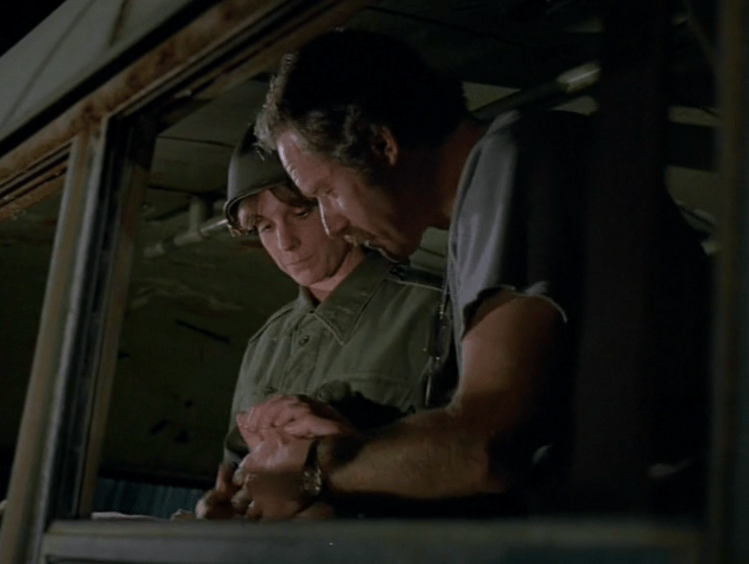
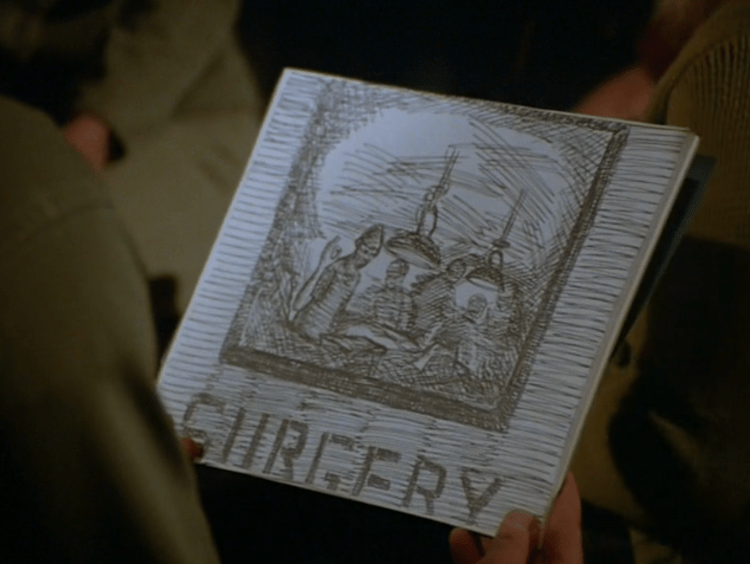
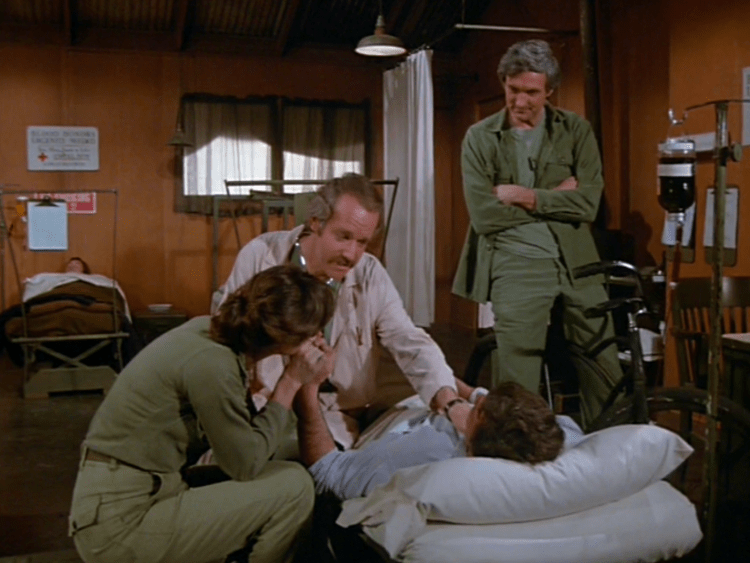
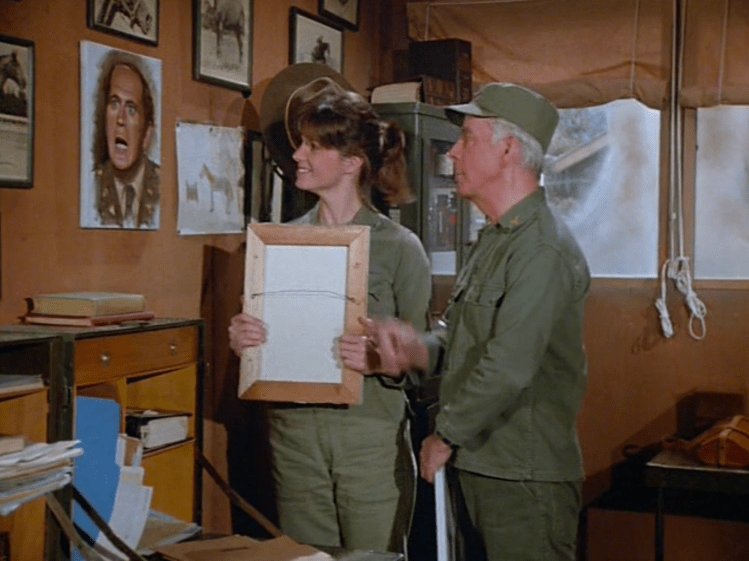
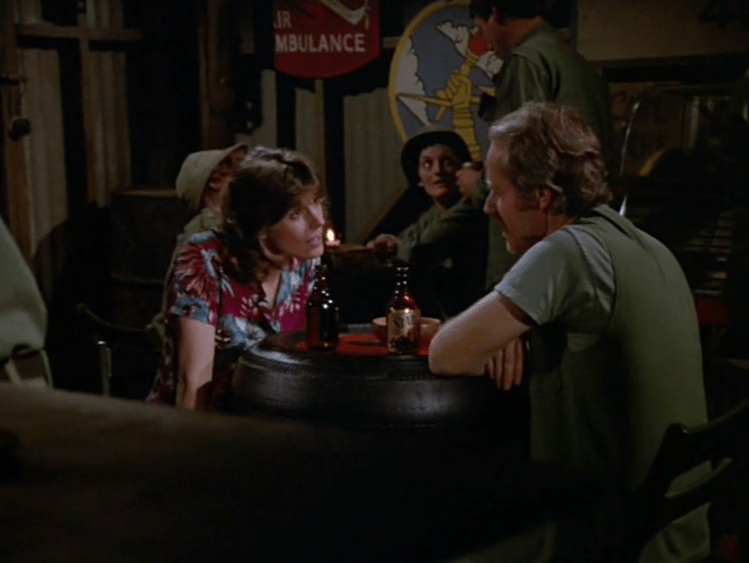
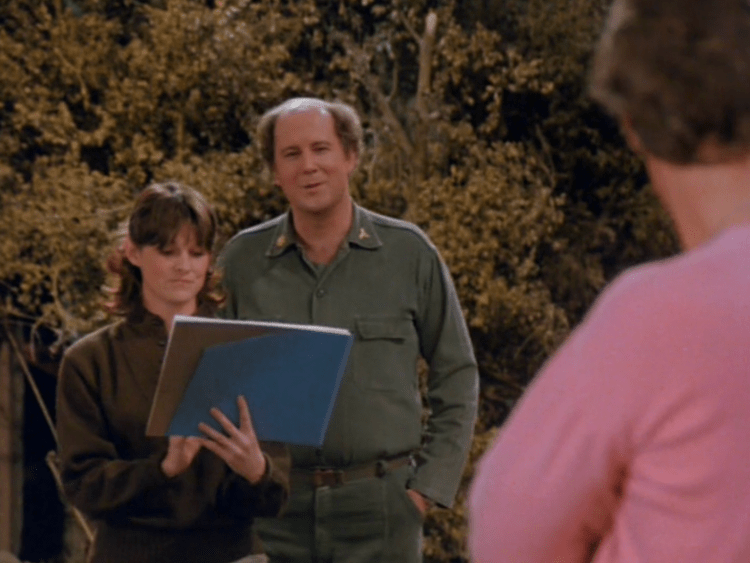
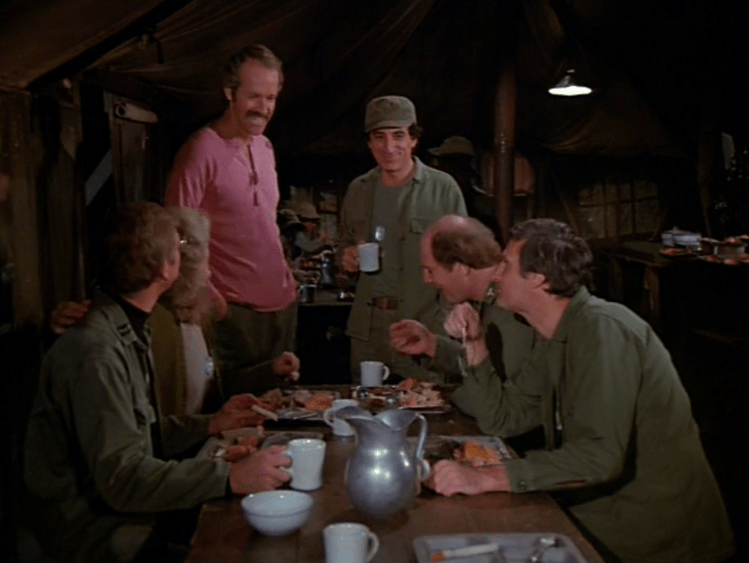
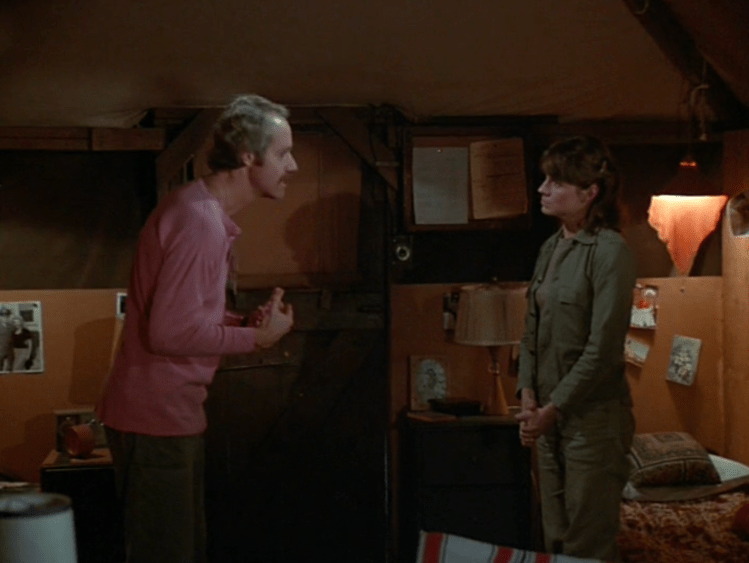
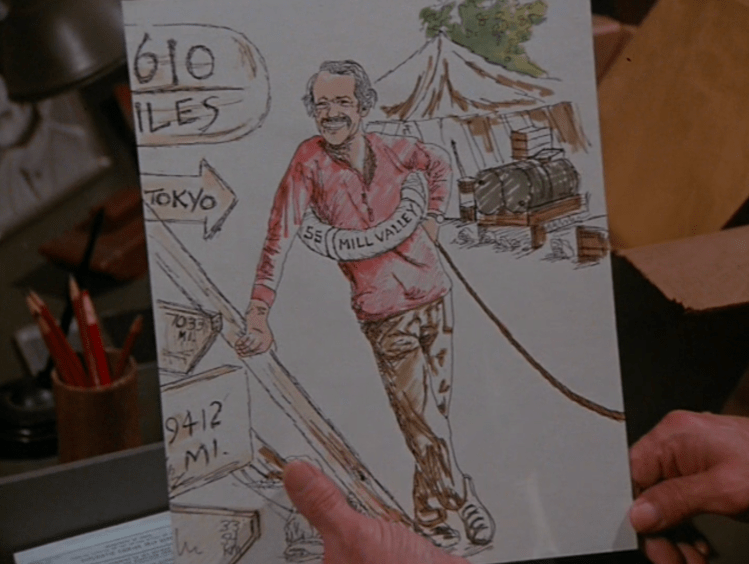
Wounded arrive in the compound, and a well known war correspondent, Aggie O’Shea, is with them on the bus. Everyone is excited to have her at the 4077th, and Hawkeye is smitten. She gets a tour of Potter’s paintings since she is also an artist, and she keeps giving Hawkeye the brush off. She takes an interest in everyone in the camp, especially B.J. Aggie and B.J. have a drink in the Officers’ Club, and she tells him that she is attracted to him. He is clearly conflicted by the situation, and Aggie is just as persistent with B.J. as Hawkeye is with her. She talks to Margaret about “camaraderie” between the doctors and nurses, and Margaret tells her that B.J. would never. Aggie decides to paint B.J., and rumors begin to spread about their “relationship.” B.J. is upset that everyone is talking about him, but B.J. admits to Hawkeye that he has feelings for Aggie. He’s upset because he never thought he could have feelings for anyone but Peg. Hawkeye points out a war zone brings unexpected people together, but it’s temporary. B.J. tells Aggie that he is trapped by the war, and that is part of the attraction. But he has a lifeline at home with his family. After she leaves, she sends everyone something from Tokyo as they requested, and she sends Potter a painting of B.J. with a “Mill Valley” life preserver.
First, Susan Saint James is incredible in this episode! She was a great choice to play Aggie O’Shea, and the chemistry between her and Farrell felt very real. That is what makes this a more compelling episode than “Hanky Panky.” In that episode, the woman is vulnerable, and B.J. is there to comfort her in the situation. In this case, there is a real connection between Aggie and B.J. Ultimately, in both cases, they are only brought together because of the war. They are both vulnerable being away from family and being in a war zone. It is understandable how two people can be drawn to each other in difficult circumstances that wouldn’t otherwise work in “the real world.” As B.J. wisely tells Aggie, “I’ve got to live for tomorrow because for me there is no now.” The painting that Aggie paints of B.J. with his Mill Valley “life preserver” can be seen as either a hinderance or a life line. B.J. chose to use Mill Valley as a lifeline. Not everyone does. Not everyone in M*A*S*H did. Frank Burns, Trapper, and Henry all had families back home, but they chose to disconnect the reality of the war from their homes lives. It is easy to judge the characters based on the standards of today, and it is hard for us to imagine being in the situation they were in. But this episode shows B.J. choosing to use his home life as inspiration to remain faithful to his life back home and keep the war as the war.
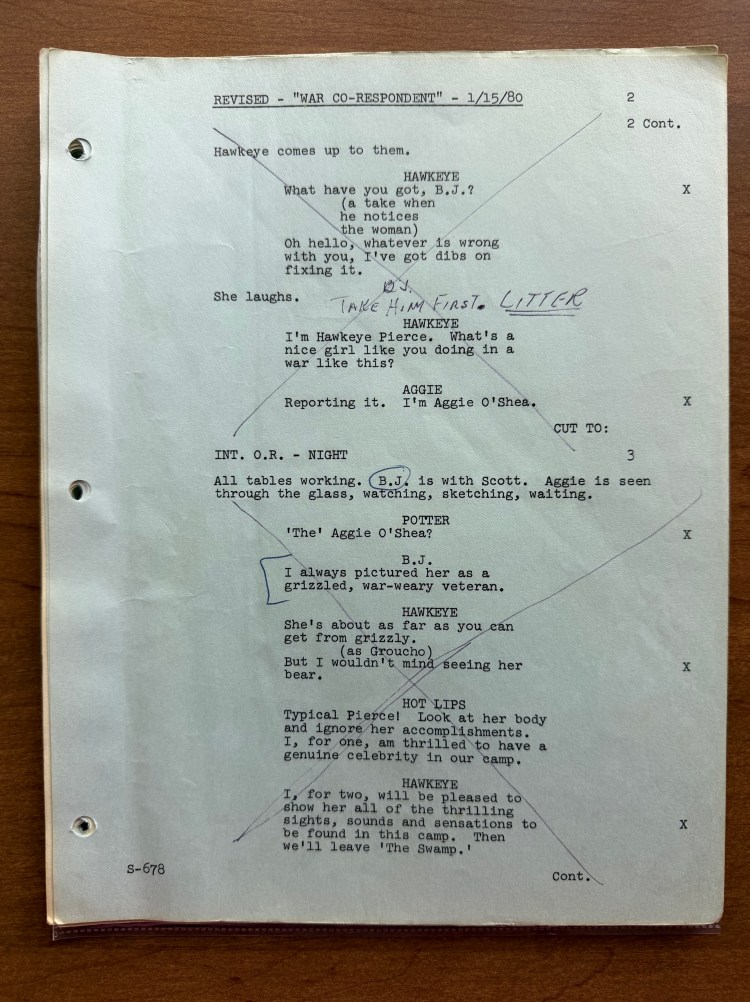
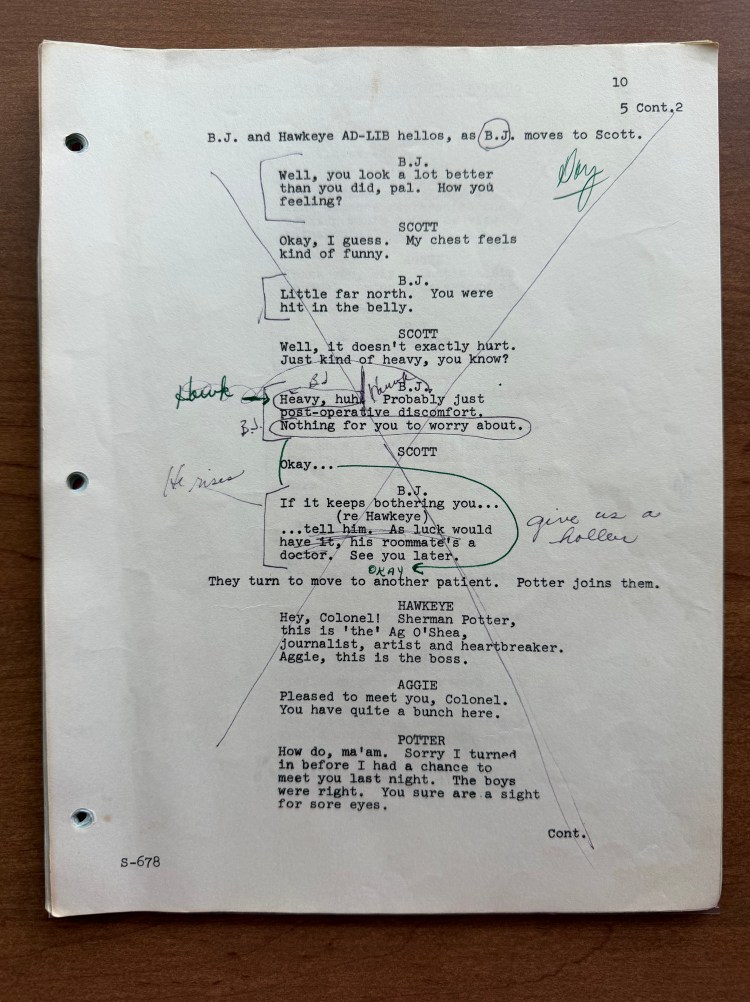
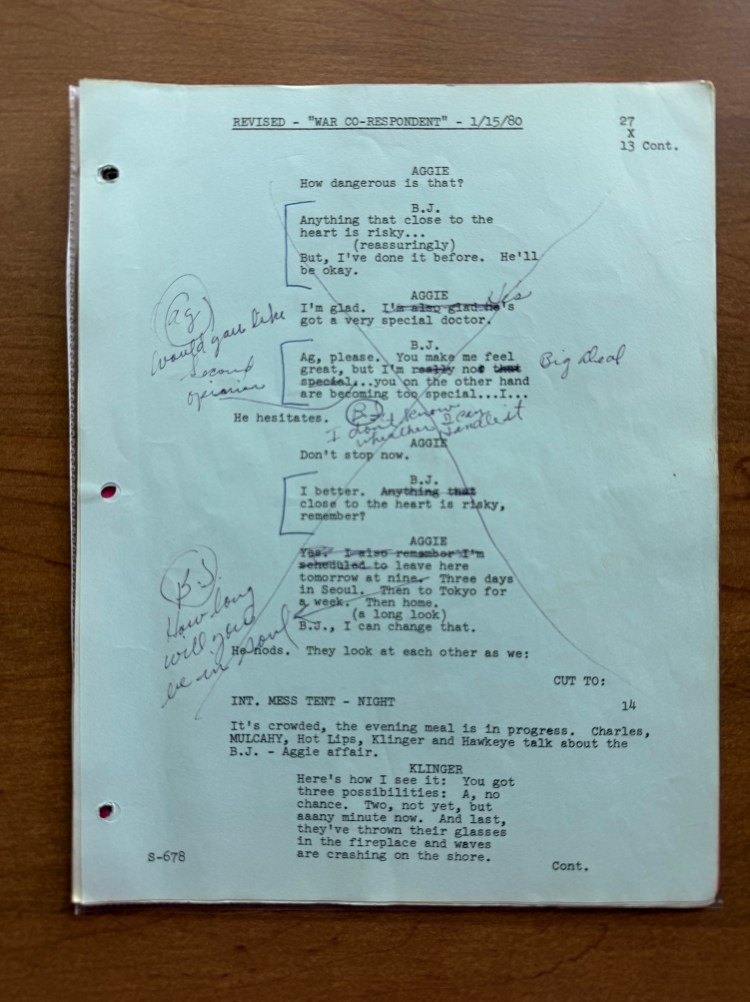
There were not many changes between this draft of the script and the final episode since it contained a number of revised pages. As I mentioned earlier, there are several handwritten changes made by Hill during the filming process, and his handwritten changes do appear in the episode. I have included several examples above including an added line for B.J. when they are on the bus in the opening scene (page 2). A scene in which lines are split between B.J. and Hawkeye while they are in post-op (page 10). Finally, the scene between B.J. and Aggie in Margaret’s tent has several handwritten changes (page 27). It is possible that these changes were made with additional sets of revised pages, but Hill wrote them in his copy of the script because he either didn’t receive the revised pages, or didn’t put them in the script.
When Mike Farrell appeared in the Still Here Hollywood podcast, one of the things that he talked about in great detail was how the producers and writers of M*A*S*H respected the actors enough to give them input into each script. They were trusted to know their characters, and it was Farrell’s understanding of B.J. that led to episodes like “Hanky Panky” and “War Co-Respondent.” I really like the episodes of M*A*S*H that pushed the characters out their comfort zones because it forces us to imagine what we’d do in a similar situation. While that may not always be comfortable, it is an important aspect of life. I also like “War Co-Respondent” because it doesn’t have a B-story. It didn’t need it. The acting and the relationships between Aggie and each of the characters allowed for a full and compelling 26 minute episode. If you also enjoy this episode, I highly recommend checking on Episode 139 of M*A*S*H Matters where they play a recording of the table read of “War Co-Respondent.” The recording was provided to them by Michael Hirsh (the creator of Making M*A*S*H and Memories of M*A*S*H), and it was recorded by David Ogden Stiers. The recording offers great insight into how an episode of M*A*S*H was made beyond the script and production documents.


One thought on “Script Spotlight 57: “War Co-Respondent””