I was recently thinking about the cast of M*A*S*H and how, while they worked well together as an ensemble, there were episodes that highlighted the talents of each of them individually. Some great examples of this are David Ogden Stiers in “The Life You Save” (09×20), Loretta Swit in “The Nurses” (05×05), and, perhaps my favorite, Harry Morgan in “Old Soldiers” (08×18). Morgan was a veteran actor when he joined M*A*S*H, so it was no surprise that he could play the multifaceted Col. Sherman Potter. The character had depth as a husband, parent, commanding officer, and as a veteran of several wars. We found out early in Potter’s introduction that he was a veteran of both World War I and World War II, and so Potter had friends from those past wars. We saw it frequently in the series since he seems to know every colonel and general in the Army! In “Old Soldiers” however, we see a different side of Potter. He is grappling with the loss of a friend, aging, and being surrounded by people half his age. This is a real phenomenon that many people experience. This episode is well written and brilliantly acted, so let’s dig in.
The Script
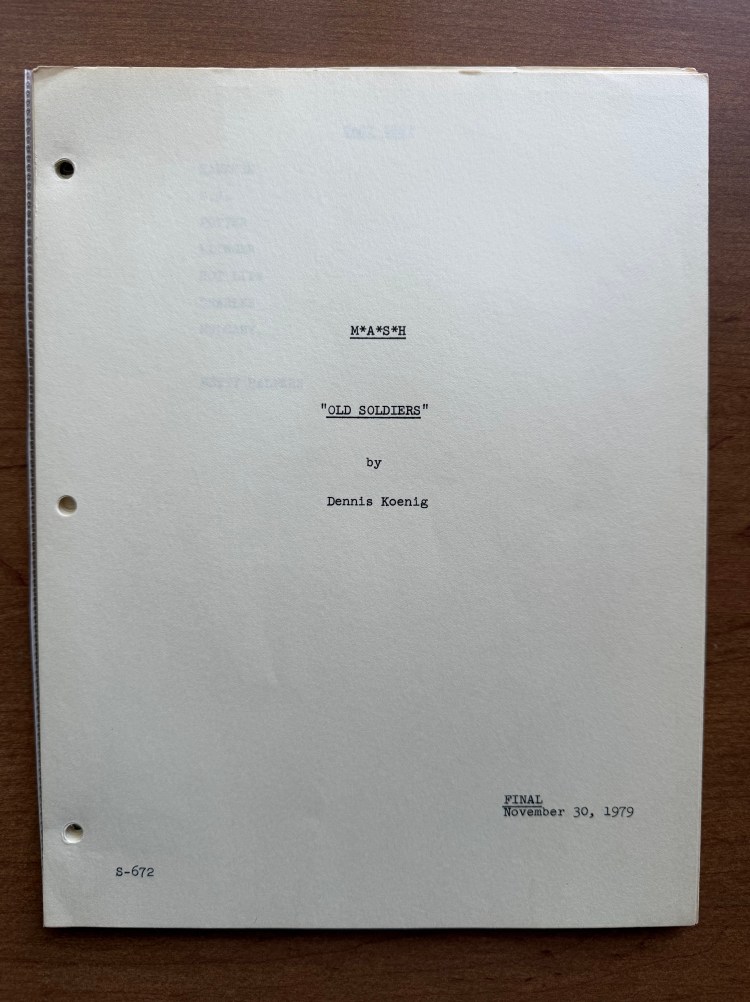
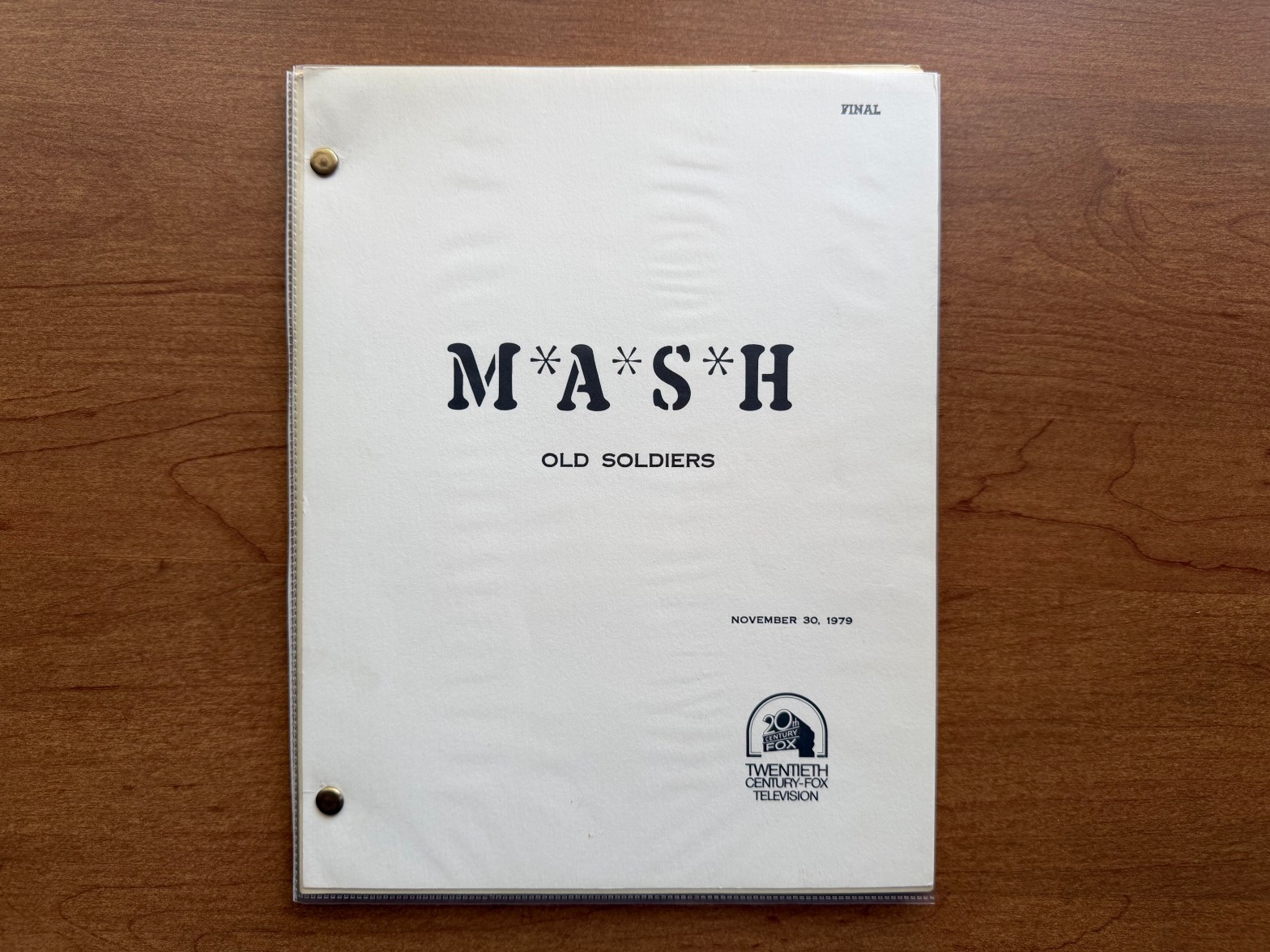
The script I have for “Old Soldiers” is a final draft dated November 30, 1979. The episode aired on CBS on January 21, 1980. It was written by Dennis Koenig who credited with writing or co-writing 48 episodes of M*A*S*H and another ten episodes of AfterMASH. In addition to being a writer, Koenig also served as a producer in much of seasons ten and eleven. “Old Soldiers” was directed by Charles Dubin, who was a prolific M*A*S*H director. He is credited with directing 44 episodes.
Since this is a final draft of a script and not a revised final draft, we could reasonably expect this script to include revised pages and various production documents. Sadly, it does not. In the copies of the script that were used on set by the actors and key crew members, they would receive color coded revised pages several times throughout the week of filming. Many of the scripts would also include production documents such as Call Sheets for each day of filming and the full Shooting Schedule. However, there were copies of the script that were not used throughout the entire week of filming. Certain departments didn’t need the latest copy of the script, so they didn’t receive revised pages or the daily schedule. There were also actors and stand-ins who would have only been on set for a single day, and I have found that they often don’t have production documents or revised pages. And if they did get revised pages, they only had the sets of revised pages for the days they were on the Call Sheet. This script still contains the lines for each character and the stage directions which were very important. The stage directions often included scene location, the time of the day, wardrobe information, and any non-verbal actions expected for the character. Various crew members would use these key pieces information to properly prepare wardrobe, decorate the sets, and get the scenes properly staged and lit. For the actors and crew, the stage directions are just as important as the words.
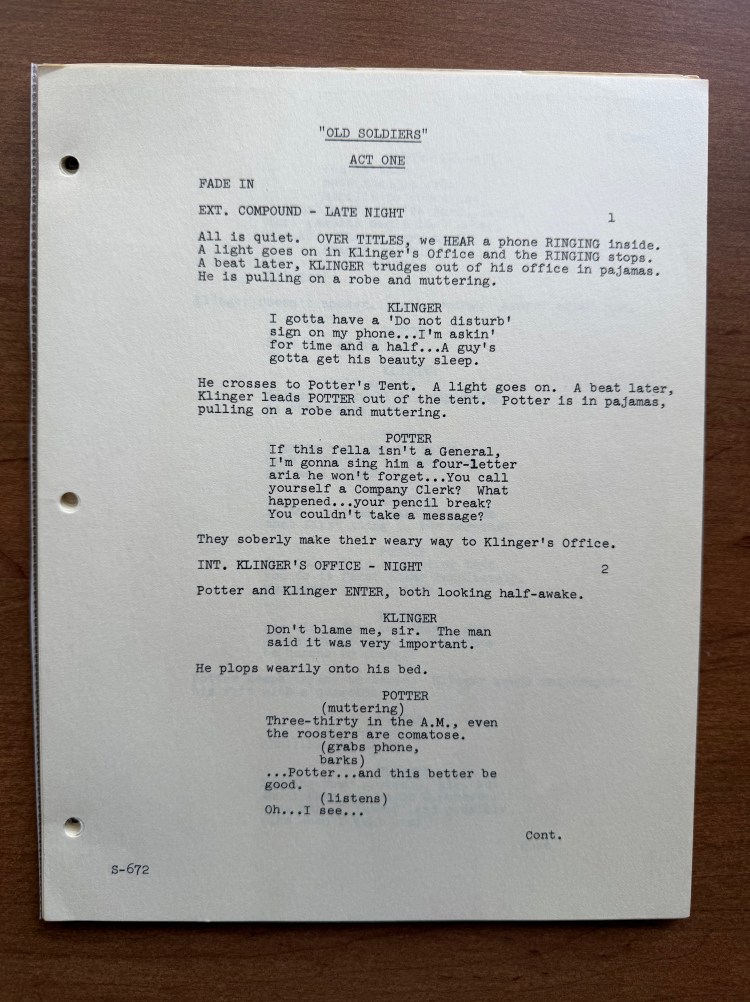
It can be easy to forget that the script contained more than just the words that appear on the screen. The writers of M*A*S*H also had to consider the setting and the physical aspects of the show as well. Often the comedy was in what we saw and not only what we heard, and those were key aspects were written in the stage directions. The script was the episode. It contained everything the cast, crew, director, sound engineers, lighting department, set decorator, camera operators, and costumers needed to ensure that 26 minutes of television was made over the course of four days. At the same time, it is easy to think of a script as “only” containing words on the page. For an episode such as “Old Soldiers,” the scripted lines are only half the story. What is on the page only matters if it can be brought to life with the proper emotion, and that is where Morgan and the rest of the M*A*S*H cast excelled with this episode.
Final Episode
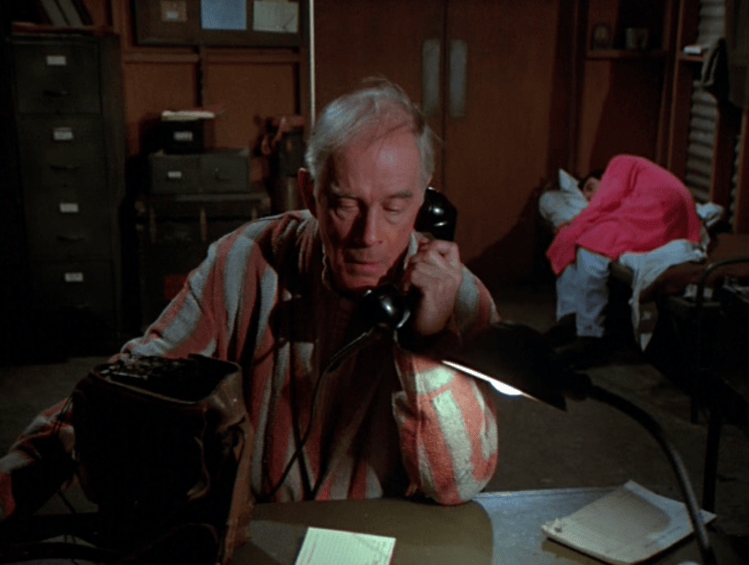
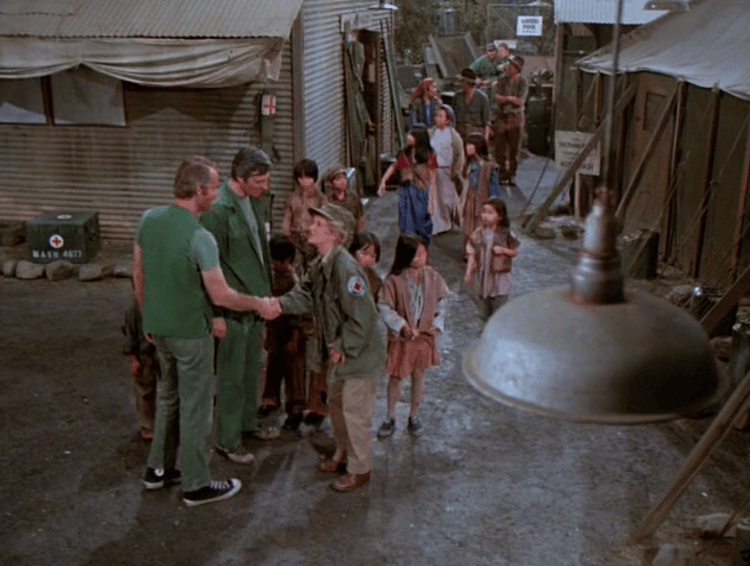
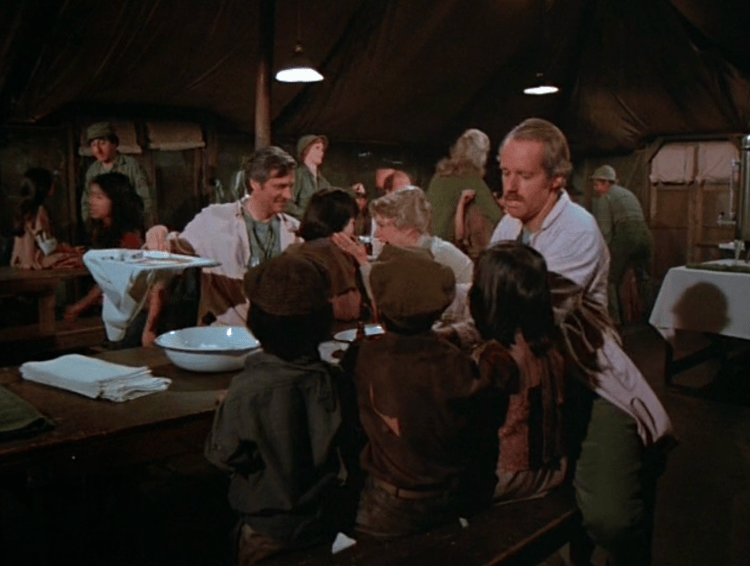
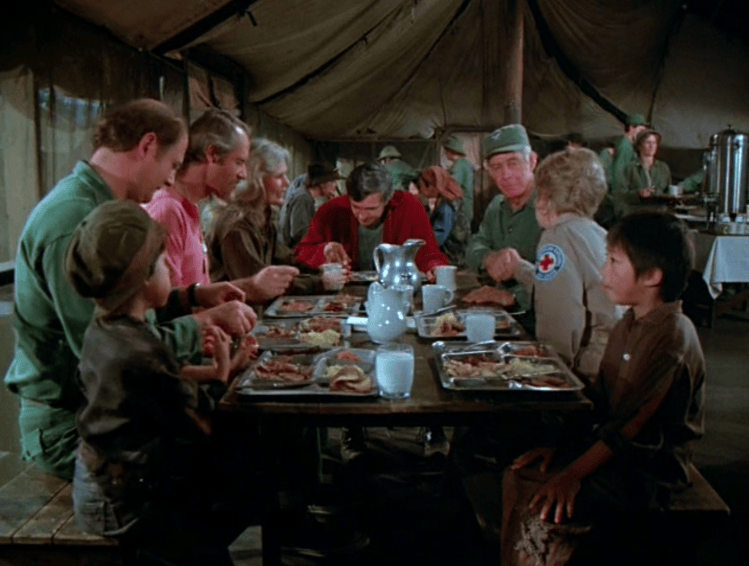
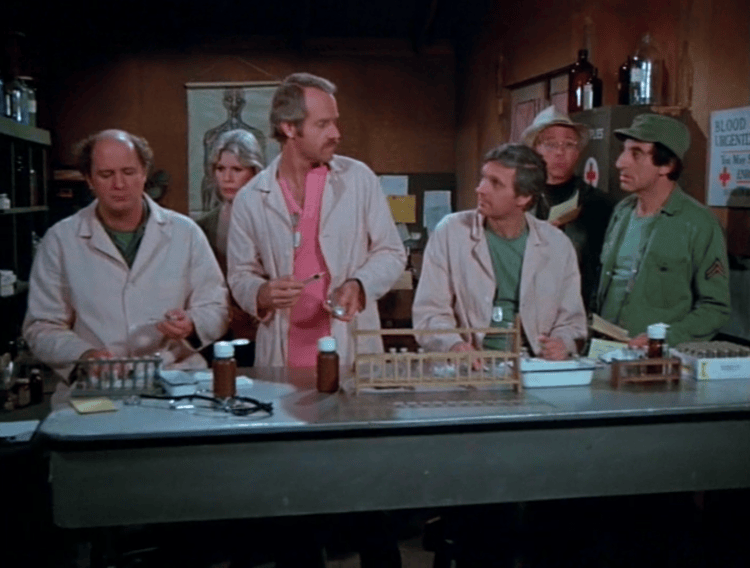
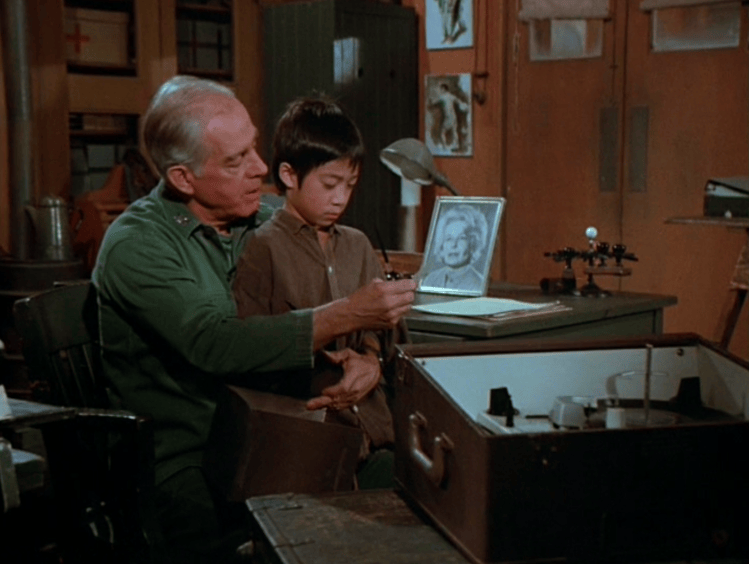
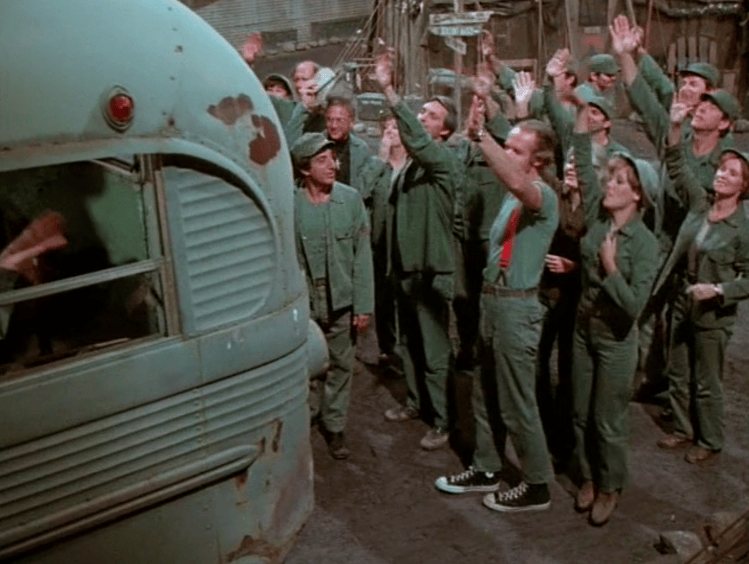
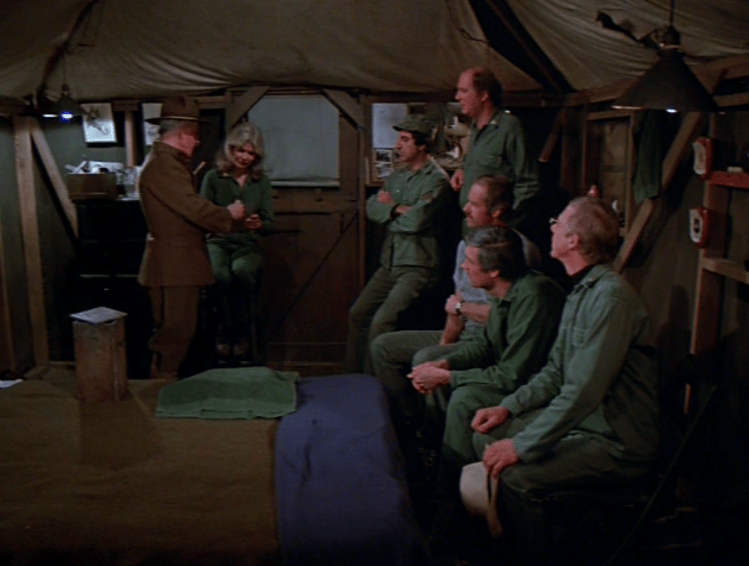
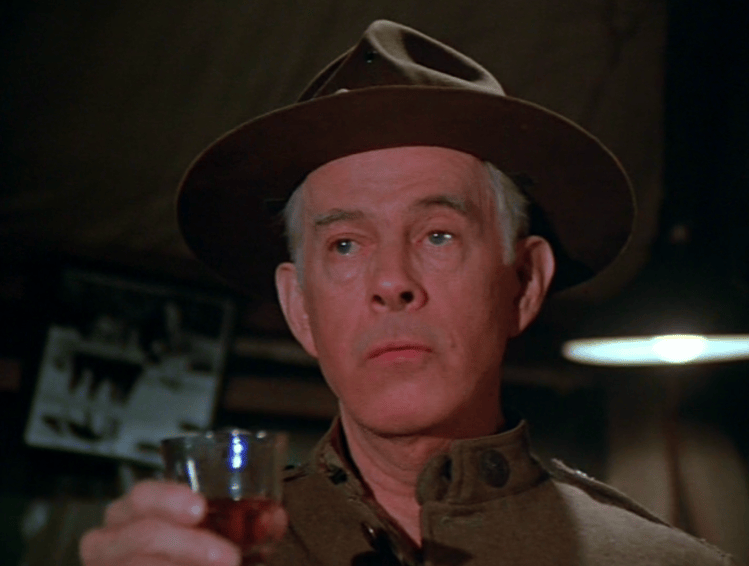
Col. Potter receives an early morning phone call that he needs to make an emergency trip to Tokyo. He leaves Hawkeye in command, and a group refugee children are brought in by the Red Cross for treatment. They get tetanus shots, but they have reactions to it, so the doctors have to figure out why. Once they discover it’s due to the use of horse serum in the inoculation, they change the dosage, and children are successfully treated. Meanwhile, Col. Potter acts strangely after he returns from Tokyo. He wants to be left alone listening to French records, and he received a mysterious package from lawyers. When they are all invited to Potter’s tent the following evening, the group jumps to conclusions that Potter may be sick. When they go to Potter’s tent, they learn that Potter’s last war buddy from World War I passed away, and they made a tontine to pass along a bottle of brandy to the final survivor. Potters gives an emotional toast to his WWI buddies before toasting his current friends at the 4077th.
This is a fan favorite episode, and it is easy to understand why. The storyline is very compelling, and the actors perform brilliantly. The B-story of the children at the 4077th, while being in a serious situation, offered a softer storyline to balance the more serious A-story about Col. Potter. There are so many great emotions in this episode. Col. Potter grappling with being the last survivor of his friend group and facing aging himself is very relatable. And the same is true for the rest of the camp automatically assuming the worse about Potter’s health. That is also a very natural, human reaction when we suspect something is wrong. We tend to imagine the worse. I really like the scene where they are all standing outside of Potter’s tent. They all want to know what is going on, but at the same time, no one wants to knock. The realization that they may be told what they all fear becomes the fear itself, and that is a great illustration of anxiety.
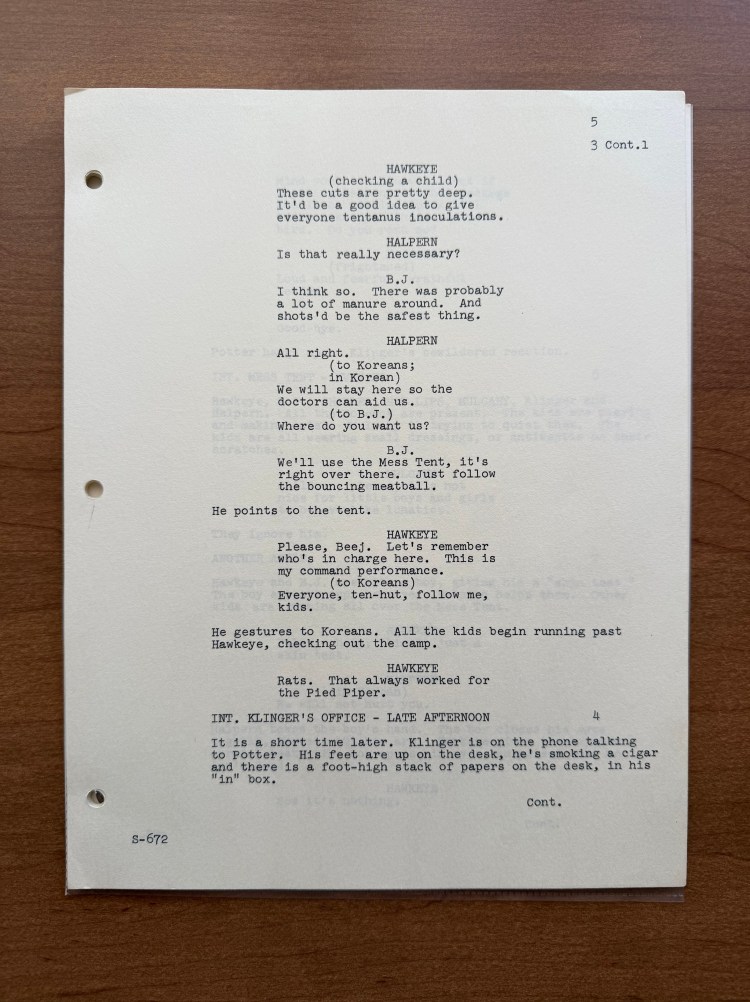
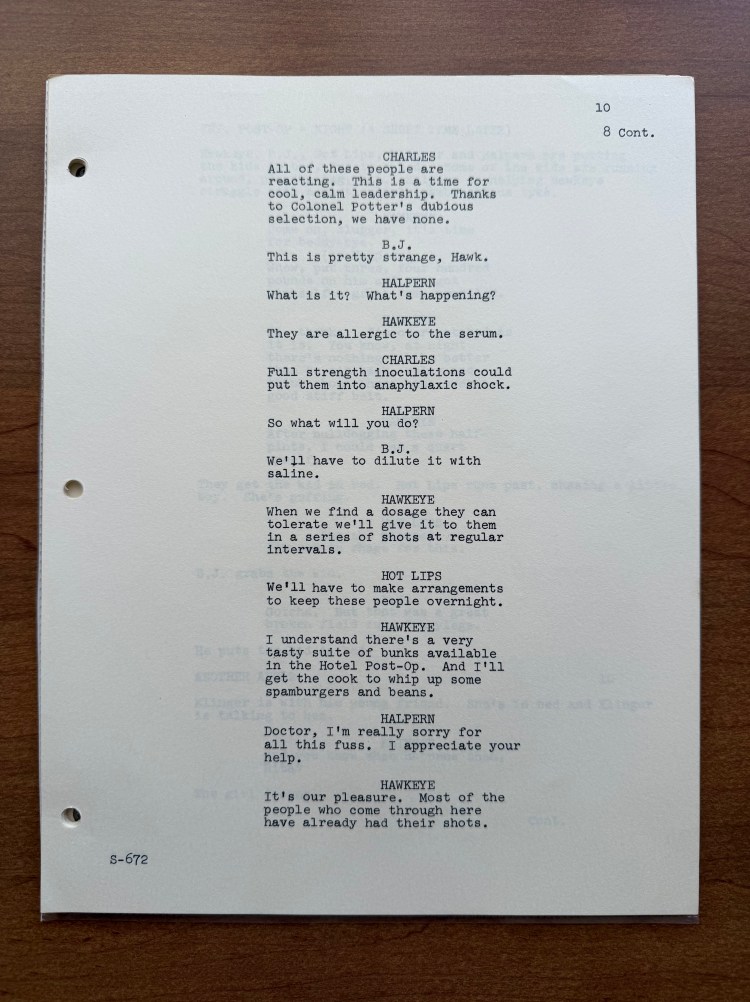
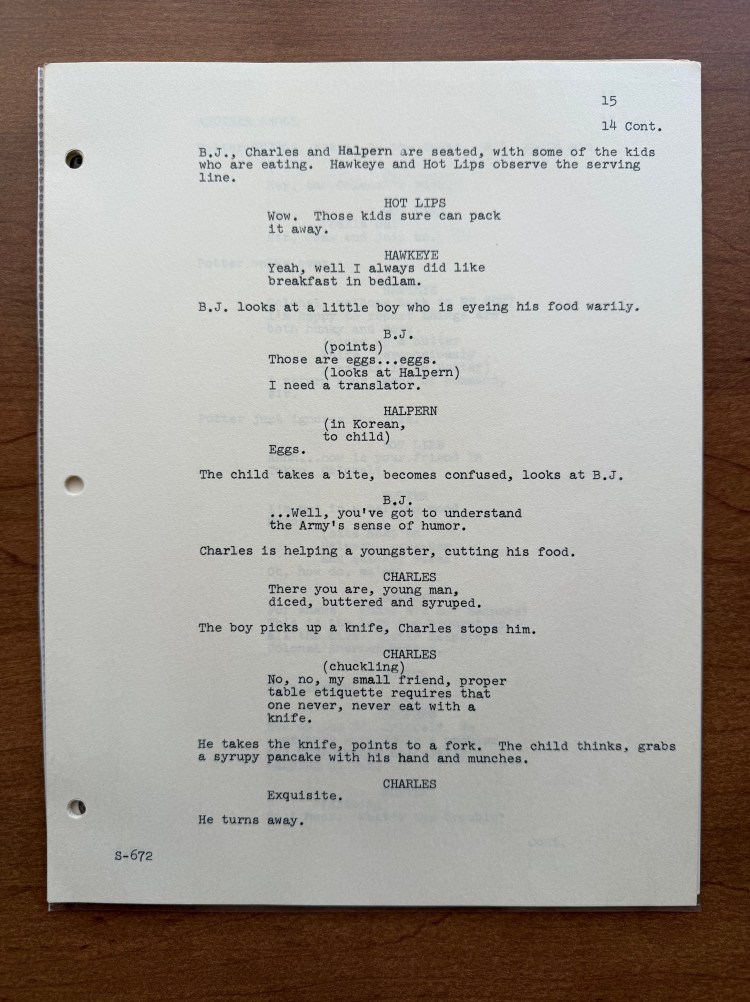
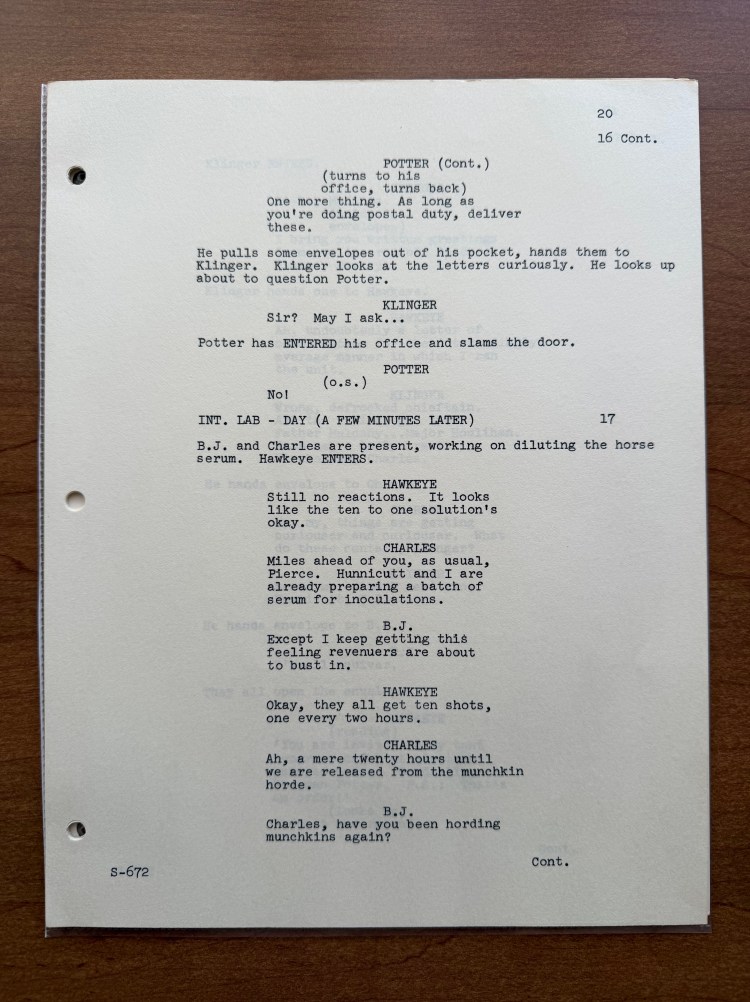
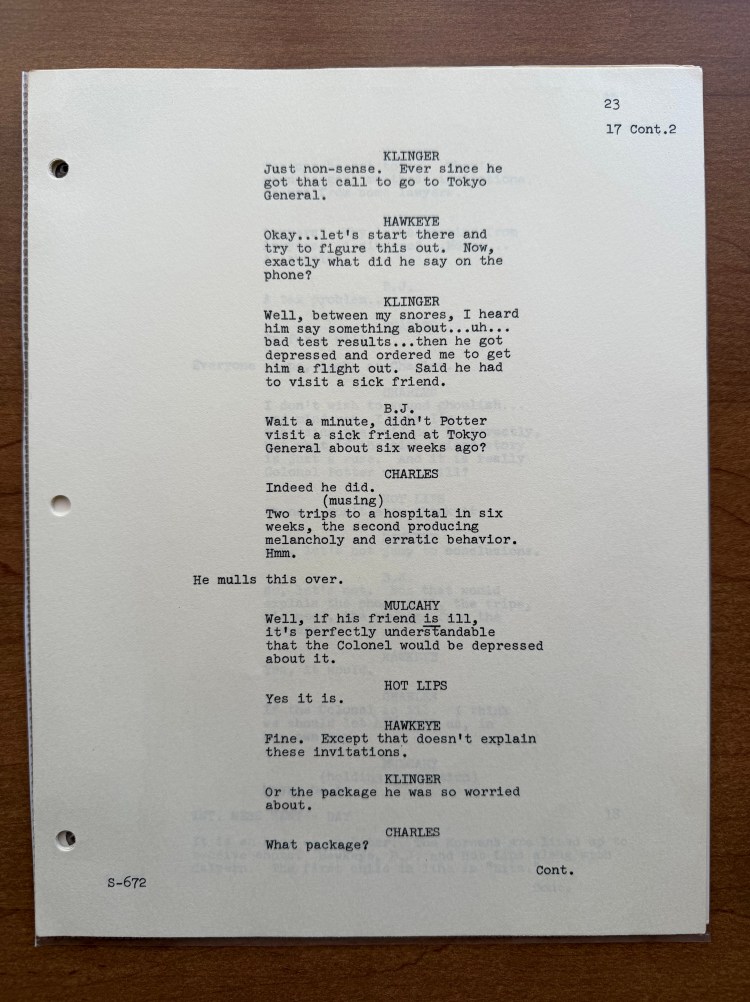
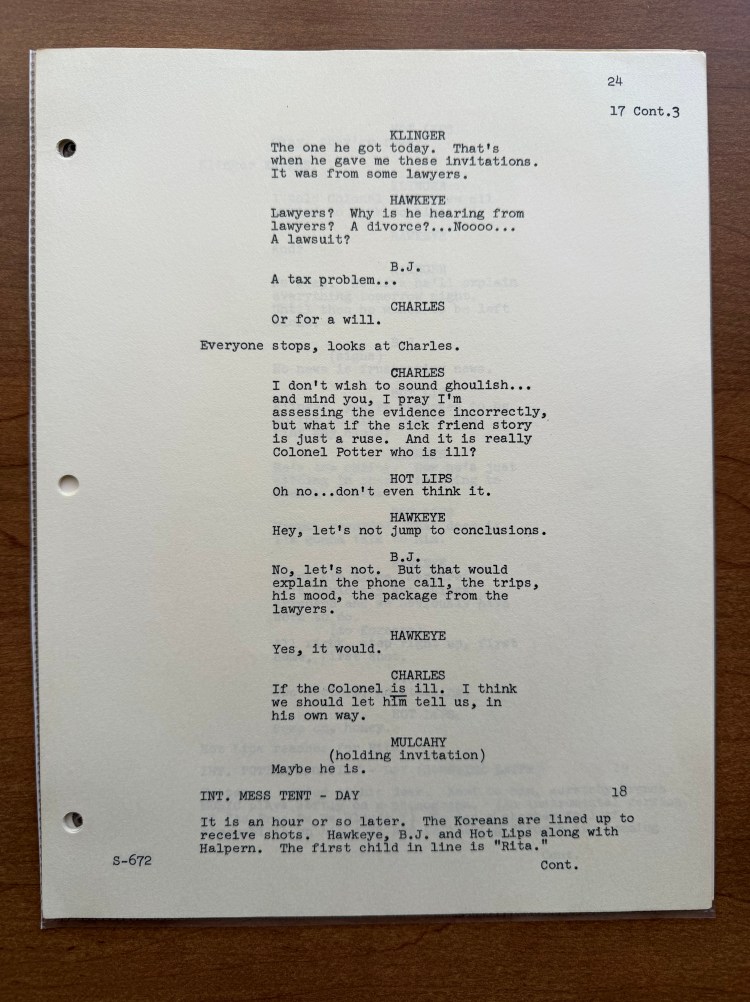
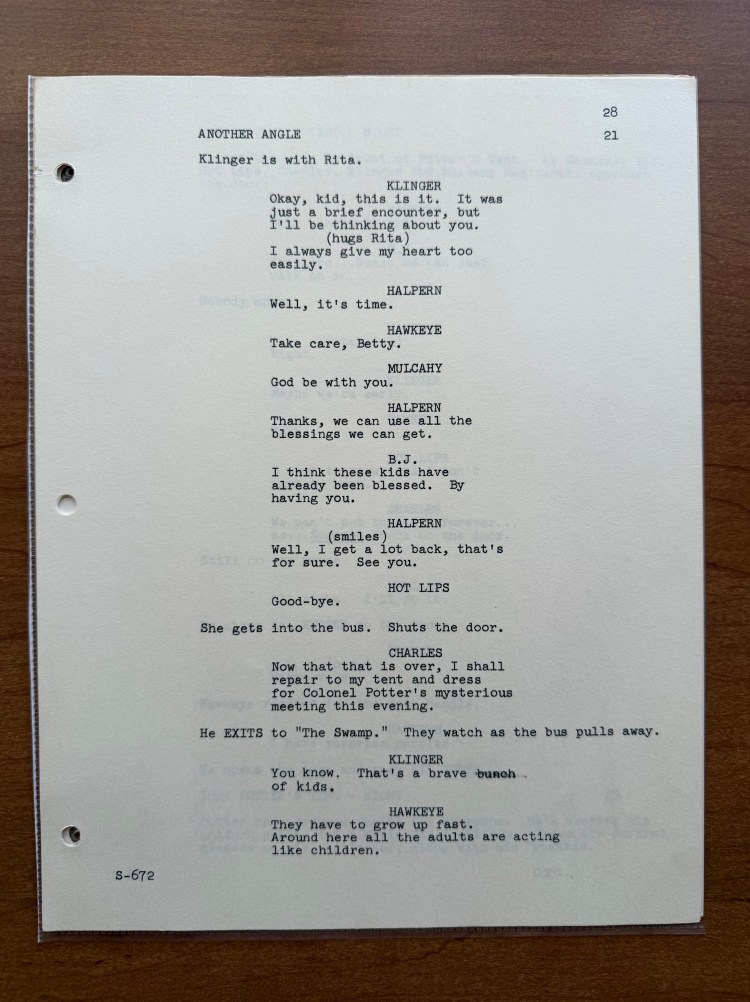
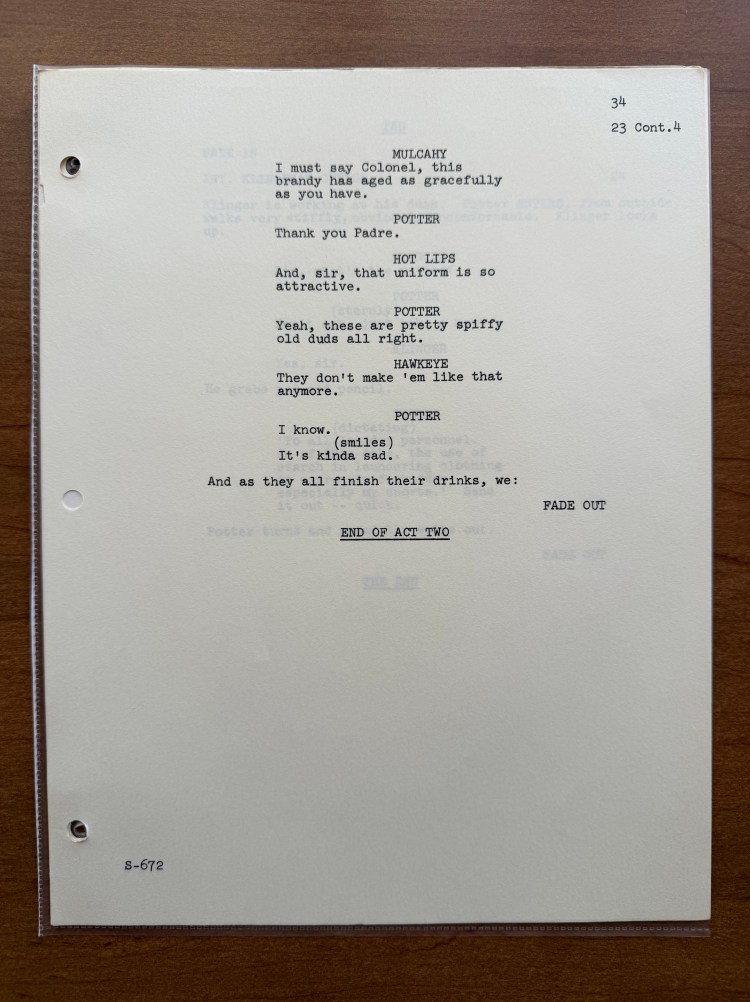
As for the script, there are a number of changes between this draft and the final episode that are worth noting. The scene in which we first meet the refugee children and Betty Halpern is slightly extended in the script versus what we see on screen (page 5). When the doctors first notice the reaction the children are having the tetanus shots, the lines the doctors deliver are not only different, but some of the lines were originally written for someone else (see page 10, on which B.J. and Charles swap several lines). There was a scene in which Charles attempts to teach table manners to some of the children (page 15). The scene where the doctors are in lab was written a little longer (page 20). Also in the lab, the speculation about Potter’s health was written a little differently initially (pages 23-24). The goodbye scene with the refugee children and Betty was written differently than it appears in the episode (page 28). And finally, the scene after Potter and the group have their toast was going to be longer with them commenting about the smoothness of the brandy (page 34). Personally, I am glad they chose to end the scene where they did because it felt more respectful of the scene and Morgan’s performance.
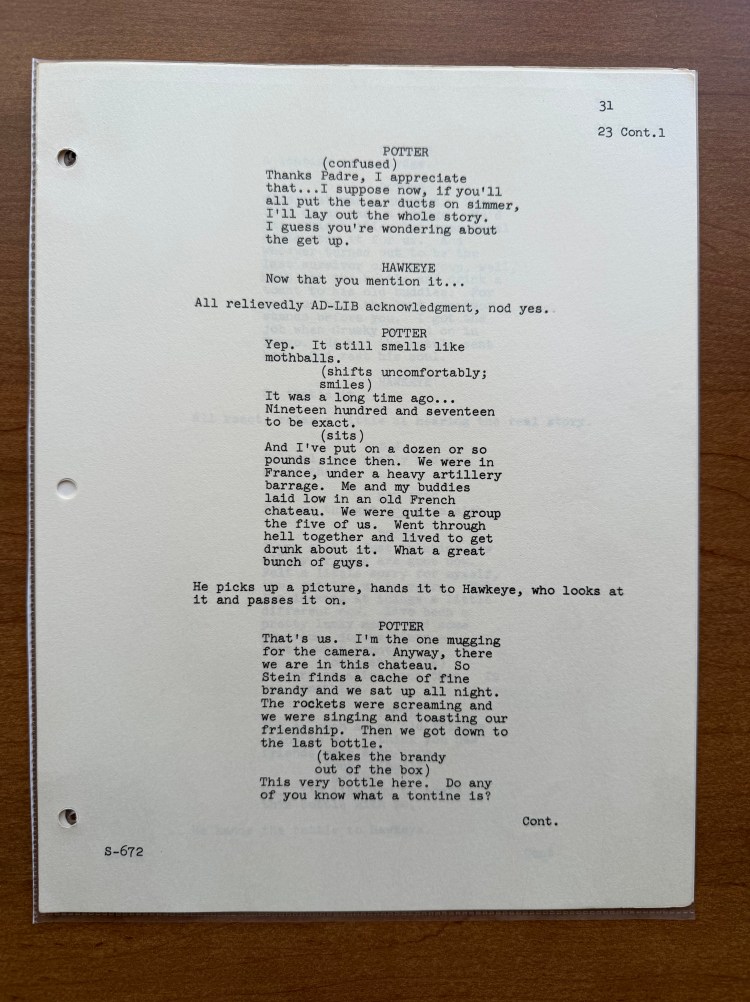
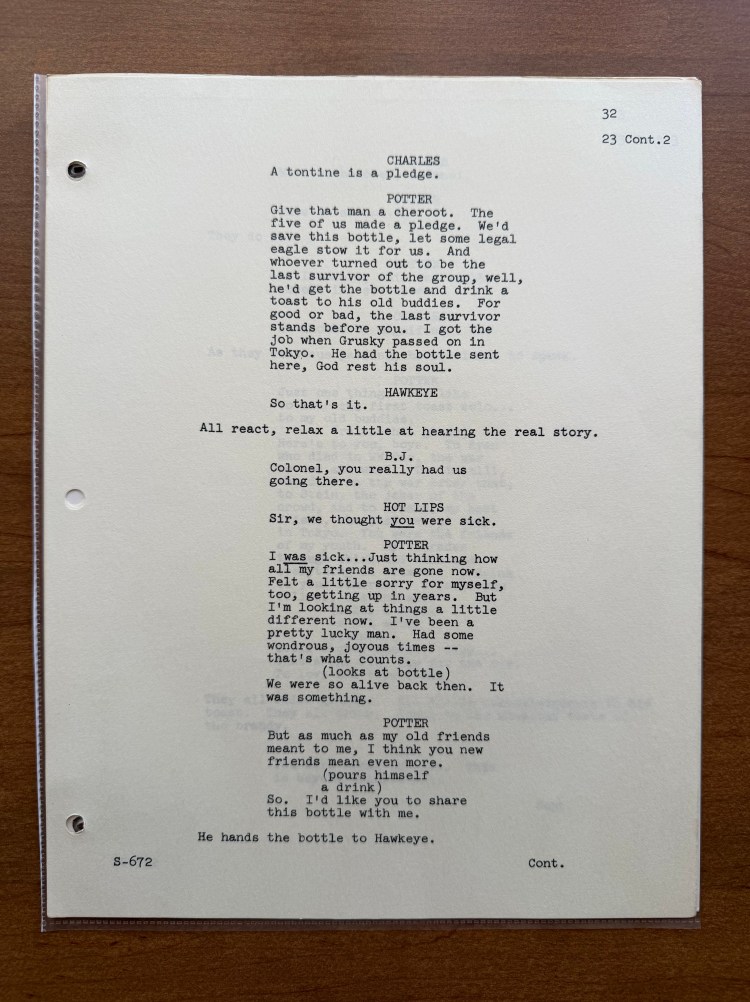
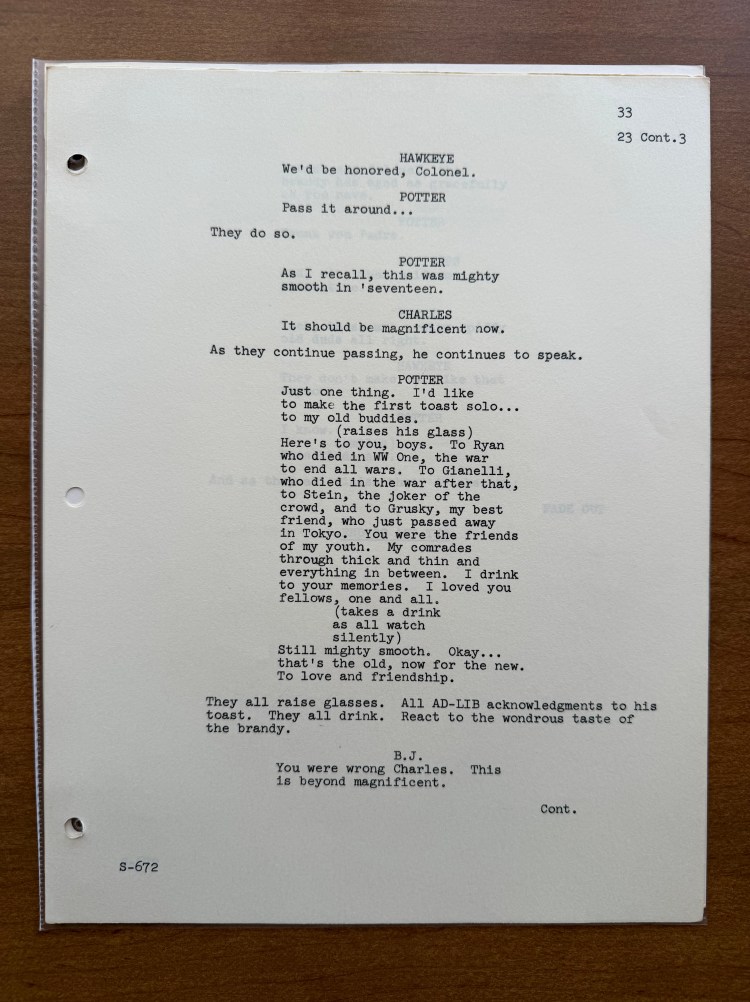
“Old Solders” is a stand out episode of season eight, and perhaps, the series. It is often cited as a fan favorite due to the tontine scene in Col. Potter’s tent, and it is easy to see why. Harry Morgan performed that scene flawlessly. He had added perfect amount of emotion with each word, and with each pause between his lines. M*A*S*H is often lauded for having one of the best ensemble casts in television, and this episode illustrates why. The real emotion and love that the characters, and actors, had for each other comes through on screen. But it is Morgan’s performance that steals the episode. I have struggled with how to close this post in an appropriate way, but then I found the answer. I said that the script is words on a page, but the actor brings the emotion and inflection that allows us to feel the words. There is no better example to illustrate this point than the scene in Potter’s tent. So I am going to close this post by recommending that you read the speech Potter gives and his toast to his buddies as written on the page (presented in the photos below). Note that there are no stage directions for where or when Potter is emotional, there are no written pauses, and there are no written voice cracks. Morgan brought those scenes to life by adding the emotion and inflection at the perfect time. Because of that, I imagine that you, like me, will read this page with Morgan’s voice in your head. That I feel is the greatest compliment to an actor when they are able to turn the written word into an emotional performance.
 The M*A*S*H Historian
Thanks, Eric! That was outstanding, much like “Old Soldiers.” A HUGE thanks for including Potter’s speech in its entirety. It was the cherry on top.
LikeLiked by 1 person
I think seeing how he took the words from the page to life speaks to his talent!
LikeLike
“Old Soldiers,” and Harry Morgan’s stellar performance, was also featured in “Making M*A*S*H”: https://www.youtube.com/watch?v=-Jhjjnhe4xY&t=937s
LikeLiked by 1 person