
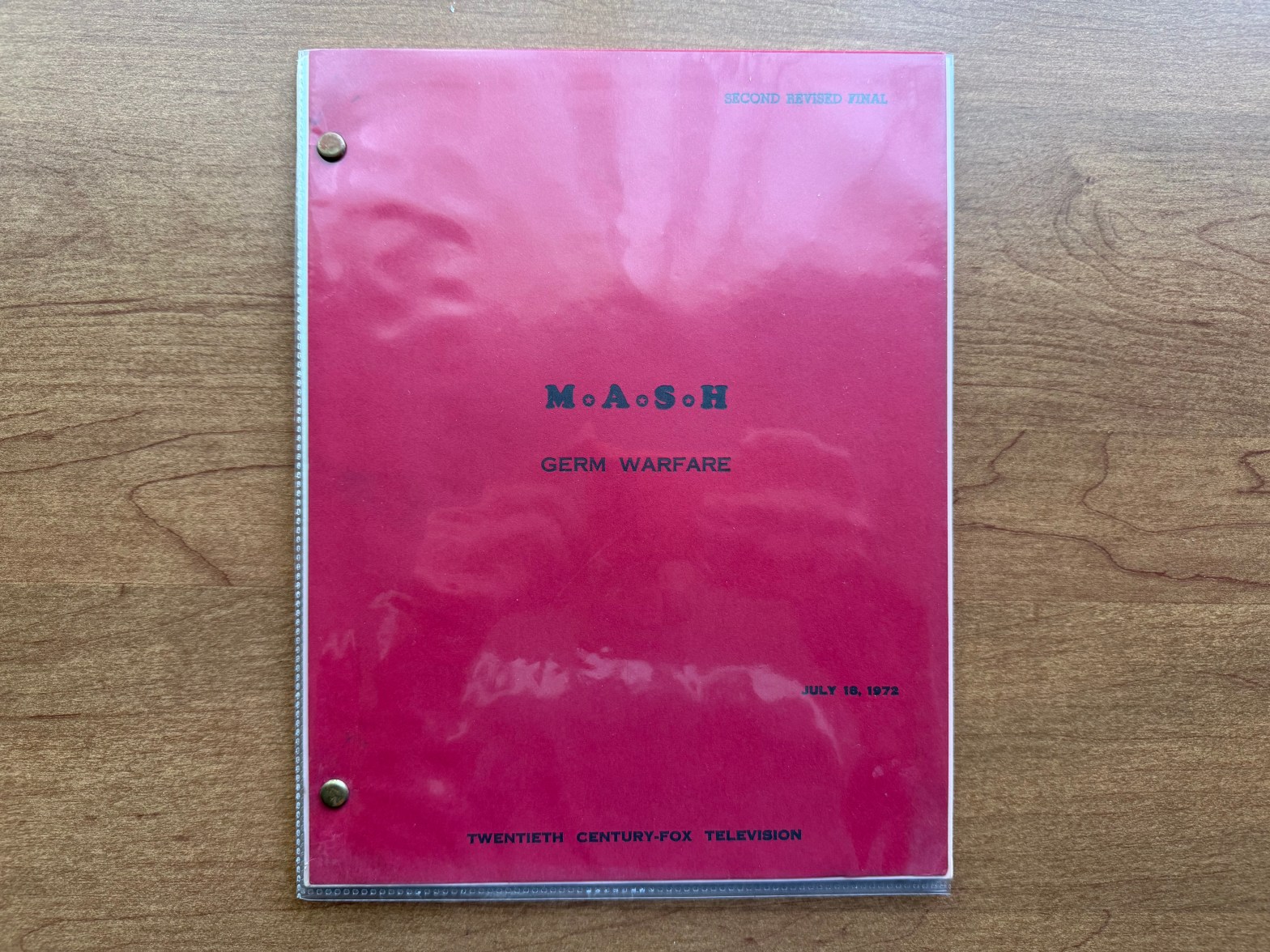
The last few months, I have reviewed scripts from season five in celebration of the 50th anniversary of that season’s debut (see my posts for “Lt. Radar O’Reilly” (05×04) and “The Nurses” (05×05)). This month, I decided to go all the way back to season one and review an episode from early in M*A*S*H‘s run. The episodes in the first season of M*A*S*H were hit or miss for me as I mentioned that in my season one wrap-up in 2025. There are some stand-out episodes that truly showed the promise of the series, and there are a few that were problematic in many ways. But looking back at my notes and thoughts from season one, I discovered that most of the episodes were “fine.” Many of the storylines were funny on the surface, but they became questionable the more you thought about it. One of the episodes for which I feel this way about is “Germ Warfare” (01×11). It is a funny episode, but when you think about how Hawkeye and Trapper not only stole a pint of Frank’s blood, and then had to steal another sample of a different bodily fluid, the storyline comes dangerously close to being slapstick.
The Script
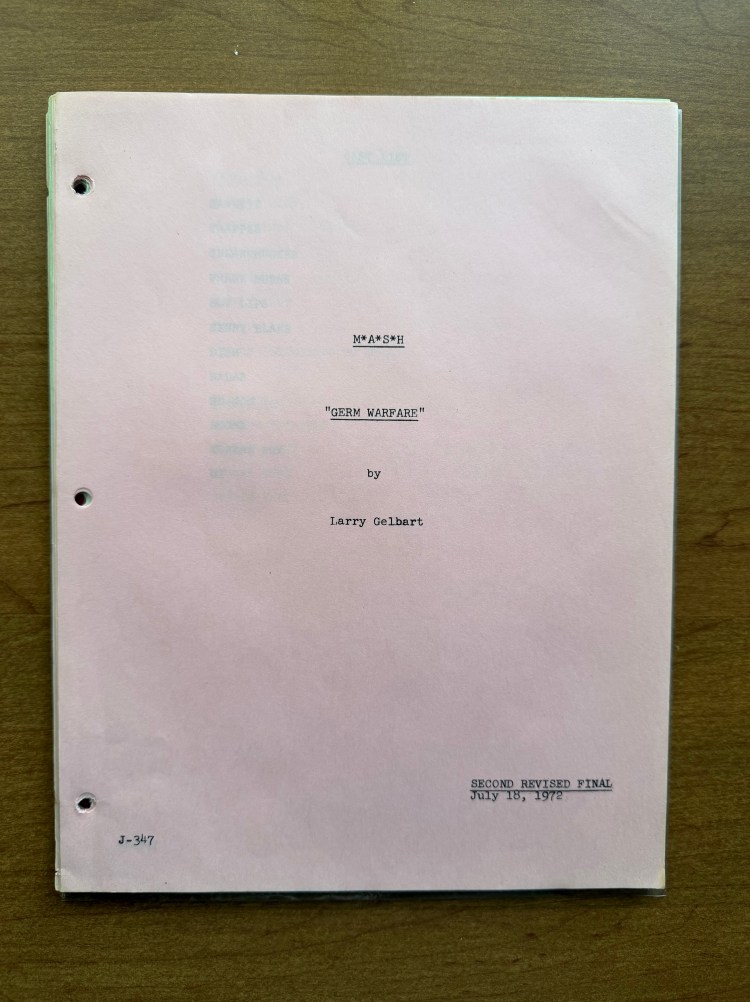
This script is a Second Revised Final draft dated July 18, 1972. The episode did not air on CBS until December 10, 1972. “Germ Warfare” was written by Larry Gelbart, a name very familiar to M*A*S*H fans. Not only was he the series co-creator and executive producer, but he is also credited with writing (or co-writing) 42 episodes and directing six episodes before leaving the series after its fourth season. The episode was directed by Terry Becker, and this is his only directing credit for M*A*S*H, although he does have other acting and directing credits to his name.
Before we look at the contents of this script, I want to note something about the covers of the early scripts that I don’t think I’ve ever called attention to. On the early script, the font for M*A*S*H is different than it is for the later scripts. In the early seasons, the font was not the stylized, stenciled font that we are used to seeing in the opening credits. Later scripts, such as the script for “Old Soldiers” (08×18), changed that and the stylized M*A*S*H logo was used on the covers. This change of the M*A*S*H logo on the cover occurred around season seven based on the scripts in my collection, later than might be expected. As for the contents of the script, it does have the usual stage directions and lines for the characters. I will take a moment to note that Gelbart’s early scripts are very detailed since they were still building out the M*A*S*H characters and compound. The script’s standard pages are pink, which was common for a revised copy of a script. This helped differentiate the different versions of the scripts. However, this script does contain two sets of revised pages dated July 19, 1972 (green) and August 11, 1972 (yellow). Sadly, there are no production documents in this script such as the daily Call Sheets or the full Shooting Schedule. I do not have many early scripts with that documentation still included.
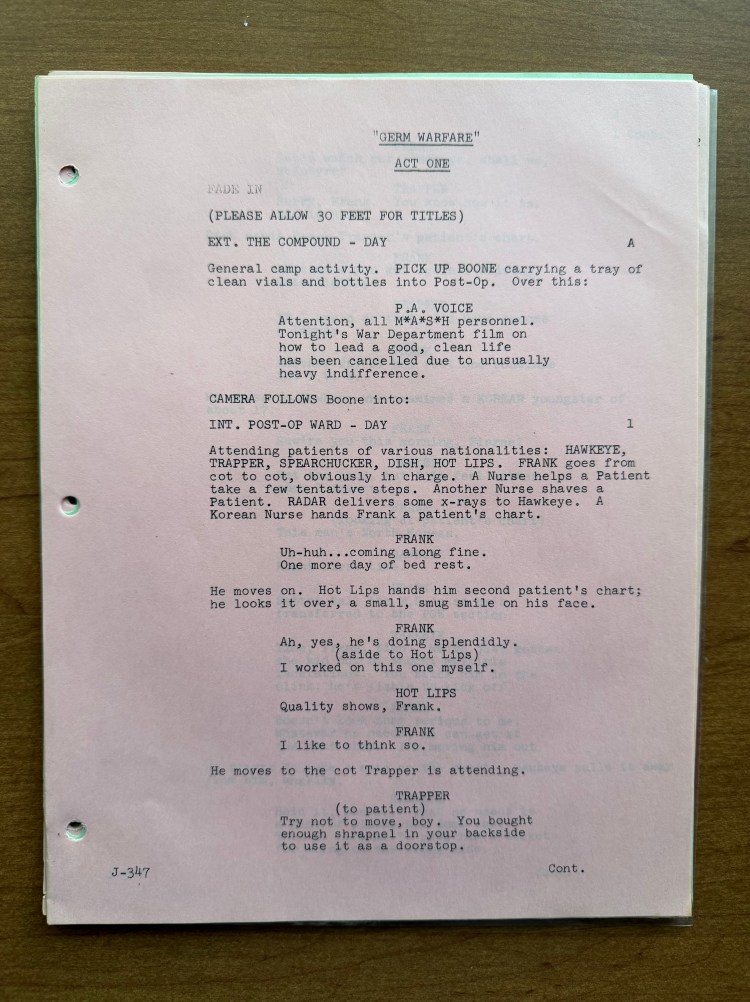
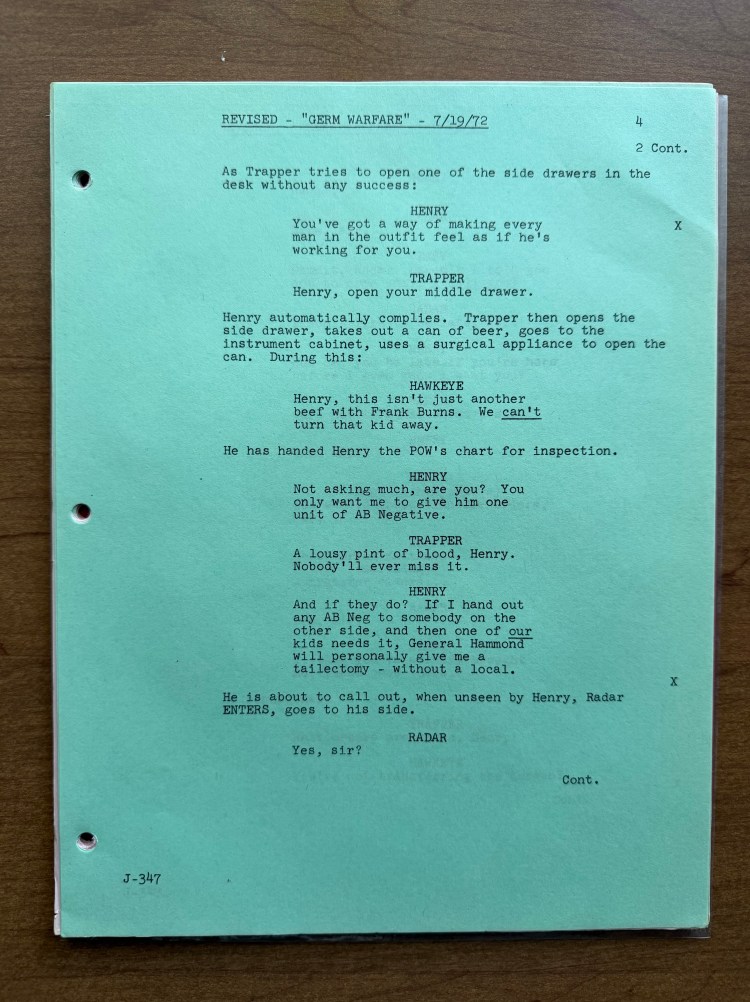
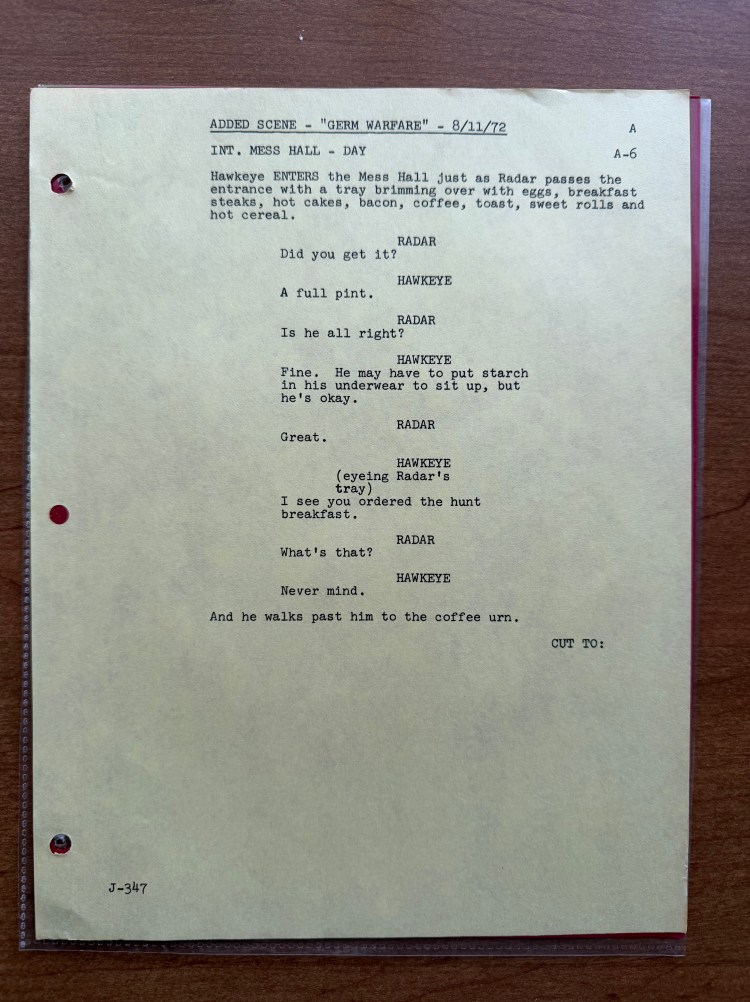
I have frequently said that the scripts are my favorite part of the collection. Seeing the stage directions and lines on the page, then watching to see how they were brought to life by the men and women of the cast and crew is part of the magic of television! As I mentioned, scripts by Gelbart were typically more detailed in their directions, especially in season one. There were some interesting deviations in this early script including the referral of the Mess Tent as a “Mess Hall” in the stage directions. The names of the sets and locations had not been fully formed. When this episode was filmed in late July and early August 1972, M*A*S*H had not even premiered yet! Gelbart and the rest of the writers didn’t have any kind of audience reaction to gauge the reception of the show at this point. They were still finding their footing, and by the end of season one, there were several hints of what was to come. Season two is still my favorite season of the series as far as quality of storylines, but that is followed closely by season four. Without the trials and tribulations of season one, M*A*S*H would not be the hit it became.
Final Episode
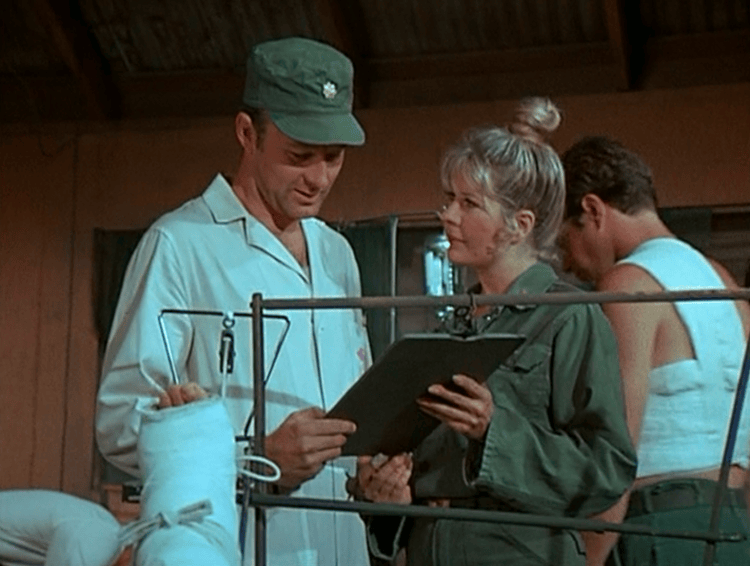
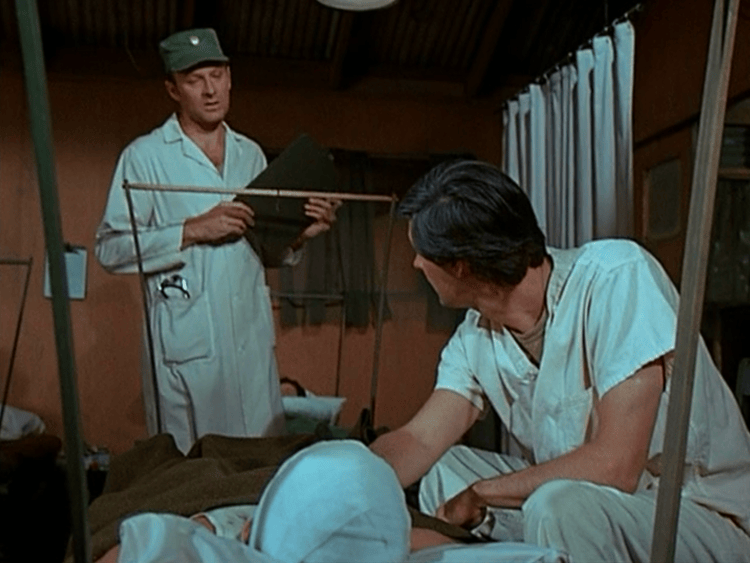
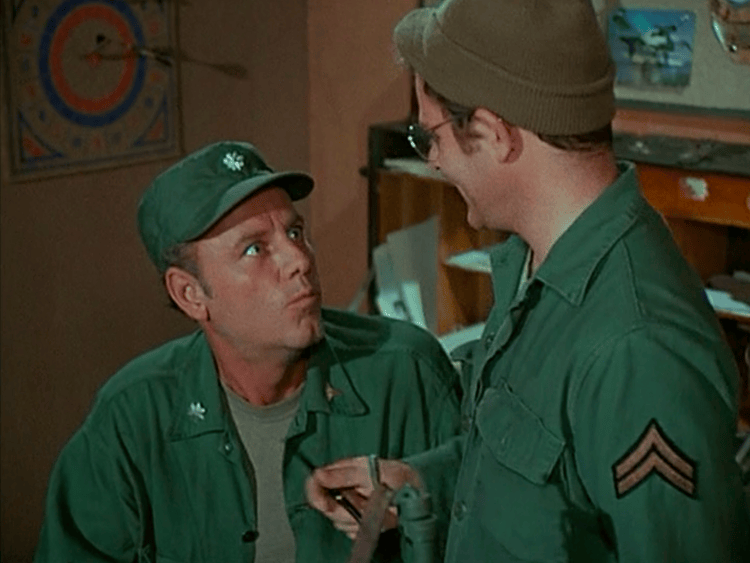
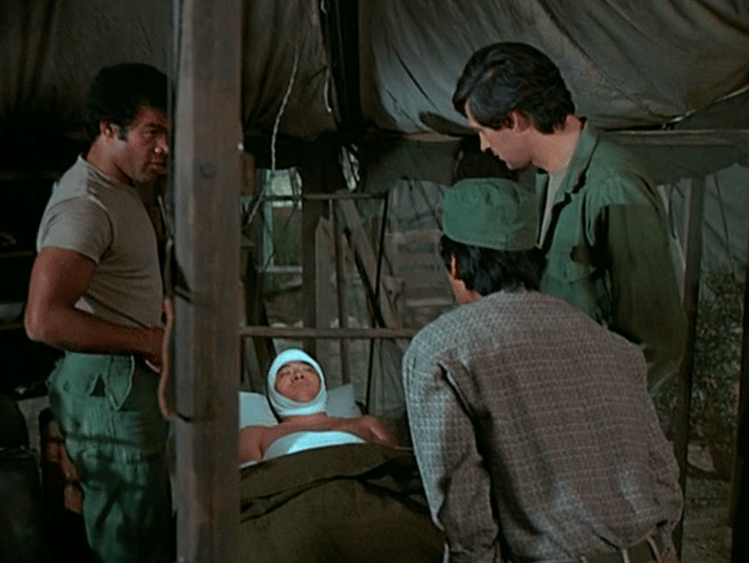
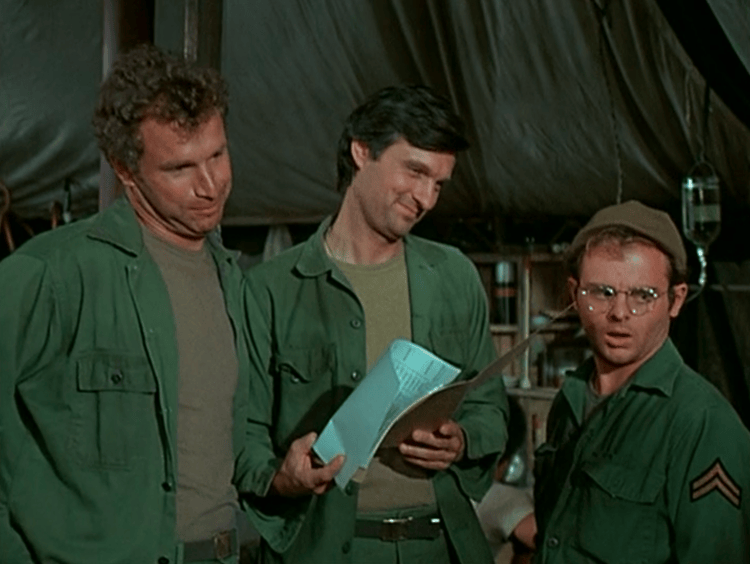
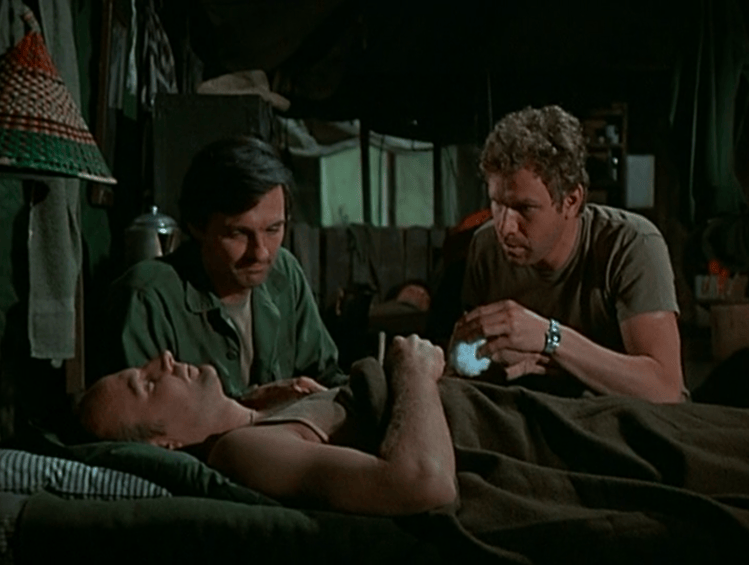
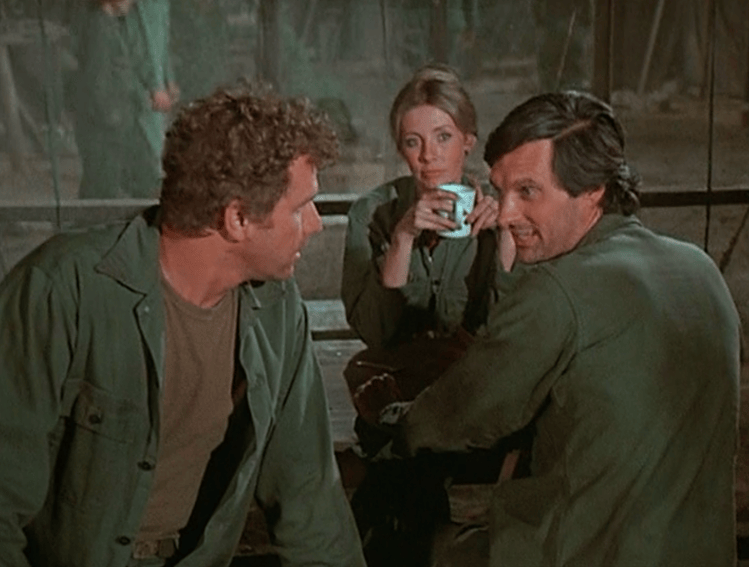
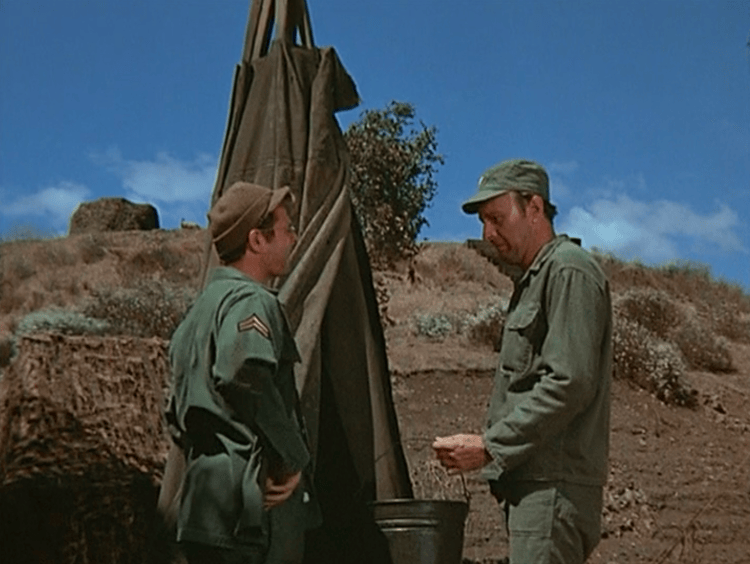
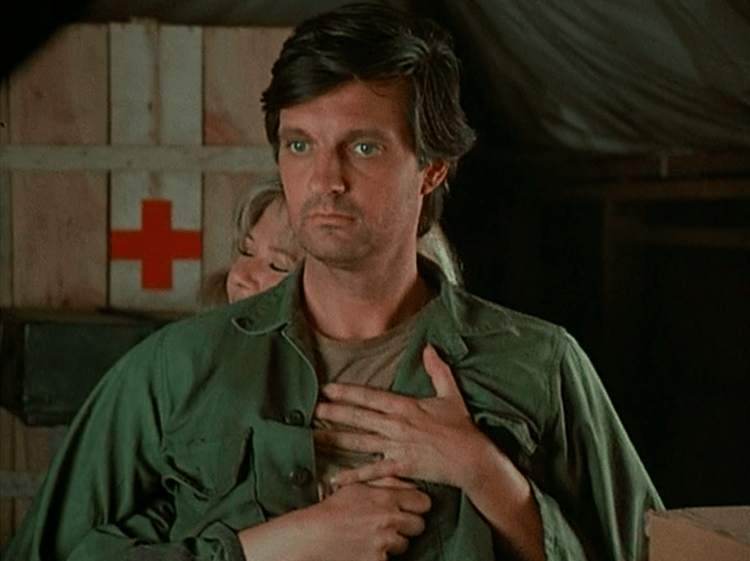
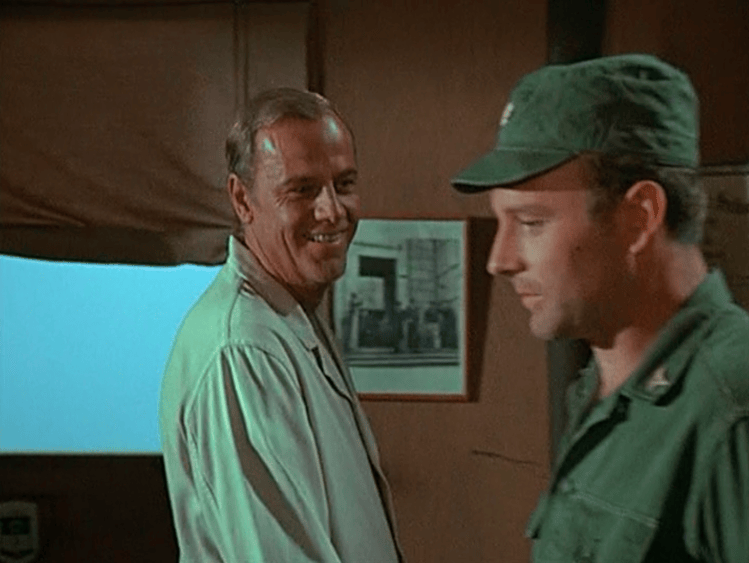
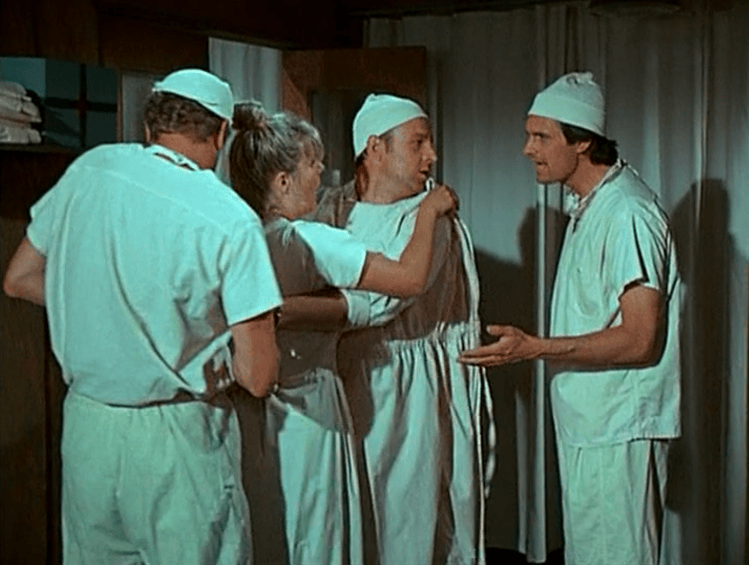
There is a North Korean POW in Post-Op, and Frank orders that he be transferred out of the 4077th and moved to the POW camp. Hawkeye and Trapper argue that he is not ready to be transferred, but Frank signs the orders anyway. They go to Henry, and Hawkeye and Trapper ask for an additional 24 hours. Hawkeye suggests that the POW could have his own bunk, and Henry agrees. In the Swamp, the POW is moved in, and Frank isn’t happy. But there’s another issue. The POW needs AB-negative blood. It’s a rare blood type, and Radar provides the records of everyone’s blood type in camp. Turns out, Frank has AB-negative! They know Frank won’t willingly give blood, so they plot to steal it while he sleeps. After stealing a pint of Frank’s blood and giving it to the POW, the POW shows signs of hepatitis. Hawkeye and Trapper have to find another way to test Frank without him knowing what they did. They are able to collect a urine test, but until the results are in, they have to distract Frank to keep him away from patients…and Margaret. The test results are delayed, so Hawkeye and Trapper have to tell Frank what they did just before they go into a session in the O.R. Thankfully, the results arrive, and Frank tests negative for hepatitis. But he is anemic!
This is a very, very early episode of M*A*S*H, and we can tell by the characters who are still in the series including Boone, Jones, Lt. Dish, and Ho-Jon (who still hasn’t left for Maine). As I mentioned in my introduction, this episode is a little over the top for me. There are a few reasons for this. One is the inclusion of several strange voice overs. This was done in the movie a few times, but I feel like there are more in this single episode than there was in the entire M*A*S*H film. Then, there are too many moments where we are asked to suspend our disbelief. The fact that Frank’s urine sample was collected in a non-sterile bucket goes against medical practices, and the fact that Frank doesn’t wake up at all as they take his blood is very hard to believe. Hawkeye and Trapper do note that it seems like Frank would sleep through anything, but it’s still unlikely that someone would sleep thought having a pint of blood taken. I don’t think “Germ Warfare” is a bad episode, however. There are some funny lines, and some memorable scenes, but a B-story might have helped balance some of the “ghoulishness” of this episode.
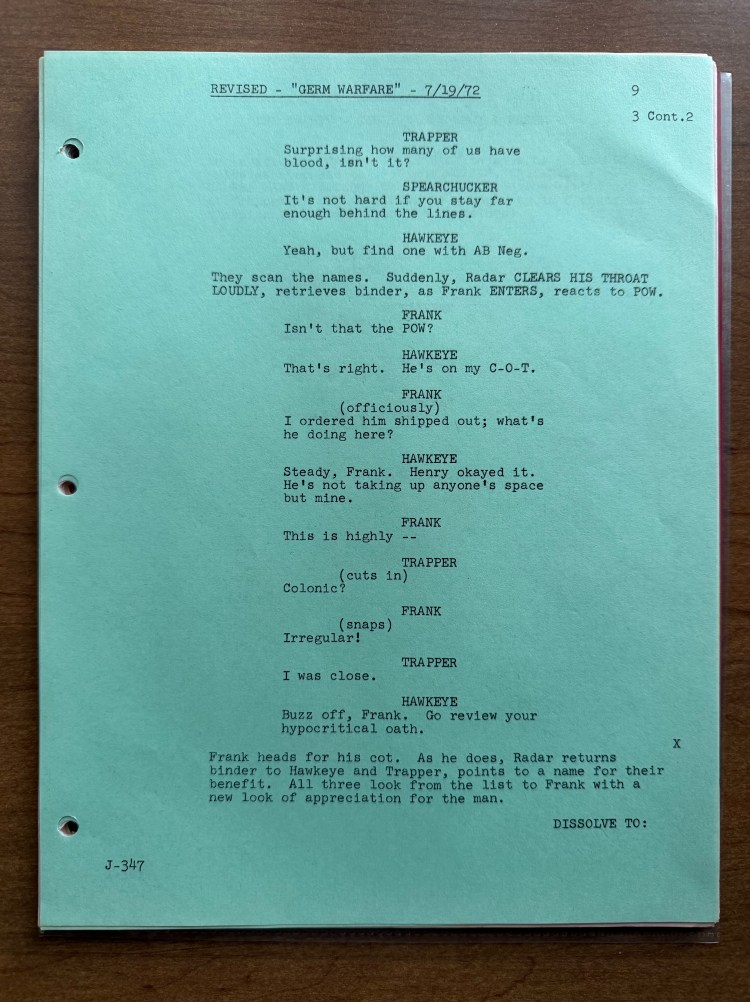
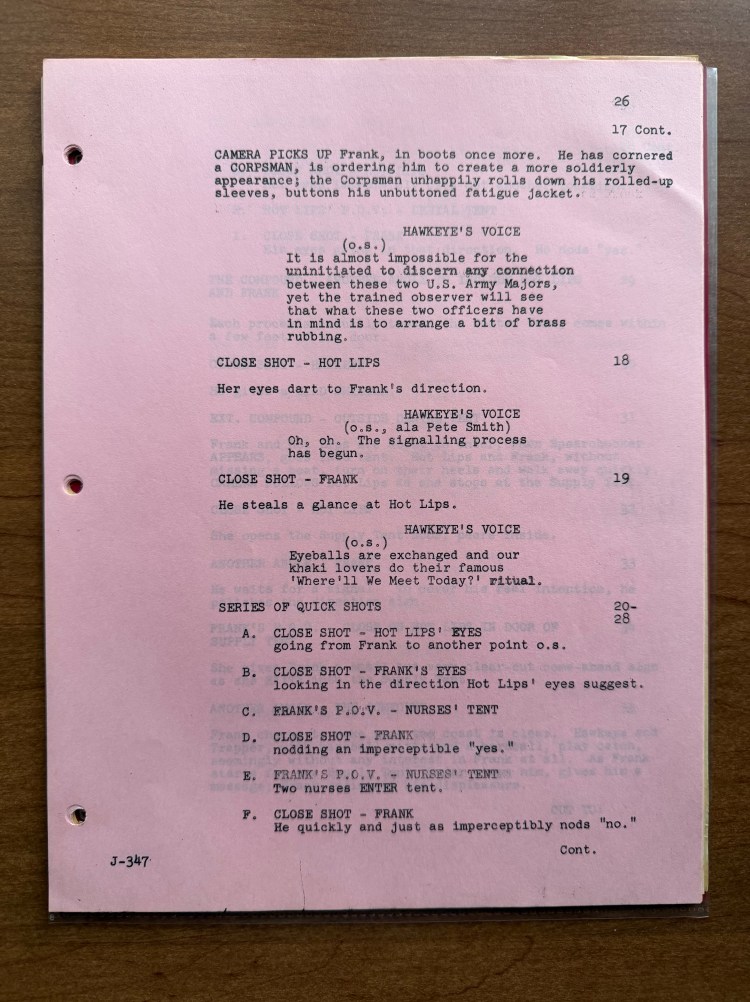
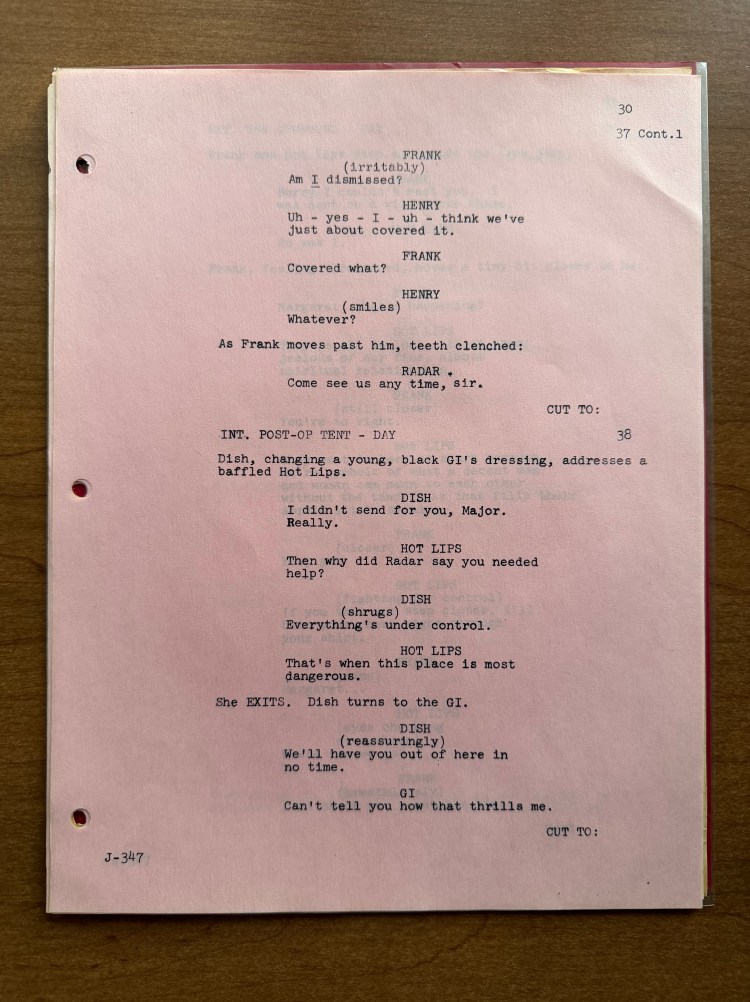
As I read along in the script, I found some interesting things worth noting. There are several typos in this script that I have never seen before. “Hawkeye” is misspelled a few times throughout. I think this is a result of M*A*S*H still being a new show. This script was typed three months before the pilot episode aired on CBS, so it wasn’t a household name yet. Since the script is a Second Revised Final draft and contains some revised pages, there were not many changes between the script and the final episode. There are a few lines were said slightly differently than written, but that was pretty standard. There are a few scenes that are slightly different than the final episode, however. The initial scene in Post-Op with Frank, Trapper, and Hawkeye was originally written a little longer (page 9). These lines were likely cut for time. Hawkeye’s voice over while they are trying to keep Frank and Margaret separated is in a different order in the script (page 26). Finally, there were a few extra lines by Lt. Dish after she talked to Margaret (page 30) that were also likely cut for time.
The first season of M*A*S*H, as with most shows, has some episodes that miss the mark. While I don’t think this episode is as bad as “Edwina” (01×13) or “Major Fred C. Dobbs” (01×22), it does come dangerously close to being a “slapstick comedy at the front.” I don’t think “Germ Warfare” is a bad episode or a good episode, but it did push the characters of Hawkeye and Trapper to a point where you question just how far they’d go to make a point. On a positive note, there were a few moments in this episode where Trapper is the voice of reason. I wish we saw that more in the first three seasons of the series. The first season of M*A*S*H was hard for the writers and producers because the movie had used most of the stories from the original novel, and they were more limited on what they could show on television. Gelbart and the writers found a balance by the end of the first season, and the heart of M*A*S*H was there. Just as in the later seasons when the writers of M*A*S*H experimented with different types of episodes, the writers of the first season had to do the same to find what M*A*S*H would ultimately become.

