

On March 18, 1975, the season three finale of M*A*S*H aired on CBS. It had been advertised as the final episode for Col. Henry Blake, but fans of the series were shocked by how the episode ended. The death of Henry Blake was a defining moment for M*A*S*H, and I would argue, a defining moment in television. This wasn’t the first time the death of a character has been shown on M*A*S*H. “Sometimes You Hear the Bullet” (01×17) was the first episode in which a minor character died on M*A*S*H. That allowed the show runners to do more with the series. A series didn’t kill main characters off, but M*A*S*H did, and with that, Larry Gelbart and Gene Reynolds held true to their promise of portraying war in an accurate way. Gelbart defended the decision immediately following the broadcast of the episode and in the following decades. March 2025 marks the 50th anniversary of the original broadcast of “Abyssinia, Henry” (03×24), so in this week’s episode, we look at a script from the episode and review this important event in the history of television.
The Script
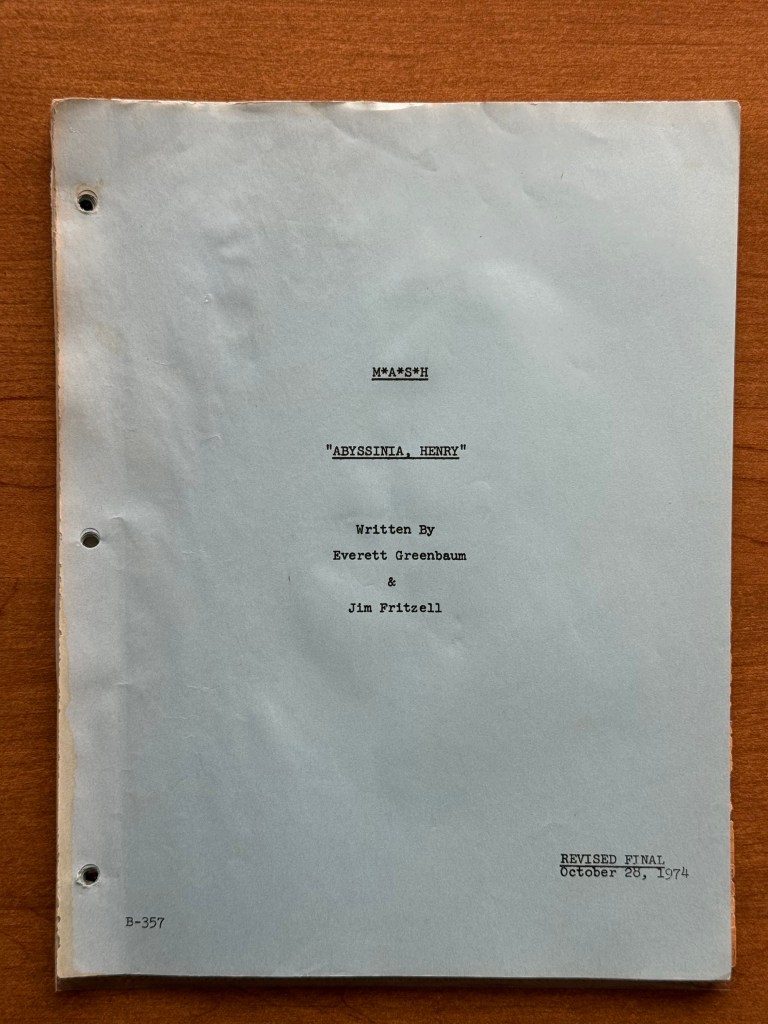
This script is a revised final draft dated October 28, 1974. While the end of “Abyssinia, Henry” was influenced by Gelbart and Reynolds, the episode was written by the writing team Everett Greenbaum and Jim Fritzell. They are credited with writing 24 episodes of M*A*S*H in seasons three through six. They would also write for AfterMASH. The episode was directed by Gelbart, which is fitting due to the importance of this episode. As I mentioned, the episode aired March 18, 1975, and we know this was the last episode filmed of the season because after the final scene was shot, there was a wrap party scheduled.
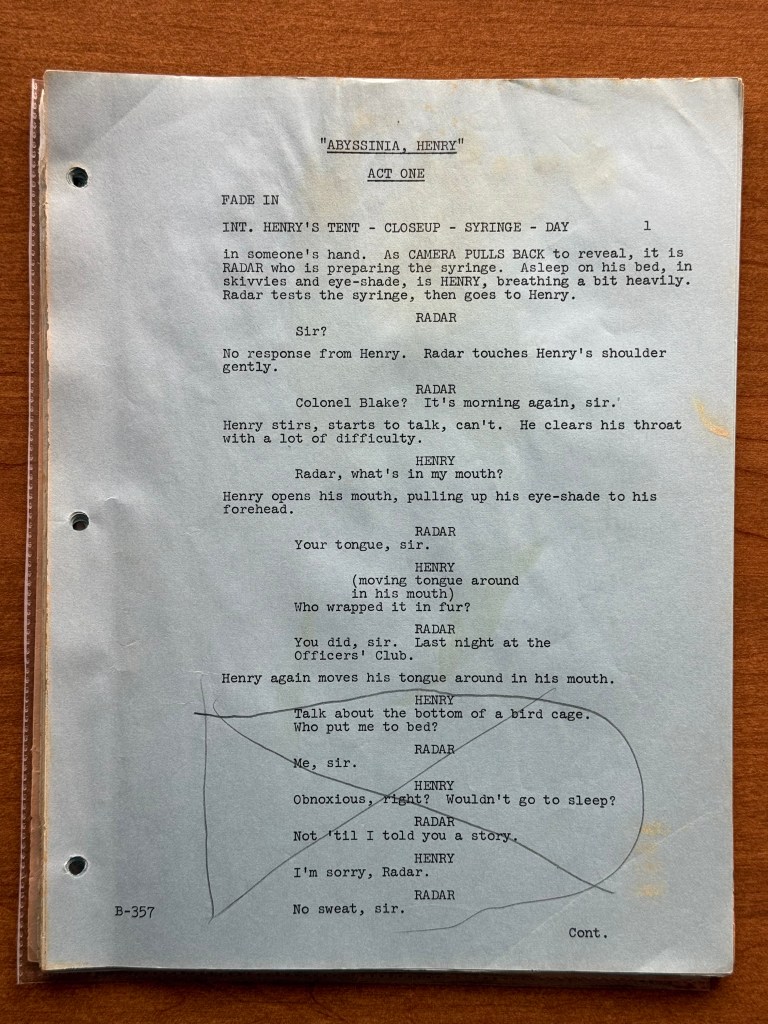
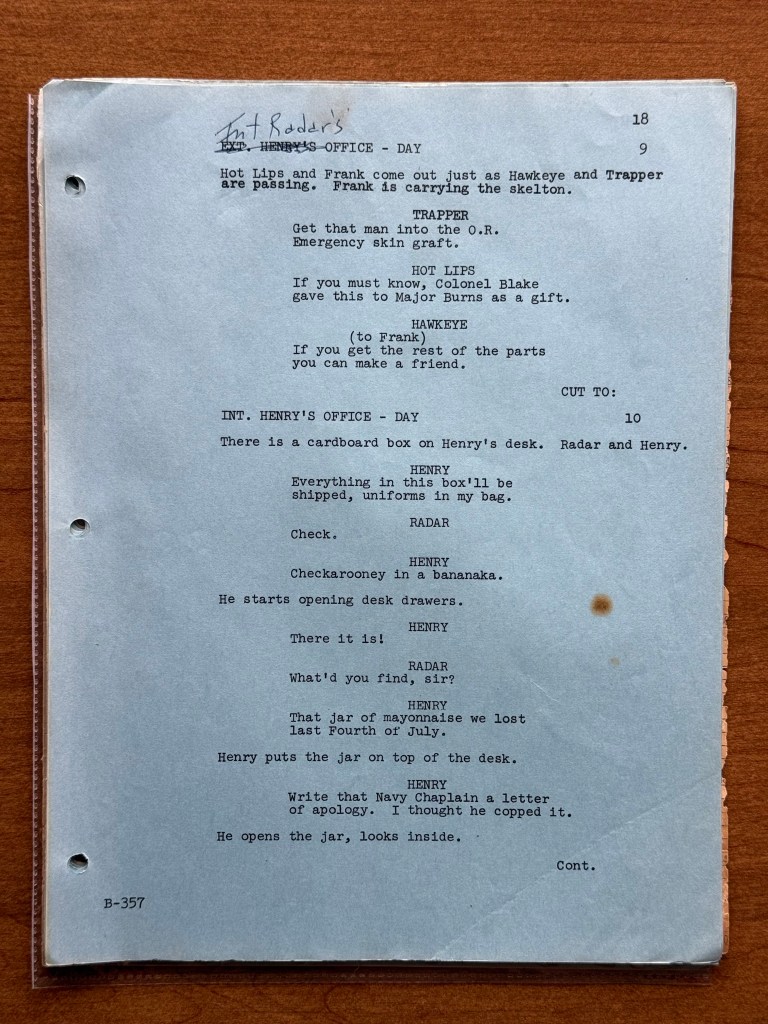
I have been collecting M*A*S*H scripts since 2007, and I didn’t acquire a copy of this script until 2024. This episode is was one of my “grail” scripts along with “The Pilot” (01×01) and “Goodbye, Farewell and Amen” (11×16). I believe that “Abyssinia, Henry” is as important as either of those episodes. Like the script for “Mail Call” (02×23), this script belonged to Stephen Bass, who was the sound mixer for M*A*S*H for the first eight seasons. Bass is one of the countless, uncredited crew members who worked behind the scenes at 20th Century Fox Television to ensure M*A*S*H looked and sounded good for the audience, and he made several markings throughout this script. Unfortunately, this script does not have any revised pages or production documents, such as Call Sheets and the Shooting Schedule. However, it does include one very important page.
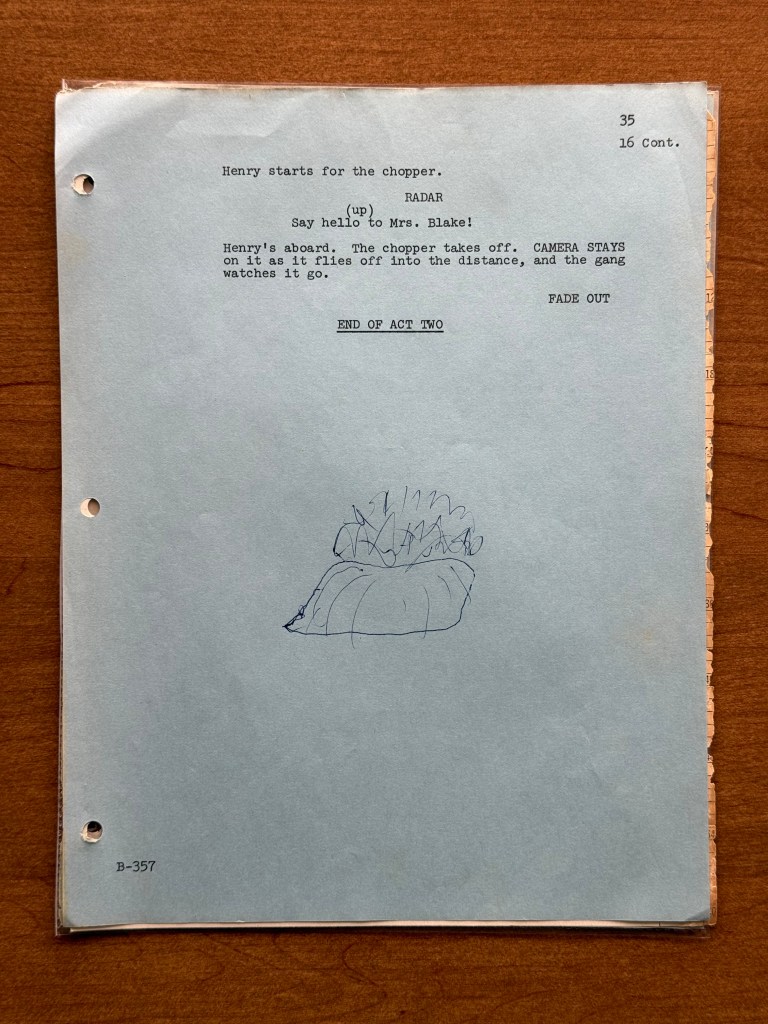
The story of the next to last page of the script for “Abyssinia, Henry” has become part of the M*A*S*H legend (the page for the Tag is the final page of the script). Gelbart withheld the revised page of the script from the cast until the day they filmed it so their reactions to Henry’s death were genuine. It was delivered to the cast as a revised page dated November 6, 1974, and the cast read it before filming the final scene in the O.R. Thankfully, Bass’s copy of the script includes the final revised page. The scene is written pretty much as it was delivered, but this copy of the page looks different. It has measurements on it for margins, and it is listed as the “Master.” M*A*S*H scripts were mimeographed, and revised pages were mimeographed onto sheets of paper that were brightly colored (pink, green, blue, yellow, etc.). However, this page is the test page from the printing department from which the copies of the revised page were made for the cast and crew. When I received this script, I didn’t know whether this page would be there. Not only was I relieved to find out that this page was in the script, I was excited to learn yet another story from behind the scenes. The print shop at 20th Century Fox printed all the scripts and revised pages for M*A*S*H for eleven seasons. But it goes beyond M*A*S*H. The workers in the print shop would have printed scripts for all shows and films being produced at 20th Century Fox! That would have been a busy building!

M*A*S*H scripts tell stories, and this script has a lot to tell. We get some insight into the work done by Bass as he worked on the sound engineering for the series and recorded voiceovers. We also learn about the print shop at 20th Century Fox that produced hundreds of copies of scripts for various productions at Fox Studios. Most importantly, we see the work that went into the creating a groundbreaking episode in the history of television. Adding a copy of the script for “Abyssinia, Henry” to the collection was at the top of my list, and I am glad that this script found its way to me. Highlighting the work of both Bass and the print shop is important to me because it took hundreds of people in various roles to make M*A*S*H, and “Abyssinia, Henry” is a special episode in the history of television.
The Final Episode
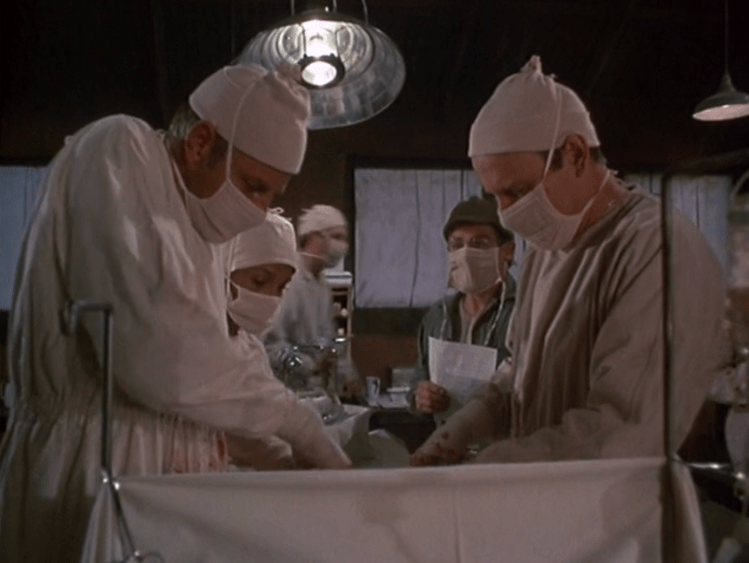
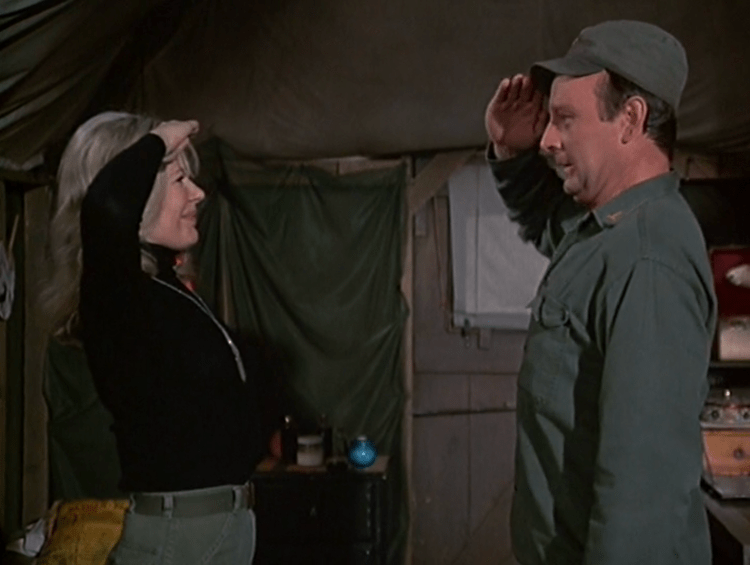
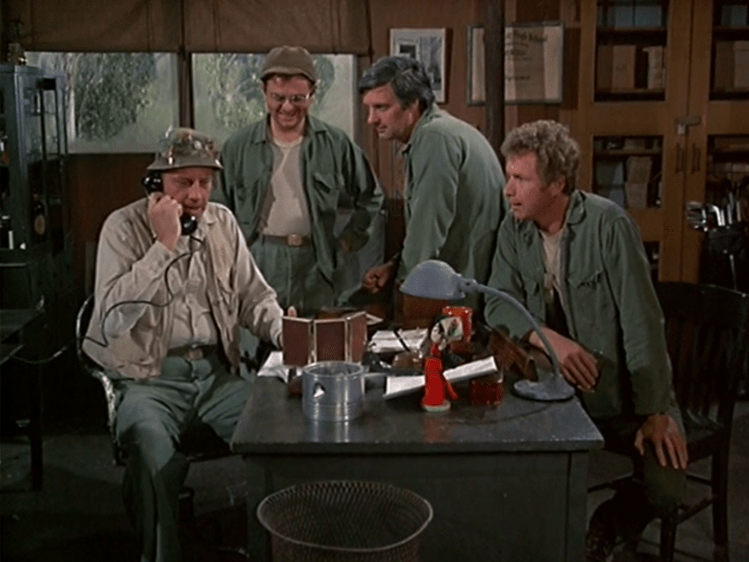
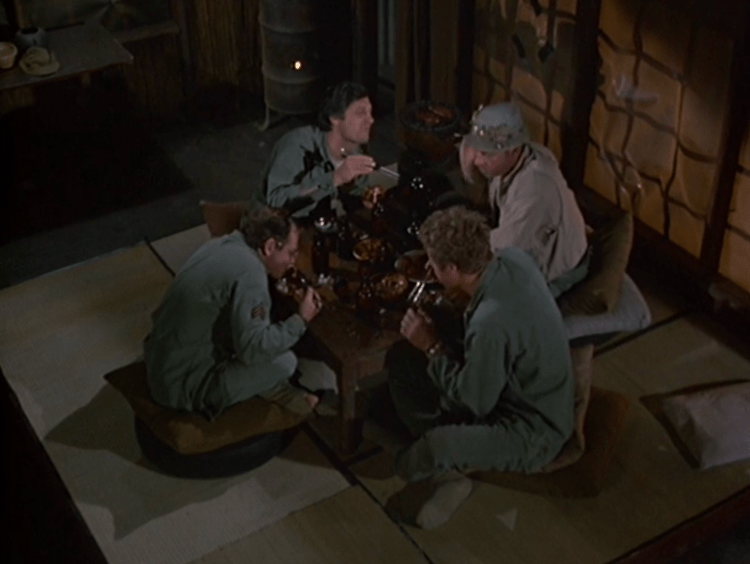
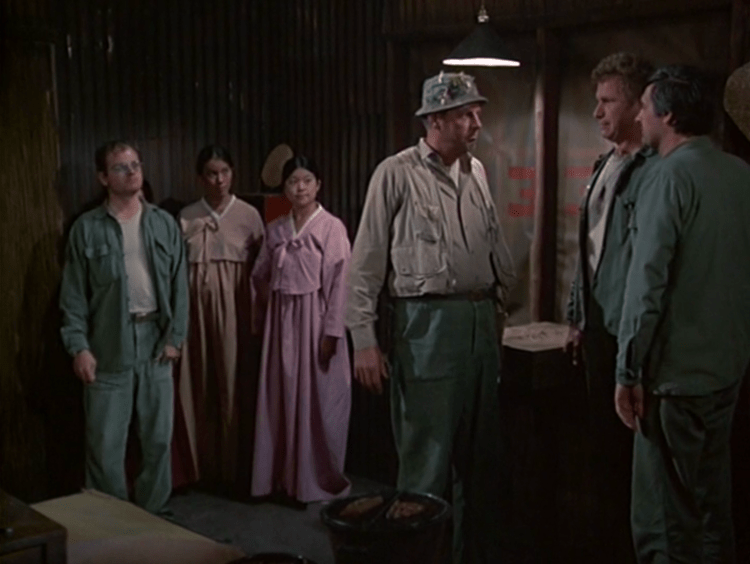

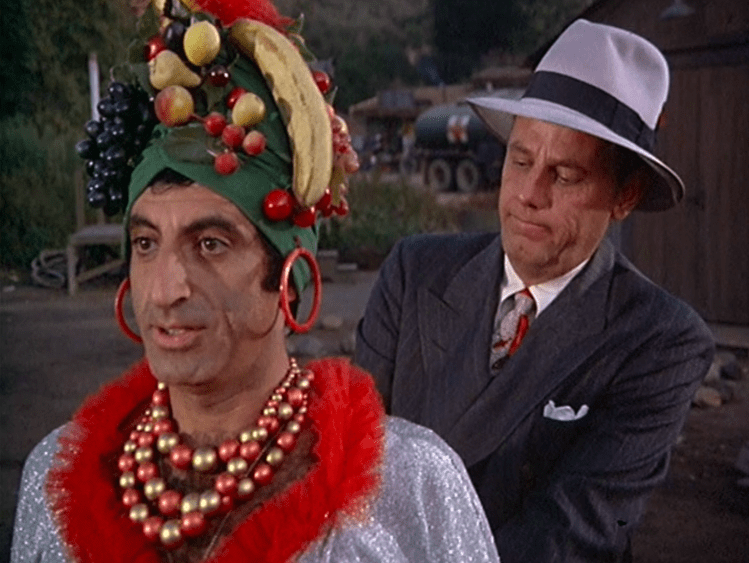
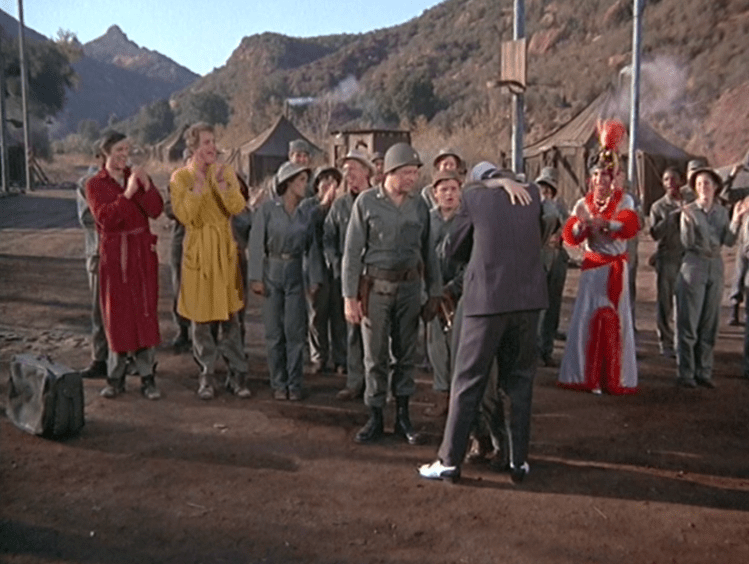
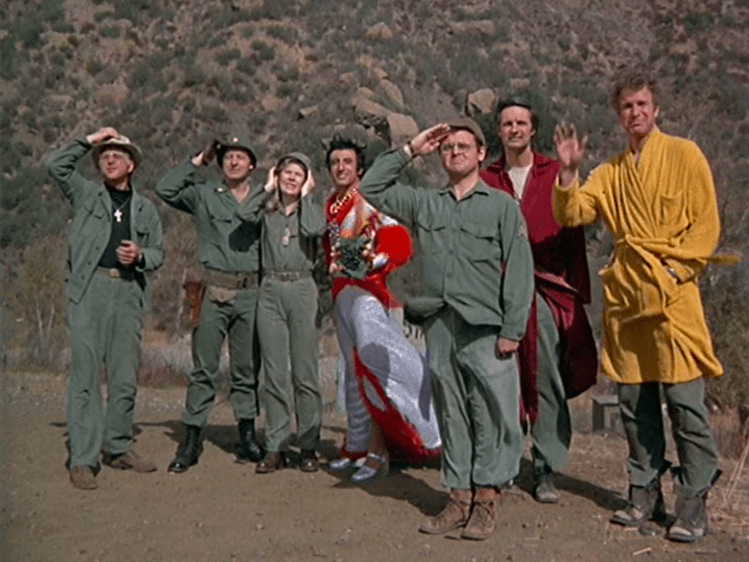
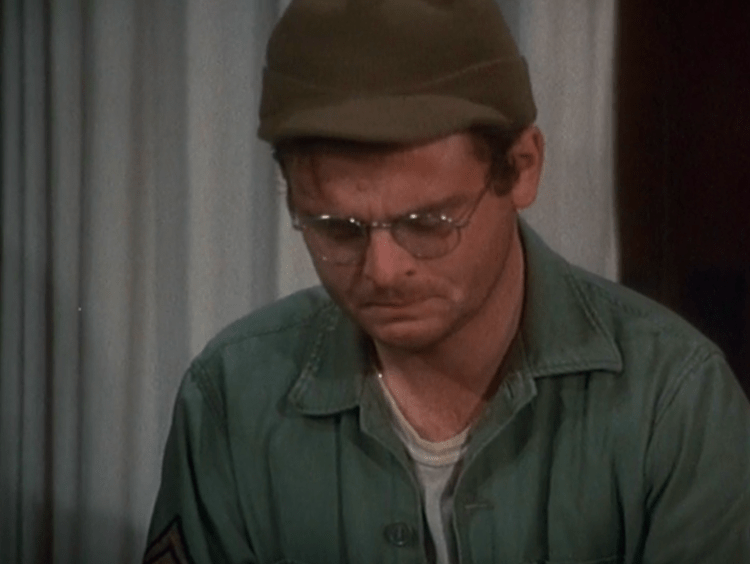
Radar interrupts a session in the O.R. to delivery some news to Col. Henry Blake…he’s going home! After the session ends, he begins making plans to go home and calls his wife to let her know that he will be coming home. Meanwhile, Margaret and Frank are happy because Frank will be taking over command of the 4077th. On Henry’s final night, Hawkeye, Trapper, and Radar throw Henry a party at Rosie’s Bar. During the celebration, they “drum him out” of the military and they give him a gift, a new suit. The next day, Frank has the full camp fall in to say goodbye to Henry. He has heartfelt goodbyes with Hawkeye, Trapper, Father Mulcahy, and Klinger. After kissing Margaret, he heads up to the helicopter pad to fly out. He gives Radar a hug before getting into the helicopter, and we see everyone wave goodbye as he flies away. Later in O.R., Radar once again enters, but this time with the news Henry’s plane was shot down over the Sea of Japan and no one survived.
It is hard to think of anything to say about “Abyssinia, Henry” that hasn’t already been said. It is such a well written episode. The viewer joins Henry in his excitement to go home to his wife and family. His conversation with his wife, the farewell party, and the final scene of everyone waving as he flies off in the helicopter are the perfect send off. Had the episode ended there, it would have been a good farewell to a character on television. But Gelbart and Reynolds’s decision to kill Henry is what makes this episode so important in the history of television. The episode was funny and heartfelt, and the scene with Radar in the O.R. was an unexpected gut punch. There was fan backlash after the episode aired, and it is easy to see why. I think if you ask most M*A*S*H fans today, they understand why the character was killed. It doesn’t make it an easy episode to watch. Even thought I know what is coming at the end of the episode, the final scene in the O.R. gets me every time.
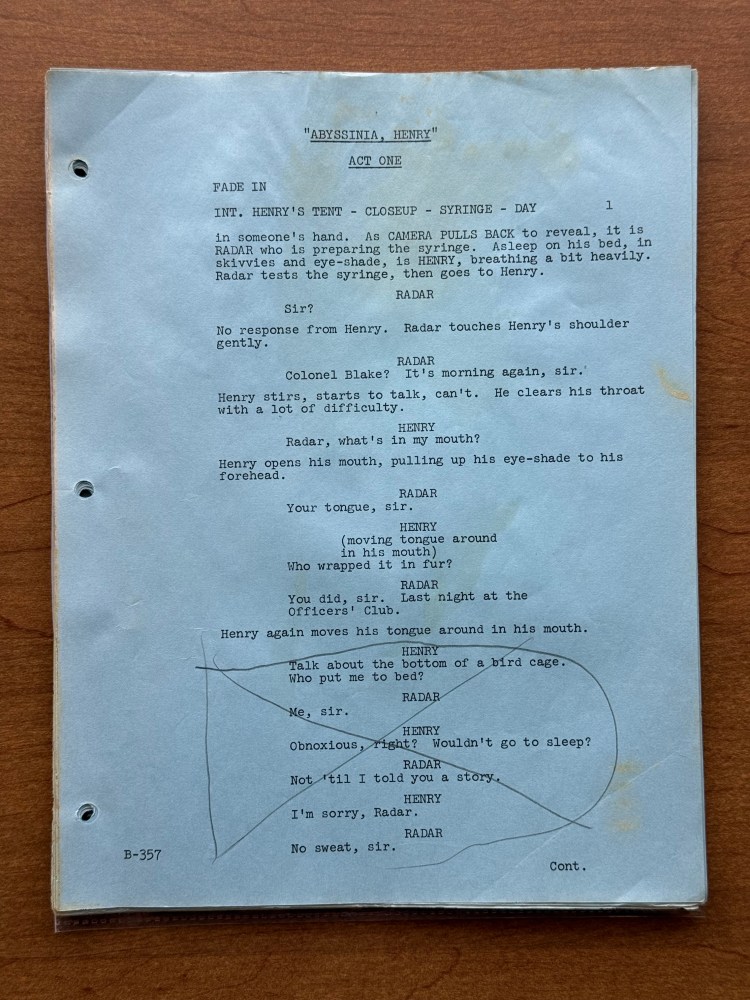
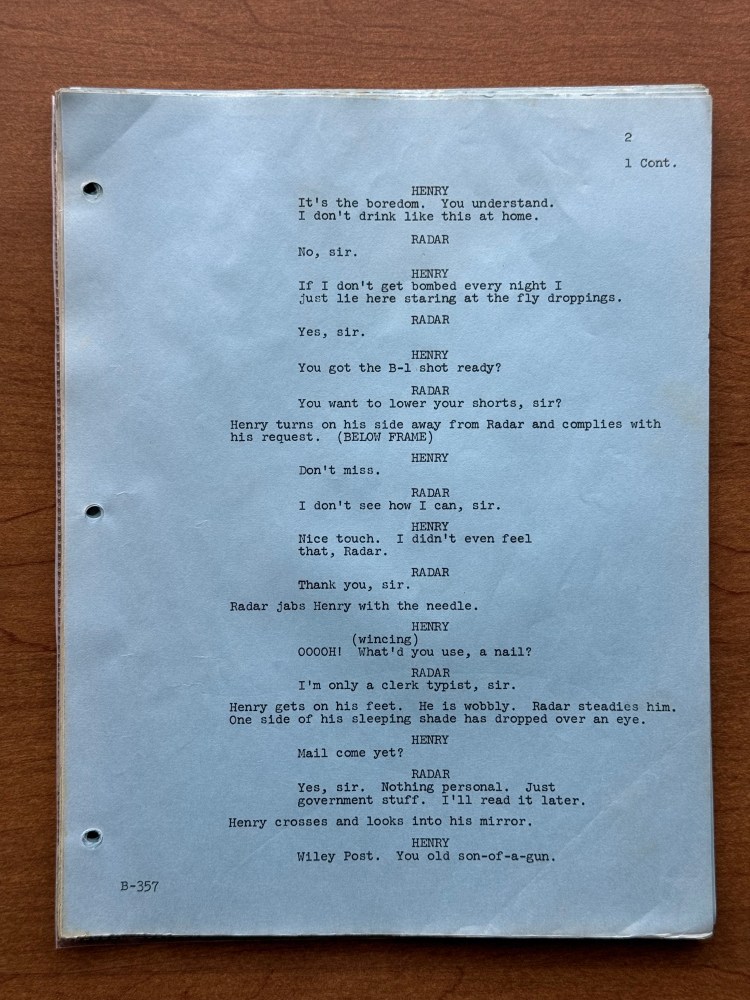
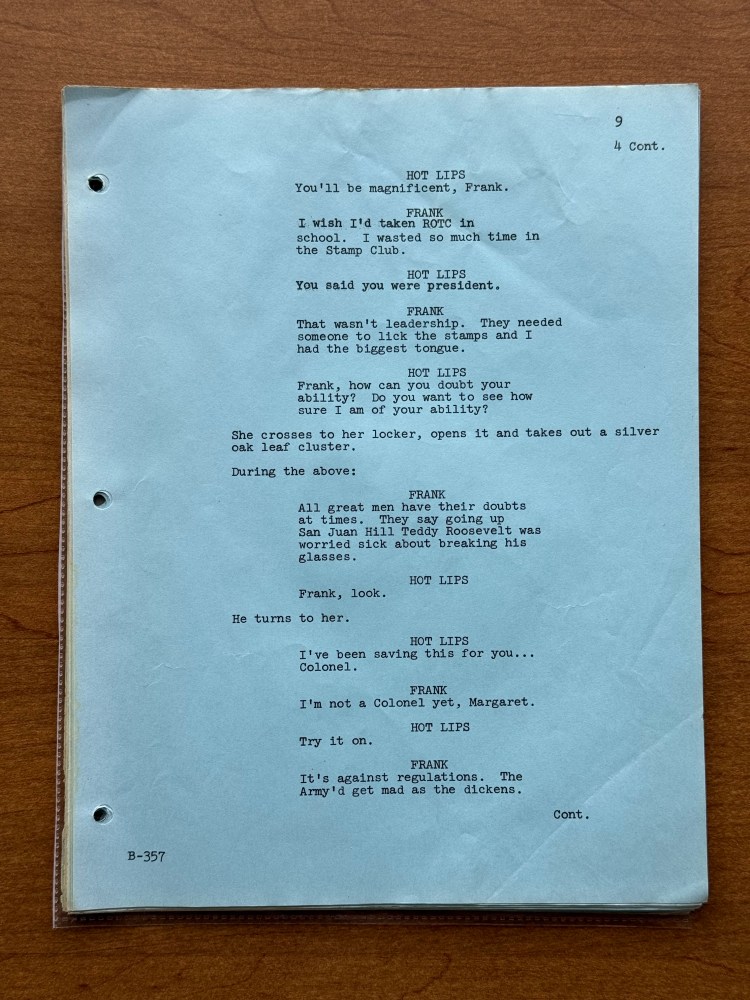
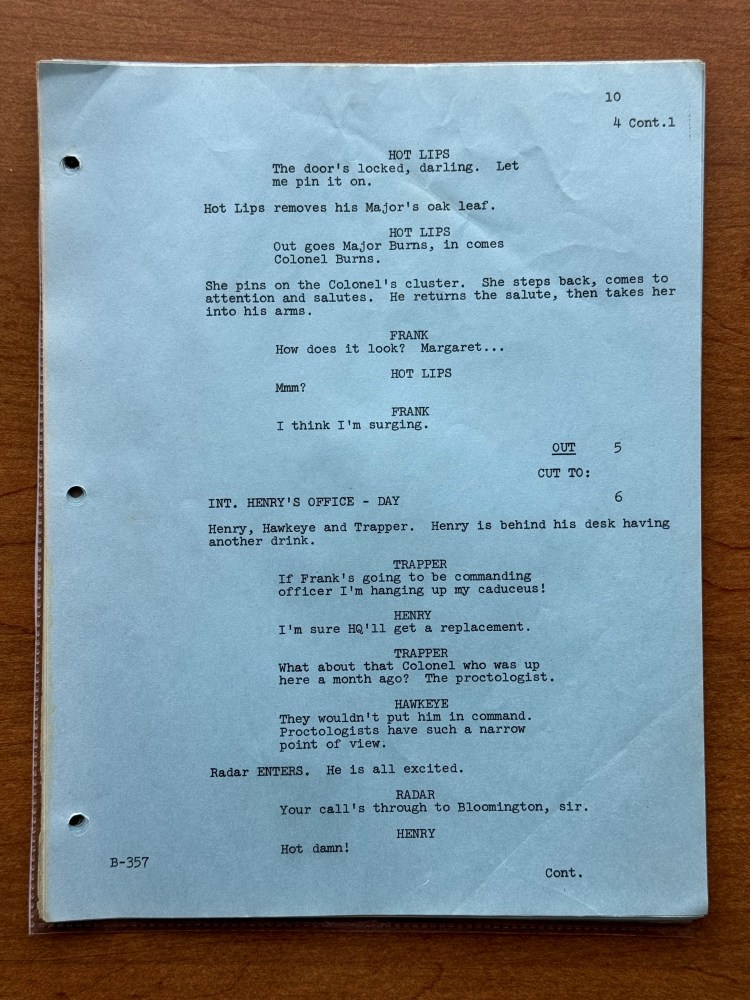
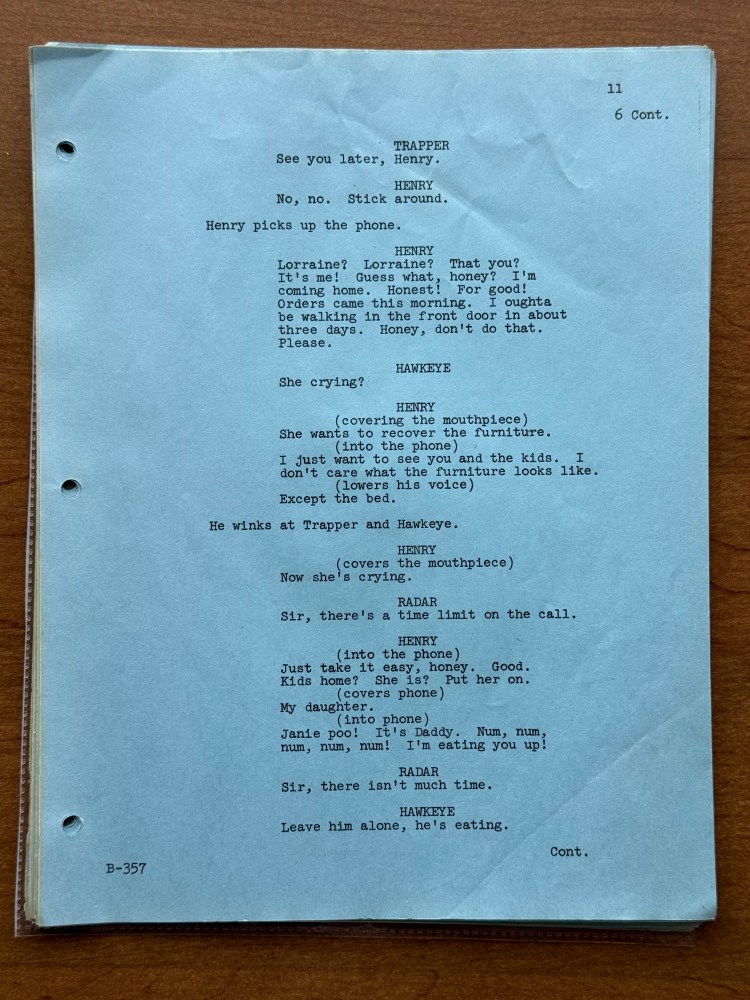
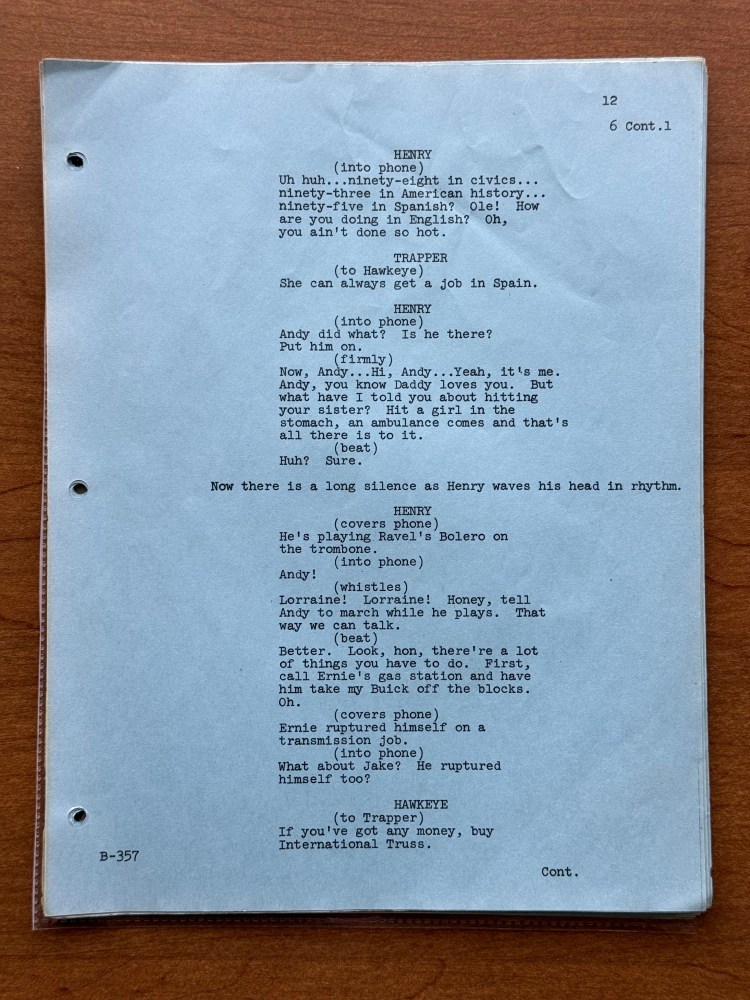
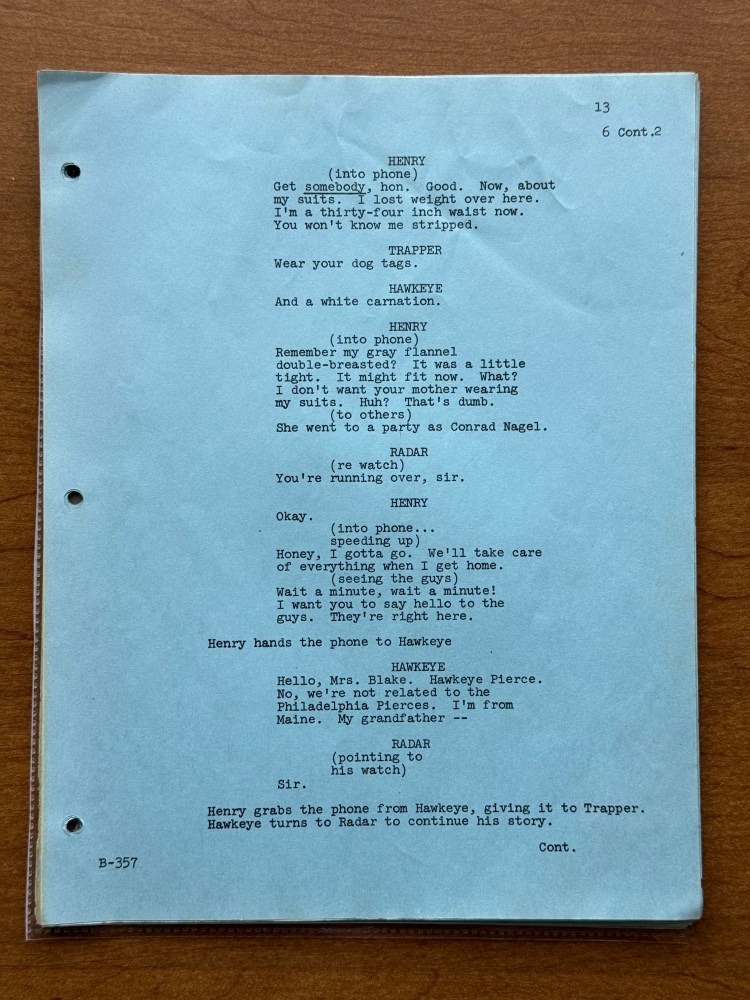
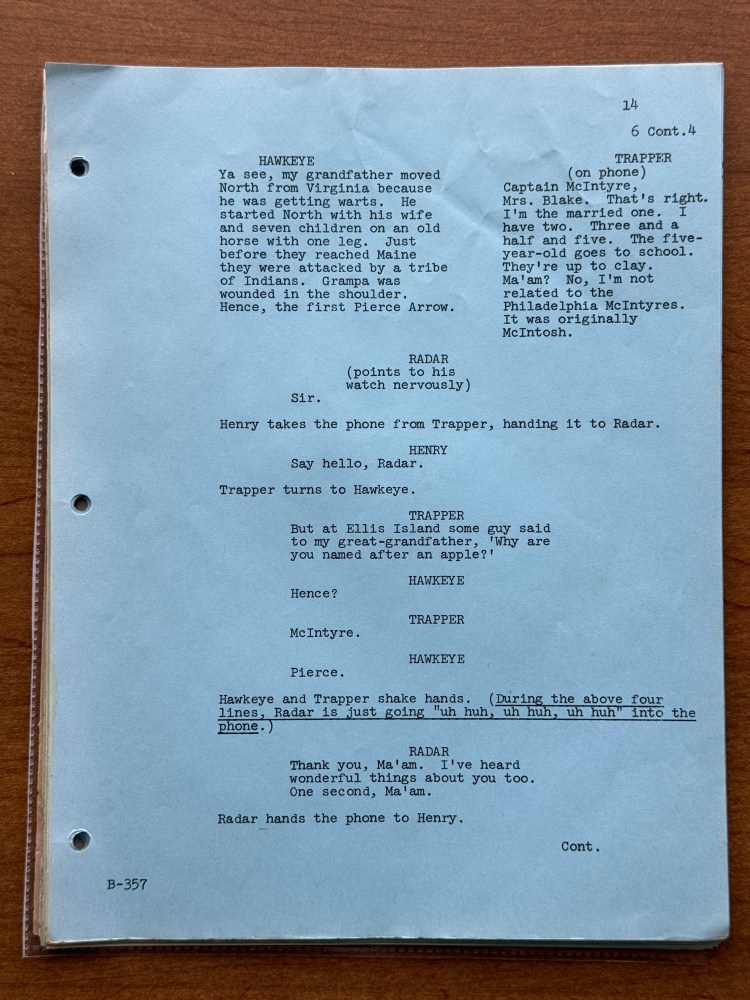
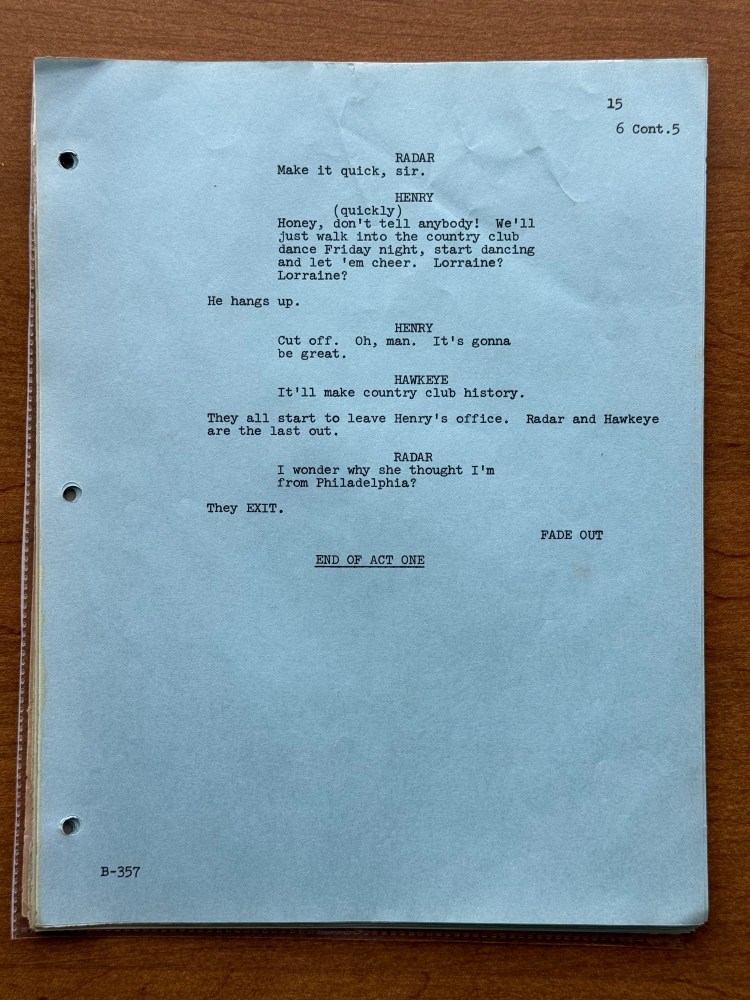
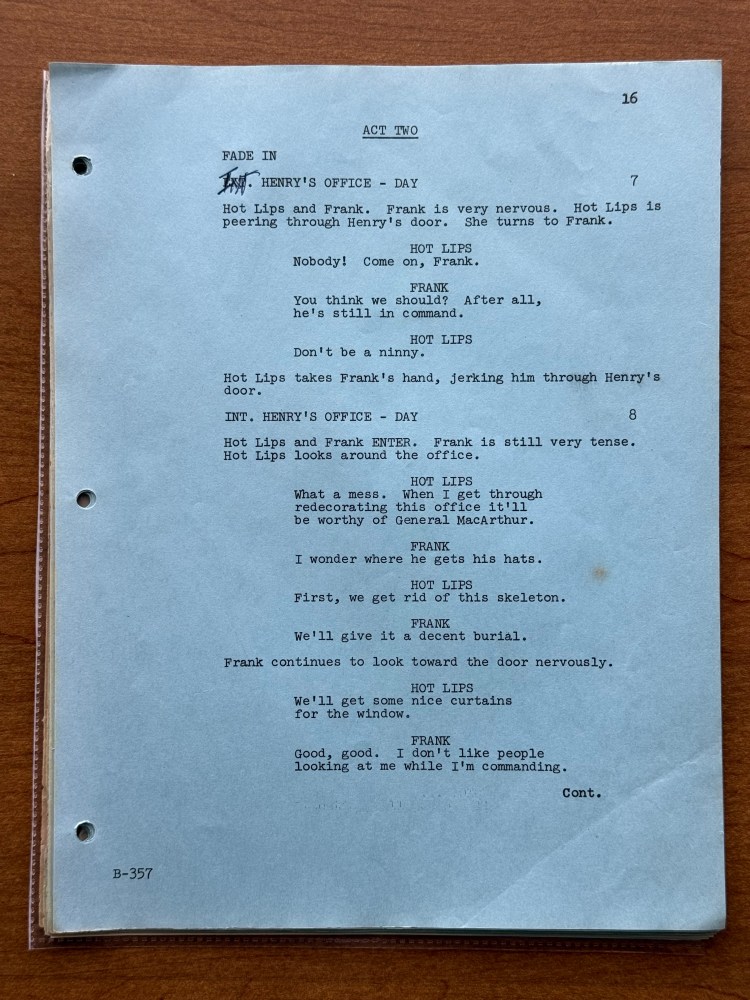
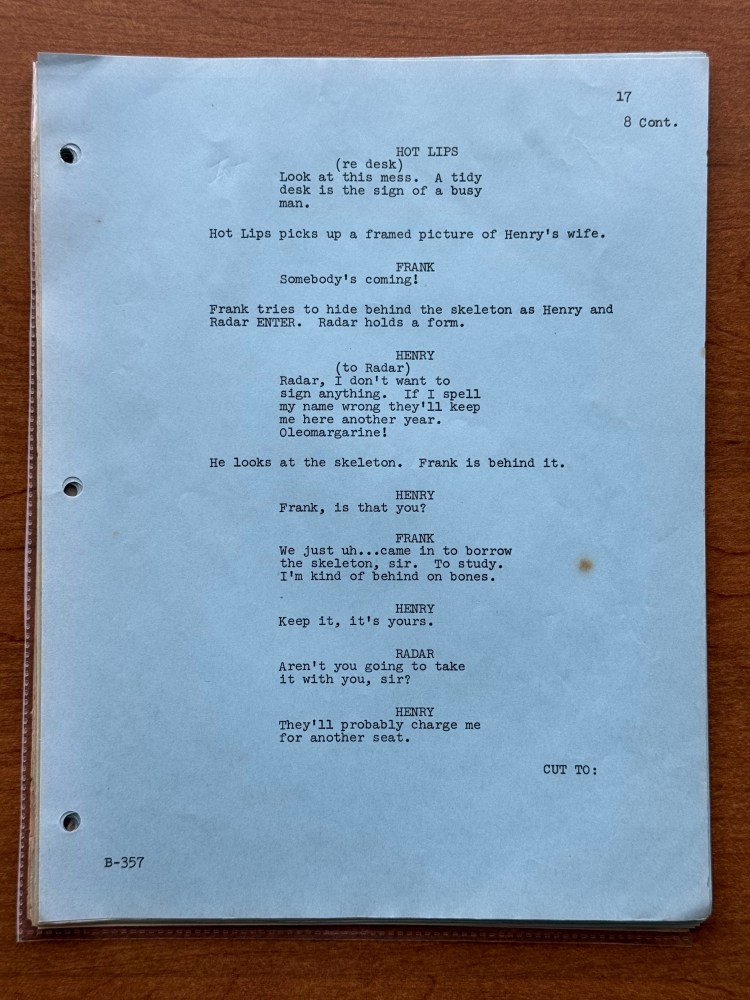

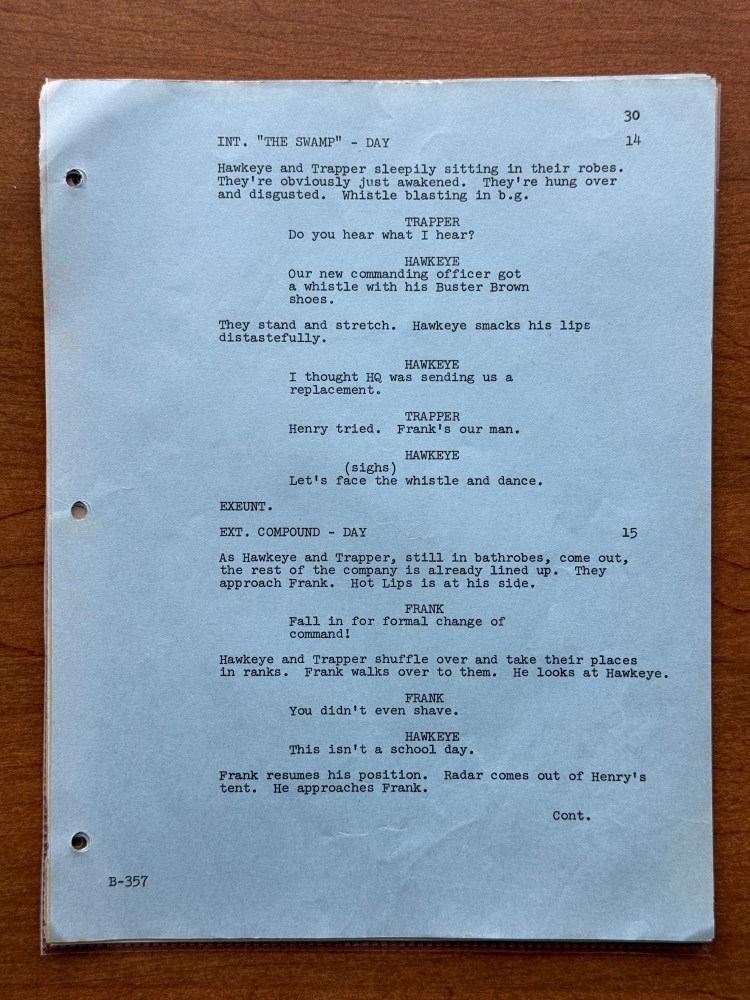
I noticed a few mistakes in this episode that are kind of unusual. At one point, Henry says that his wife has the most fantastic body in “downstate Illinois,” but Bloomington is in upstate Illinois, and it is written for Henry to say “upstate Illinois” in the script. There is also an issue with the time difference between Korea and the United States. Radar tells Henry that Illinois is fourteen hours ahead of Korea, but Illinois is actually fifteen hours behind of Korea. Beyond those two errors, there are surprising number of differences between the script and final episode. Being a revised final draft, I had assumed that it would be pretty close, but there were several changes besides the typical, minor wording changes the actors would make or the directors might have asked for in the moment. A list of the changes is below, and the page numbers correspond to the photos in the gallery above.
- Pages 1 – 2: There is a scene in Henry’s tent between Henry and Radar before we see them in them in the O.R.
- Pages 9 – 10: The scene between Frank and Margaret in her tent was longer as written
- Pages 10 – 11: While they are waiting for Henry’s phone call to his wife, Henry, Hawkeye, and Trapper talk to Henry about their concerns over Frank becoming commanding officer
- Pages 12 – 15: The phone call to Henry’s wife was longer, and Hawkeye, Trapper, and Radar each talked to Mrs. Blake (I am actually glad this got cut!)
- Pages 16 – 18: There was a scene where Frank and Margaret went in to Henry’s office planning for Frank taking command
- Page 30: In a follow up to the scene on pages 10 – 11, there was a scene cut where Henry tells Hawkeye and Trapper that Frank is taking command and no replacement commanding officer is being sent
I believe that most of the scenes were cut for time, and the producers and Gelbart wanted to be sure they gave most of the time to Henry’s farewell party and the final scenes with Henry and the full outfit.
“Abyssinia, Henry” is a very important episode in the history of television. It was one of the first shows to kill a main character to write them out of the show. Most of the time, characters were written out with little fanfare, much like how Trapper was written out of M*A*S*H. Henry’s death typically overshadows the fact that the O.R. scene where we find out that Henry was killed is also the last time we see Trapper John McIntyre. Wayne Rogers leaving the series over the break between seasons three and four meant that the show runners had to replace not only McLean Stevenson, but Rogers as well. That is a lot of change in one season, but after a shaky start in the ratings in season four, M*A*S*H recovered. M*A*S*H proved that cast changes could be made successfully. When Gelbart convinced Alan Alda to join M*A*S*H in 1972, he said that they wouldn’t make another slapstick Army comedy. They wanted to contribute something that showed the reality of war. Death is a reality of war, and the death of Henry Blake has gone down in television history as a reminder that the good guys die too.


In my time living in Illinois, and being married for decades to a woman from Chicago, I don’t think I ever heard the phrase “upstate Illinois”. The two terms were Chicagoland and Downstate, which was pretty much everything not part of Chicagoland. (Nobody was really sure how to classify northwestern Illinois (e.g. Galena), so they just didn’t talk about it much. 🙂 ) Bloomington, close to where I lived, considered itself downstate. My guess is that the inconsistency occurred because the screenwriter didn’t know the local lingo, but Mac did, so he fixed it.
LikeLike
That’s a great catch! It makes a lot of sense since McLean was an Illinois native himself!
LikeLike