
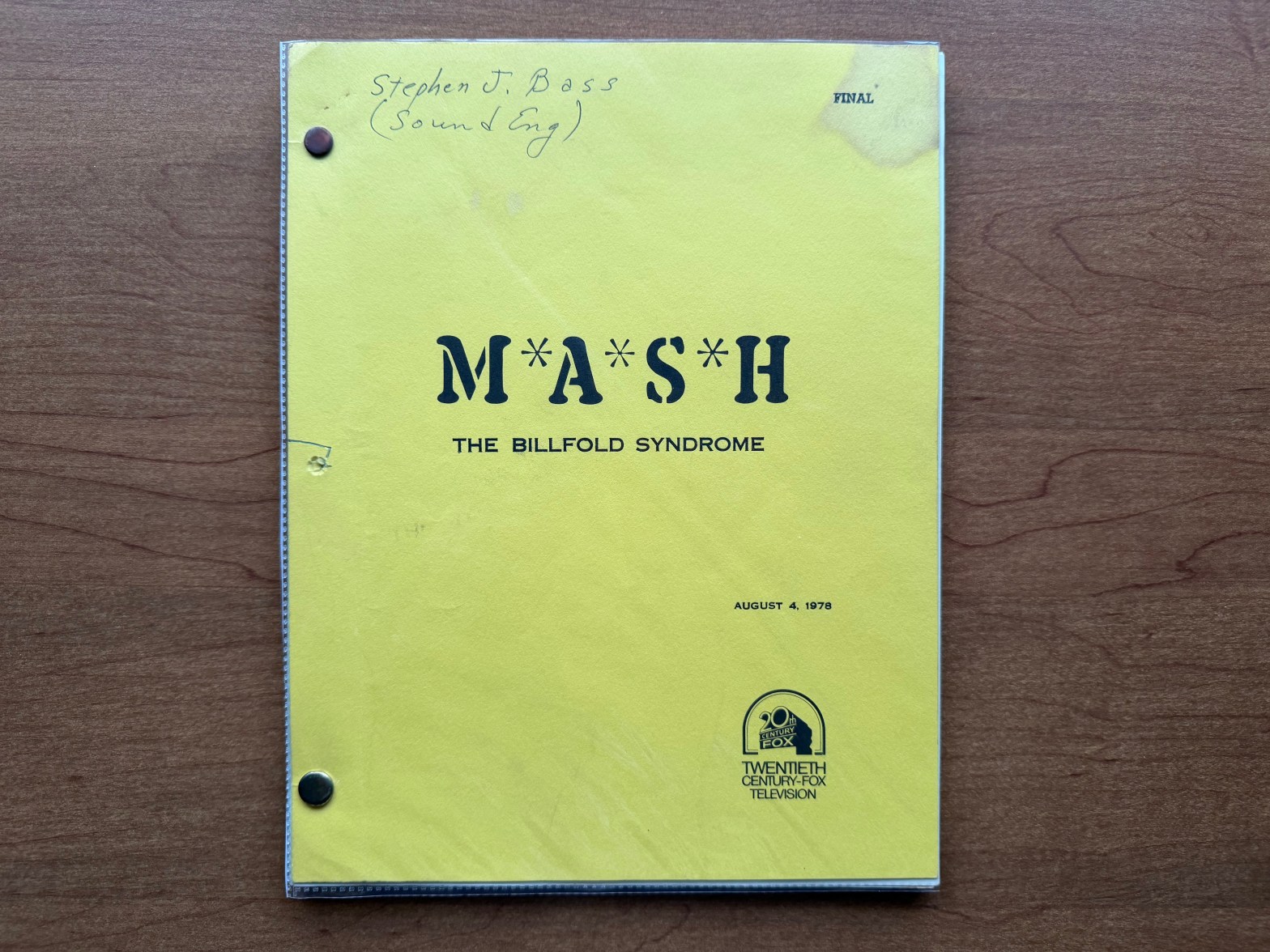
In my 2025 rewatch of M*A*S*H, there were several episodes that stood out to me. There are the fan favorites that stuck with me such as “Abyssinia, Henry” (03×24), “Dear Sigmund” (05×07), and the finale. But as I get older and learn more about the series and the use of MASH units during the Korean War, there are episodes that now have a different meaning. My impressions have changed, so my opinions on episodes that I may not have enjoyed as much have also changed. Pair that with the realization that there are several gaps in these Script Spotlight posts, I want to go back and explore some seasons of M*A*S*H that I have overlooked. I was struck by how many episodes I listed as “favorites” in my season seven rewatch, but there was one that really stood out. I am an unapologetic fan of Allan Arbus’s portrayal of Dr. Sidney Freedman, and I was really surprised that I hadn’t already reviewed the script for “The Billfold Syndrome” (07×05) because it is truly one of the best episodes of season seven, and perhaps, the later seasons of M*A*S*H.
The Script
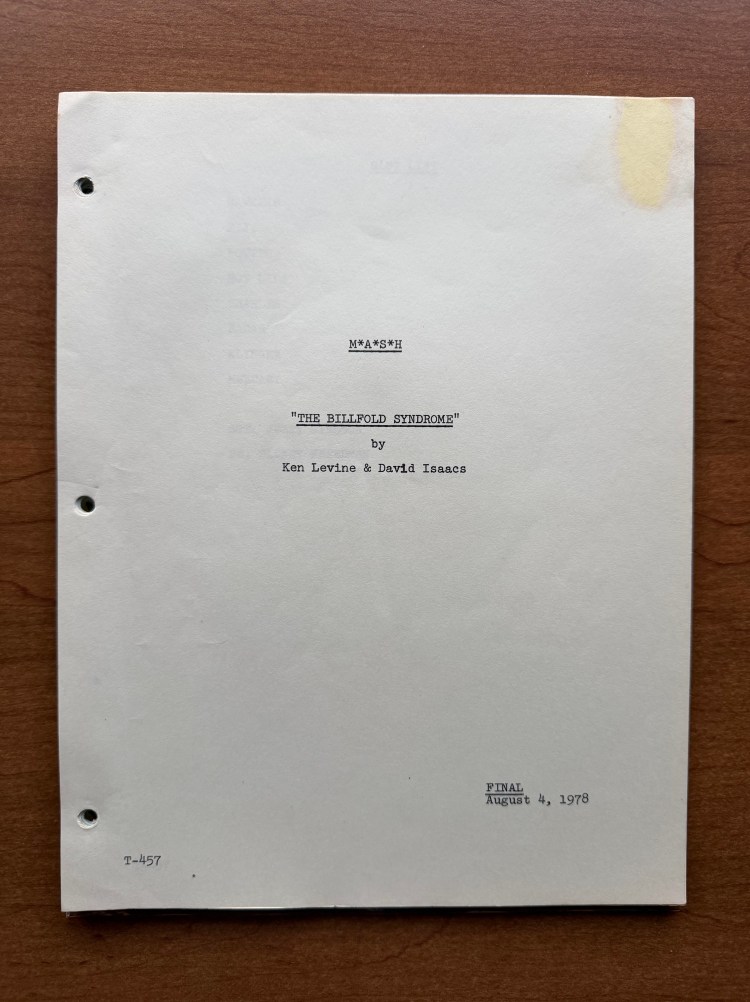
This copy of the script is a final draft dated August 4, 1978. The episode aired on CBS on October 16, 1978. It was written by the writing team of Ken Levine and David Issacs, who has a total of 37 writing credits for M*A*S*H. They went on to work for other popular shows including Cheers, Wings, and Frasier. The episode was directed by Alan Alda, who directed a total of 32 episodes of the series. This script belonged to M*A*S*H sound engineer Stephen Bass. He began his career in the early 1950s, and Bass worked for M*A*S*H from season one until his retirement in 1980.
This copy of the script does not have any of the Call Sheets for each day of filming, but it does have the full shooting schedule for the episode. This episode was filmed on August 10, 11, & 14, 1978. Since the entirety of the episode was filmed on Stage 9, they were able to complete the filming in three days. M*A*S*H scripts often took four days to film, especially if they had to film at Malibu Creek State Park one of those days. The script does contain several revised pages, and they are all dated August 9, 1978. So the revisions from the script were likely made after the table read on the 9th, and they were ready to start filming on the 10th. Some of Bass’s other scripts are marked up (see “Abyssinia, Henry” as an example), but this one doesn’t have any notations are markings from him. There weren’t many changes between the script as presented here and the final episode, and there weren’t many voiceovers or obvious dubbing in this episode, so it’s likely that Bass didn’t have many additional voiceovers to record.
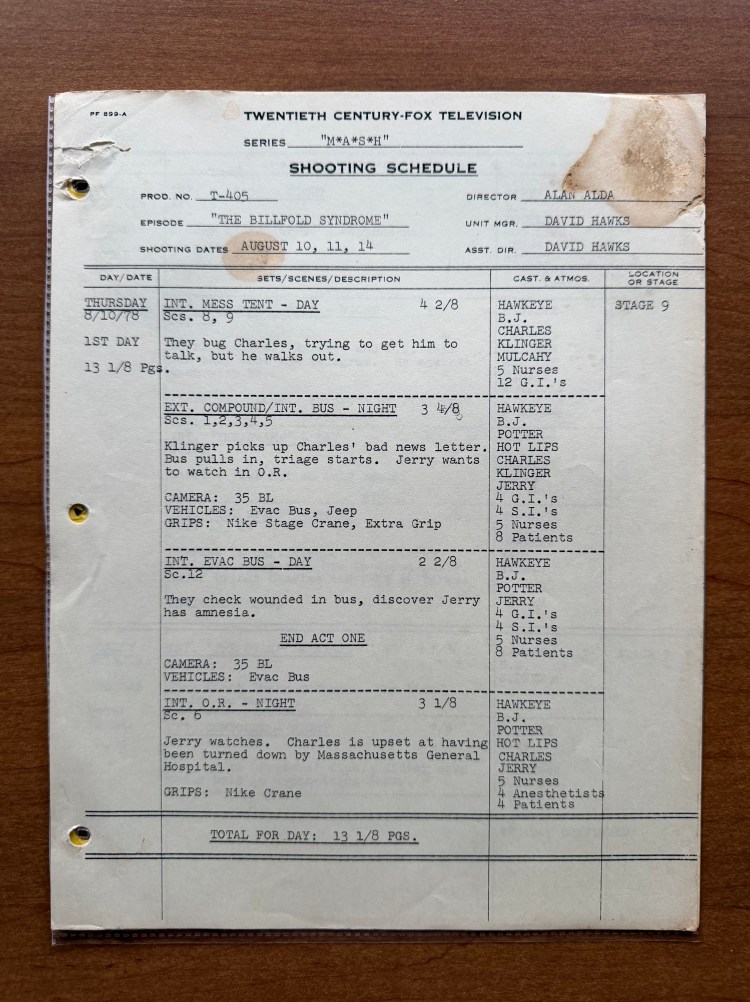
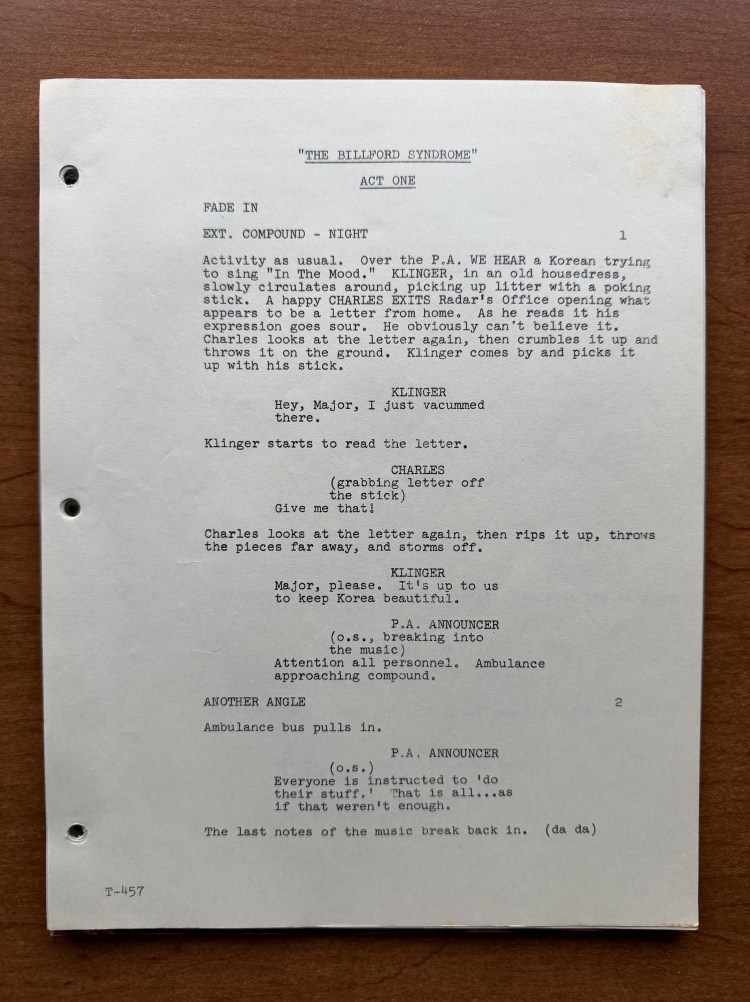
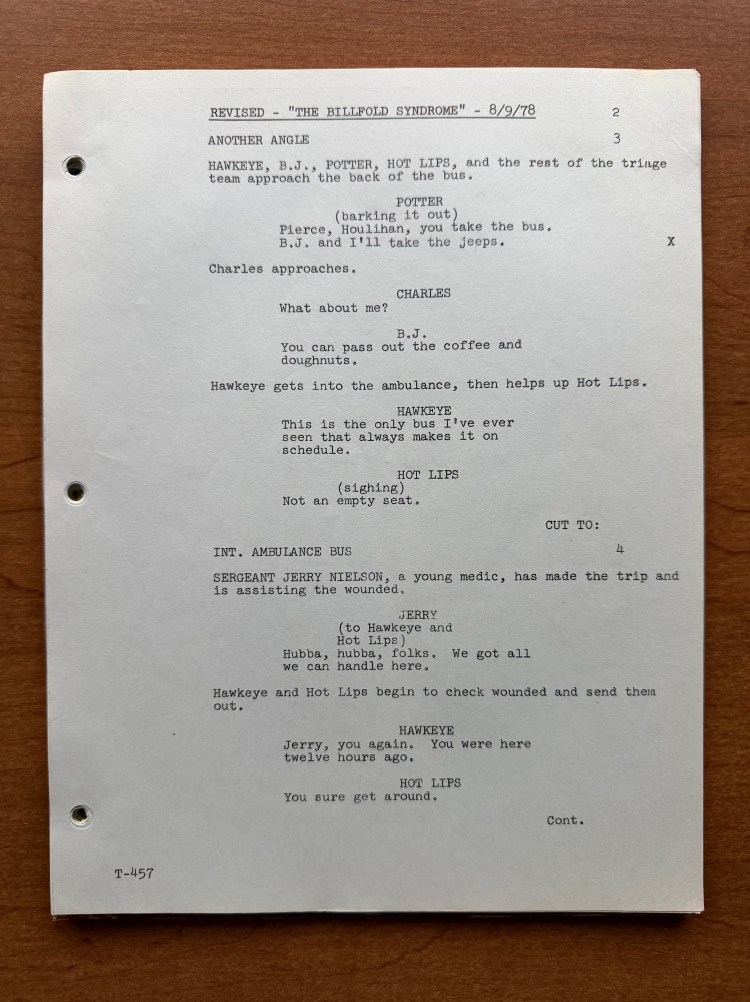
Seeing a script with the full Shooting Schedule is great because it allows us to see how well the M*A*S*H cast and crew worked together. By season seven, they were a well oiled machine, and they filmed anywhere from nine to thirteen pages per day for this episode. When you consider the amount of work that went in to setting up each scene, that is pretty impressive! Scripts are my favorite part of the collection because they are the spark that lights the episode. As I read the script while I watch the show, I understand that the words on a page are only half of the recipe. The actor has to take those words and work their magic. As we will see in the next section of this post, the acting in this episode is incredible and took the words from the page and turned them into magic on the screen.
The Final Episode
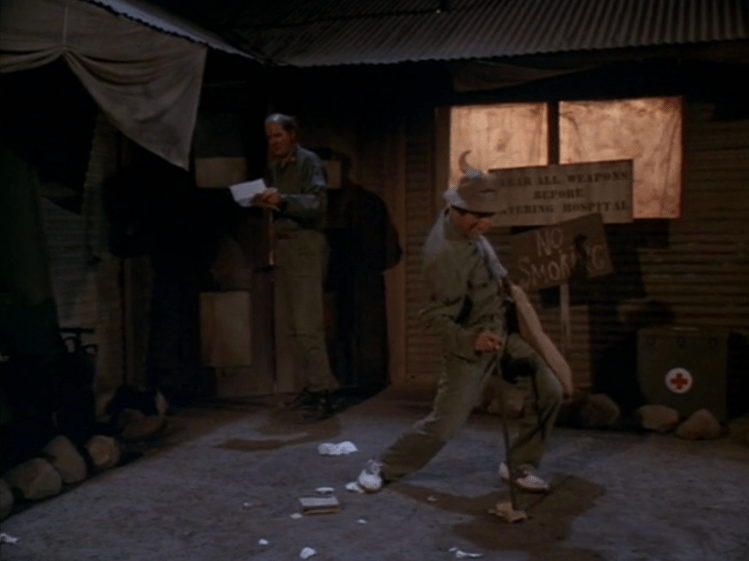
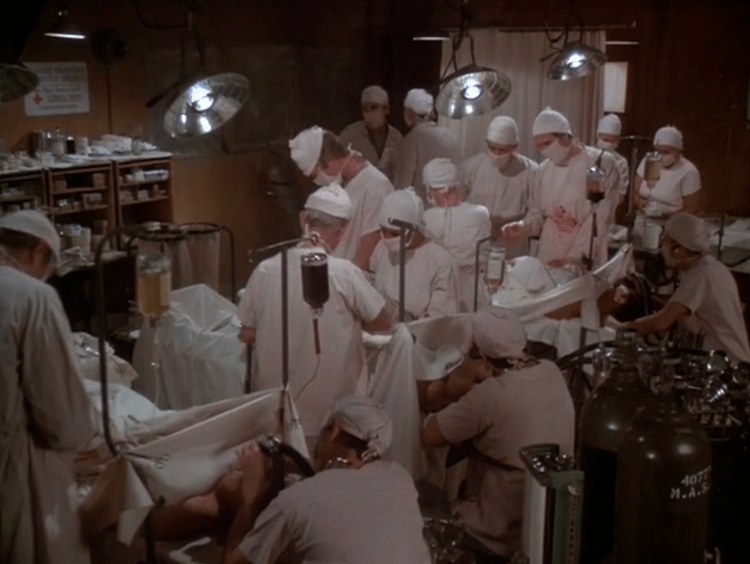
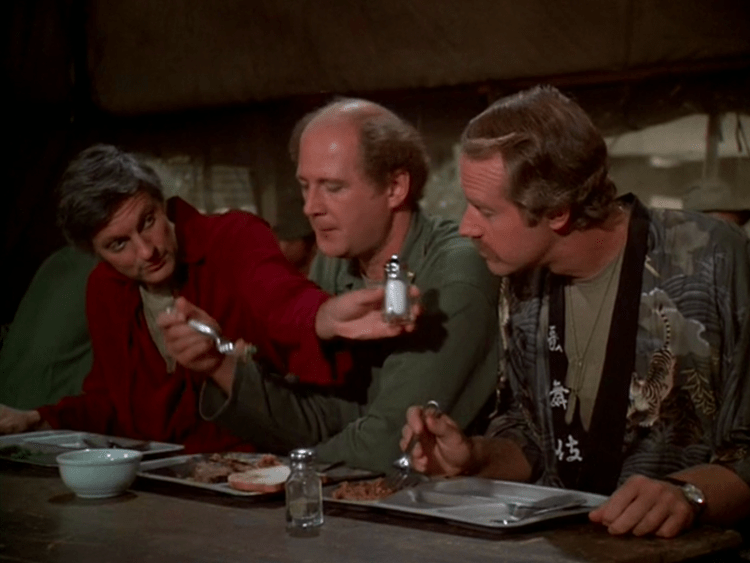
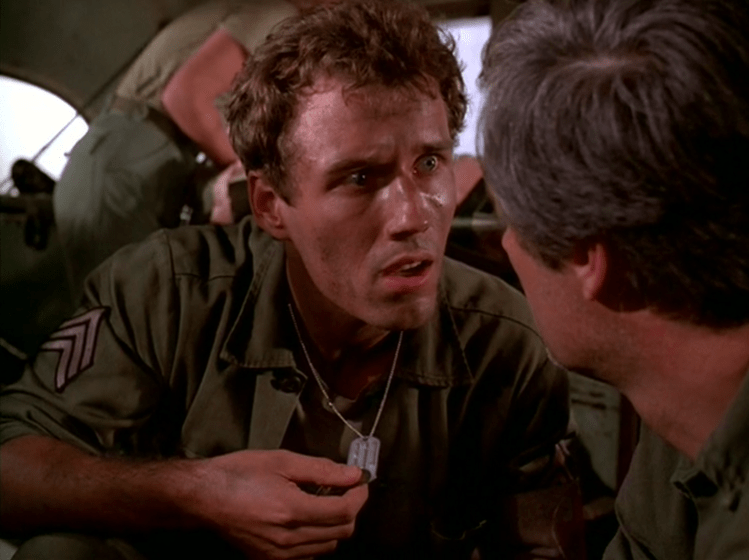
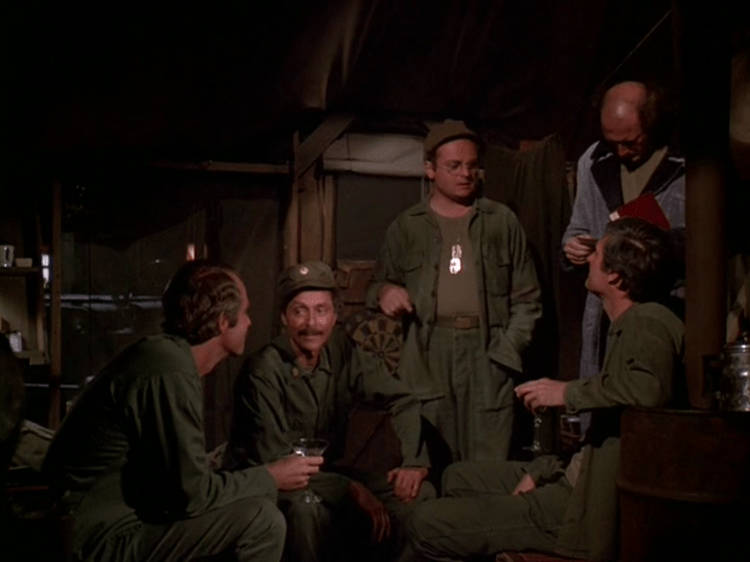
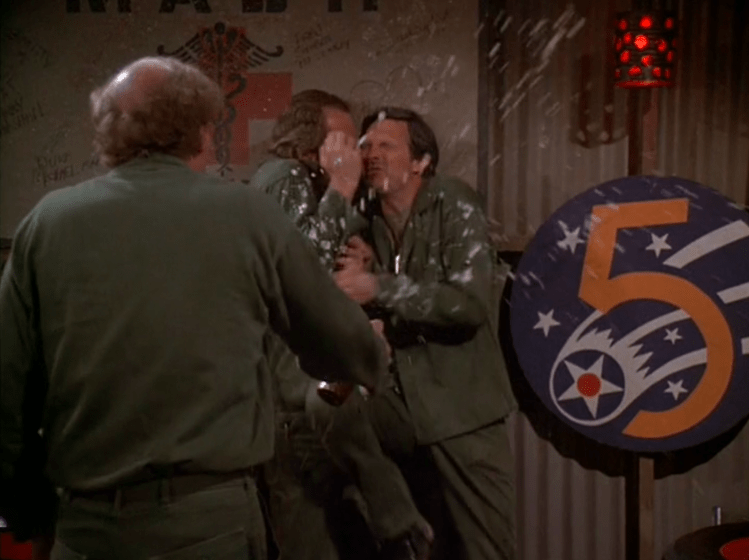
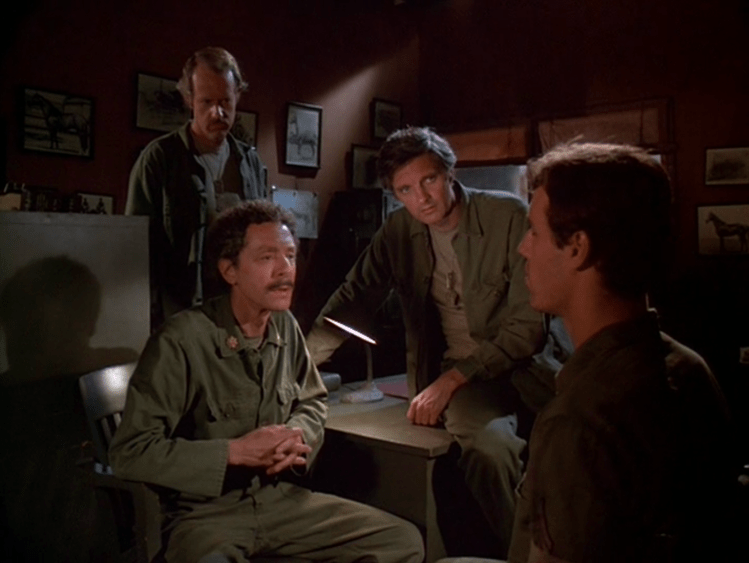
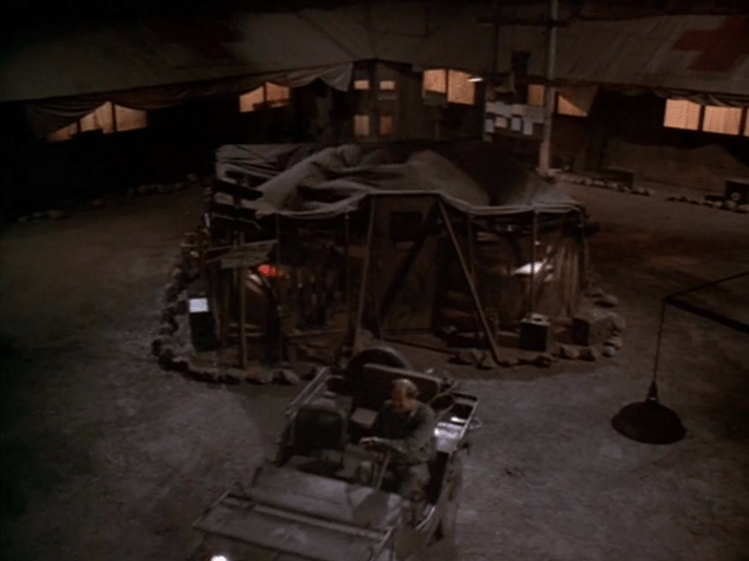
Charles gets a letter informing him that he is no longer in contention to be the head of thoracic surgery at Massachusetts General Hospital because he is currently stationed in Korea. This sours his mood, and he decides that he is going to give the entire camp the silent treatment. Hawkeye and B.J. cannot accept this, so they try everything to get him to talk. He won’t budge until conspire with Radar to send Charles a fake telegram saying that he is still in the running for the job. This works, but when Hawkeye and B.J. confess to sending the telegram he gets even with them! Meanwhile, when wounded arrive, Jerry, one of the medics, wants to stay and watch them work in the O.R. Hawkeye allows him to stay because he is a good medic, and Jerry confesses that he wants to be a doctor. He returns to his unit after the session, but the next time Jerry arrives at the 4077th, he messes up bandages, is acting off, and doesn’t know who he is. Col. Potter calls Dr. Sidney Freedman, and he believes that Jerry has “billfold syndrome,” and they have to find out what caused him to disassociate. With the help of Hawkeye and B.J., Sidney hypnotizes Jerry to find out what happened. Under hypnosis, Jerry reveals that his younger brother is also in Korea, and he was killed in the most recent battle. Sidney promises to work with Jerry in future sessions.
Every time I watch “The Billfold Syndrome,” I am reminded of how great of an episode this is. The storylines are well balanced, and I honestly can’t tell whether they considered the Charles storyline or Jerry storyline to be the “A Story” of the episode. Early in season seven, Charles was still fairly new, and Hawkeye and B.J. learn that Charles can give as well as he takes when it comes to pranks and payback. Charles is no Frank Burns! But the Jerry storyline steals the show. Kevin Geer delivers one of the best guest performances of the series. The first time we meet Jerry, it’s hard not to like him. He’s a bright, dedicated medic who is interested in becoming a doctor. The viewer is led to believe that the story might progress in one way with him observing the surgeons in O.R., and then we’re thrown for a loop when he has amnesia. Greer delivers in the hypnosis scene, and you believed the pain he felt when he realized what happened to his brother. Script writer Ken Levine has written about this episode and how careful he and Isaacs were when they depicted this storyline, especially the hypnosis scene. It was written with care.
There were no major changes between the script and final episode since the script I have includes revised page. After rewatching this episode for the second time in a year, I believe that this would be a good episode to show someone who has never seen M*A*S*H before. It balances the comedic and dramatic storylines, it is well written, all the primary characters are in it, and the guest cast is incredible. Episodes with Sidney are my favorite, and this is one of his best. He is only in the second half of the episode, but the scene with Sidney hypnotizing Jerry makes this episode great. As I have written when I reviewed a copy of the book Back Down the Ridge, psychiatrists were stationed near the front during the Korean War so soldiers were treated near their units and returned to combat. Dr. Sidney Freedman likely exists in M*A*S*H because the book discusses the use of psychiatrists near the front, and Larry Gelbart has written about the influence that Back Down the Ridge had on him and the other writers. The treatments we see by the doctors, nurses, and psychiatrists in M*A*S*H are grounded in reality, and that is a big part of what continues to make M*A*S*H relevant over fifty years after its debut.

