
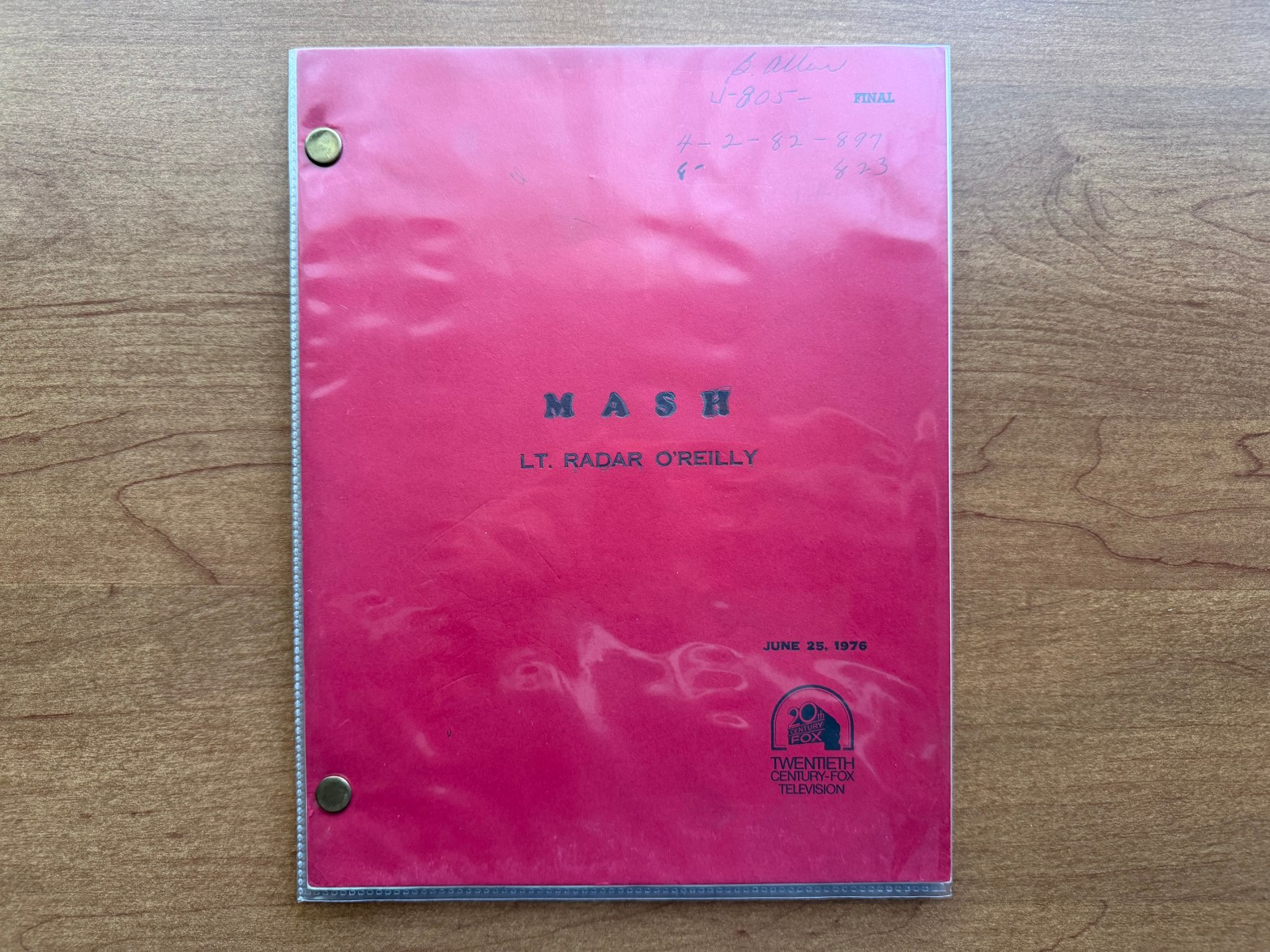
As we roll into September and the beginning of fall, it is the time of the year that the new season of primetime television begins. This tradition goes back decades, and M*A*S*H often premiered new seasons in September. In September 2026, we celebrate the 50th anniversary of M*A*S*H season five. Which is hard to believe since it seems like we just celebrated the 50th anniversary of the pilot in 2022! As we begin to celebrate the anniversary of the fifth season, one that introduced several storylines and was the final season for one character, I want to look back by reviewing a script from the fifth season. I have several in the collection, and I gave my thoughts on season five in my full series rewatch last year. But I still needed to find an episode to review. In my rewatch, there were several season five episodes that stood out, for better or worse, and the majority were “just” good episodes. I would argue that one of those episodes is “Lt. Radar O’Reilly” (05×04). It’s not among the best episode of season five, and it’s not one of the weaker episodes. It’s just…fine. So as we celebrate the 50th anniversary of M*A*S*H season five, let’s look back at “Lt. Radar O’Reilly!”
The Script
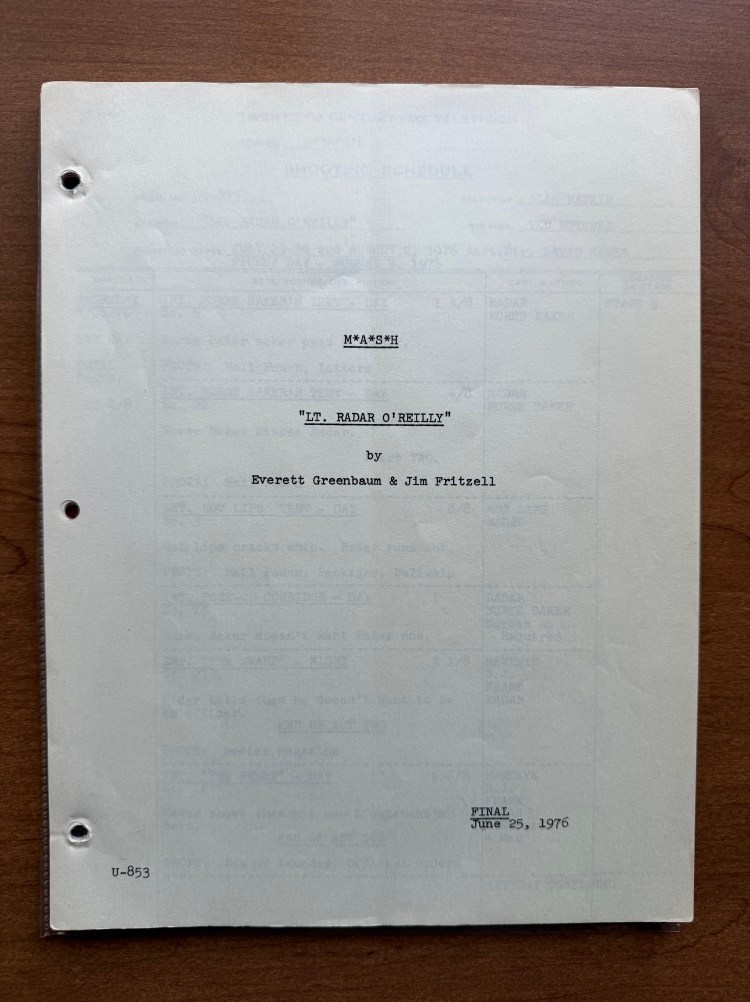
“Lt. Radar O’Reilly” was the fourth episode of season five, and it aired on CBS on October 12, 1976. The script I have in the collection is a final draft dated June 25, 1976, so it was written less than four months before it aired. The episode was written by the writing team of Everett Greenbaum and Jim Fritzell. They are credited with writing 24 M*A*S*H episodes in seasons three through six. The episode was directed by Alan Rafkin, and this is one of only two M*A*S*H episodes that he directed. However, his career as a director on television spanned several decades, and he directed other hit shows including The Mary Tyler Moore Show, The Bob Newhart Show, Laverne & Shirley, and One Day at a Time.
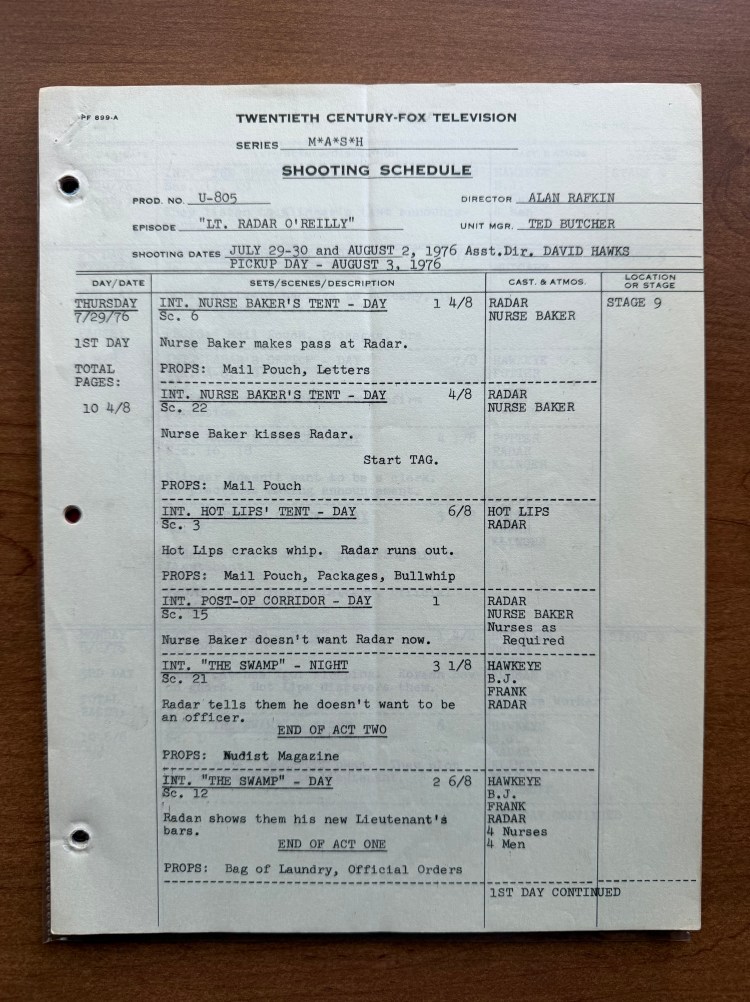
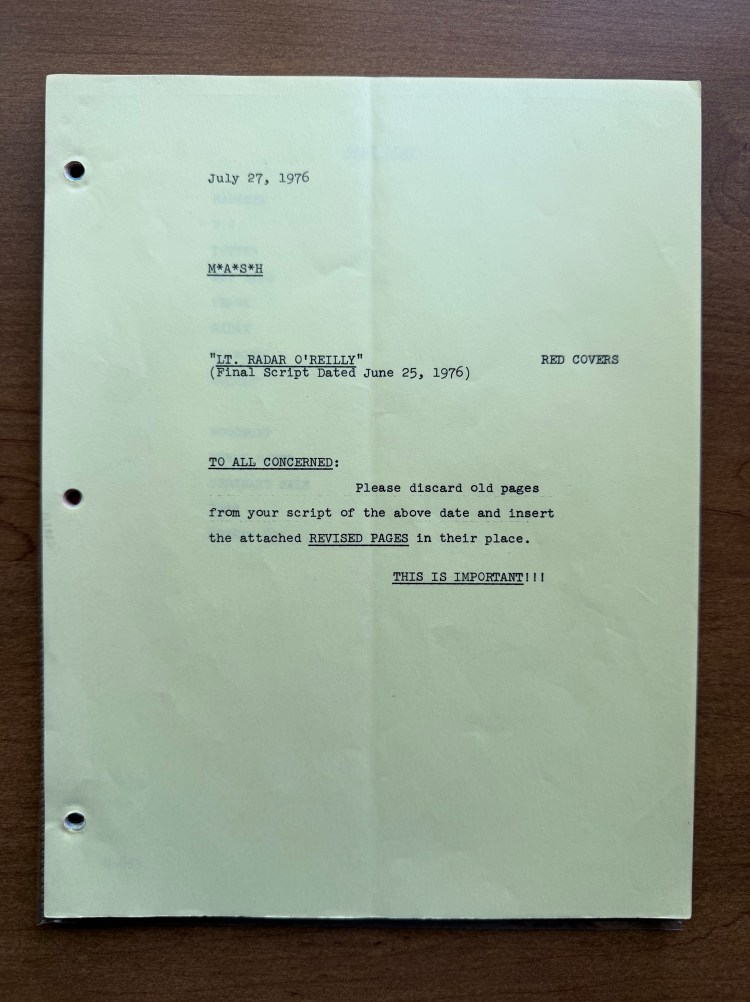
Thankfully, I know who this copy of the script belonged to, and it contains a number of interesting features. It was used by lead set decorator Bert Allen, who is credited with being on M*A*S*H from season five through eleven. He made a few markings throughout the script highlighting the need for props such as the laundry bag in the Swamp, Margaret’s whip, Radar’s mailbag, and the mail itself. This script also contains a number of production documents including the Shooting Schedule and a few sets of revised pages. There are no Call Sheets in this script. Call Sheets provided a list of the actors, crew members, and equipment needed for each day of production. However, the Shooting Schedule outlines that this episode was filmed over the course of three days (July 29, 30, August 2, 1976) with an additional day for “pickups” (August 3, 1976). A “pickup” in the case of movies and television is a scene that is minor or extra filming that is needed to add to an existing scene. It was likely that not many of the primary actors would have been needed for these scenes unless there was something that needed to be refilmed or filmed from a different angle. Unfortunately, I don’t know if the fourth day was used for this episode since I don’t have the Call Sheets. In addition to the Shooting Schedule, the script contains two sets of revised pages. One set of pages is dated July 27, 1976 (blue pages), and the other set is dated July 28, 1976 (pink pages). Allen kept the cover sheet for the revised pages dated July 27, and that cover sheet instructed the receiver to “discard the old pages from your script.” Sadly, he followed those directions, so I do not know what was revised on each page. I do have scripts in the collection that do have both the revised and original pages in tact.
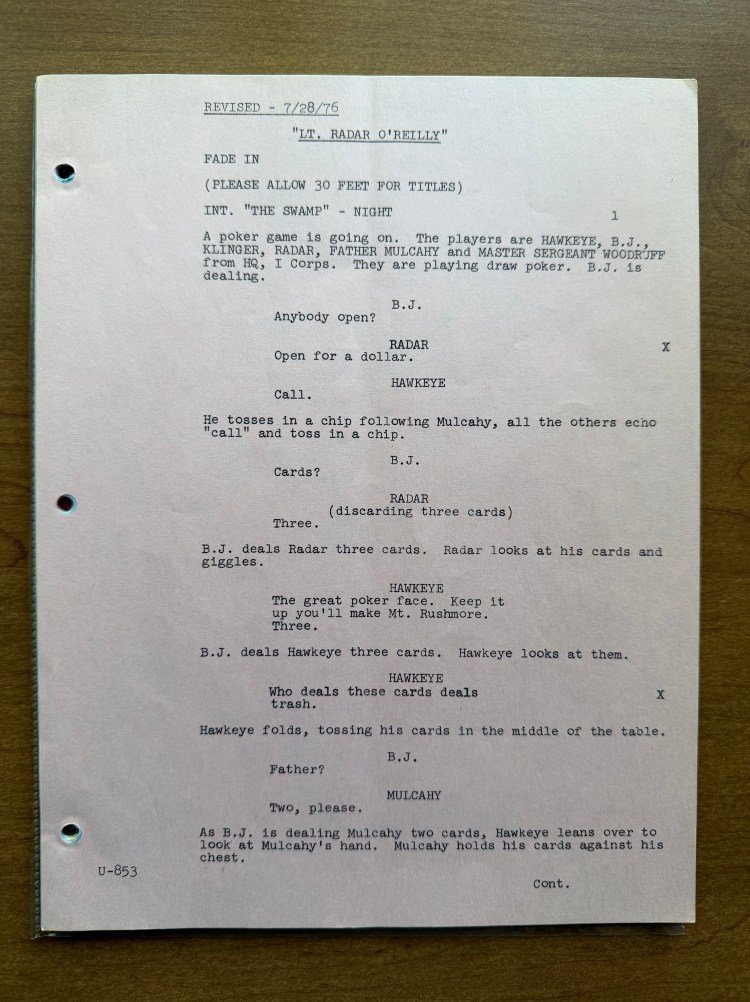
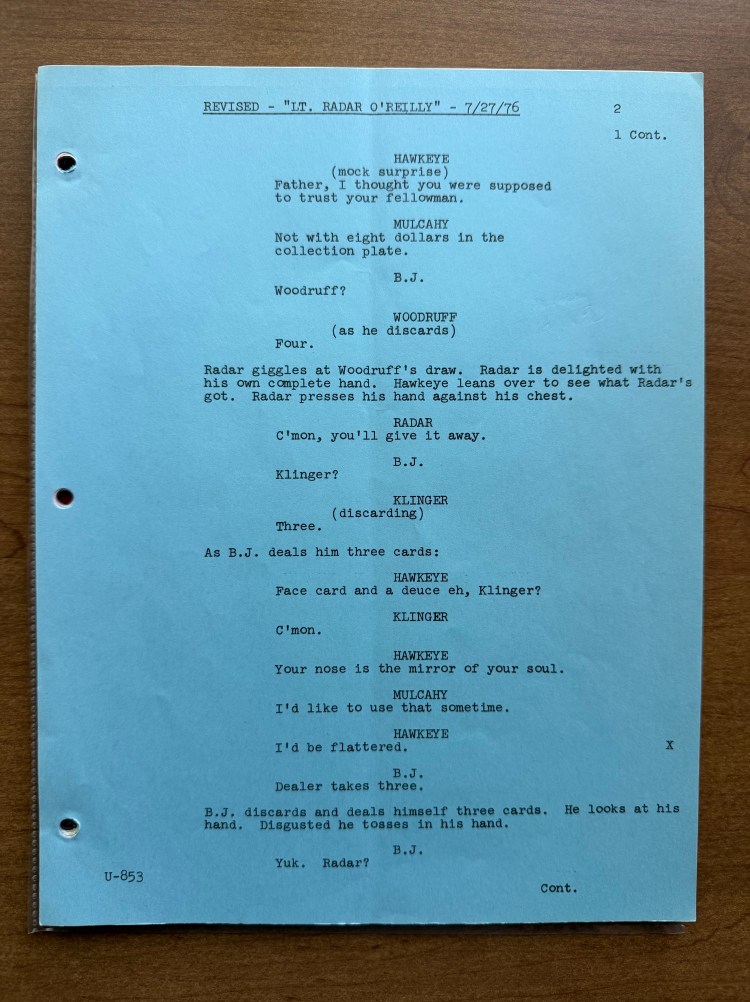
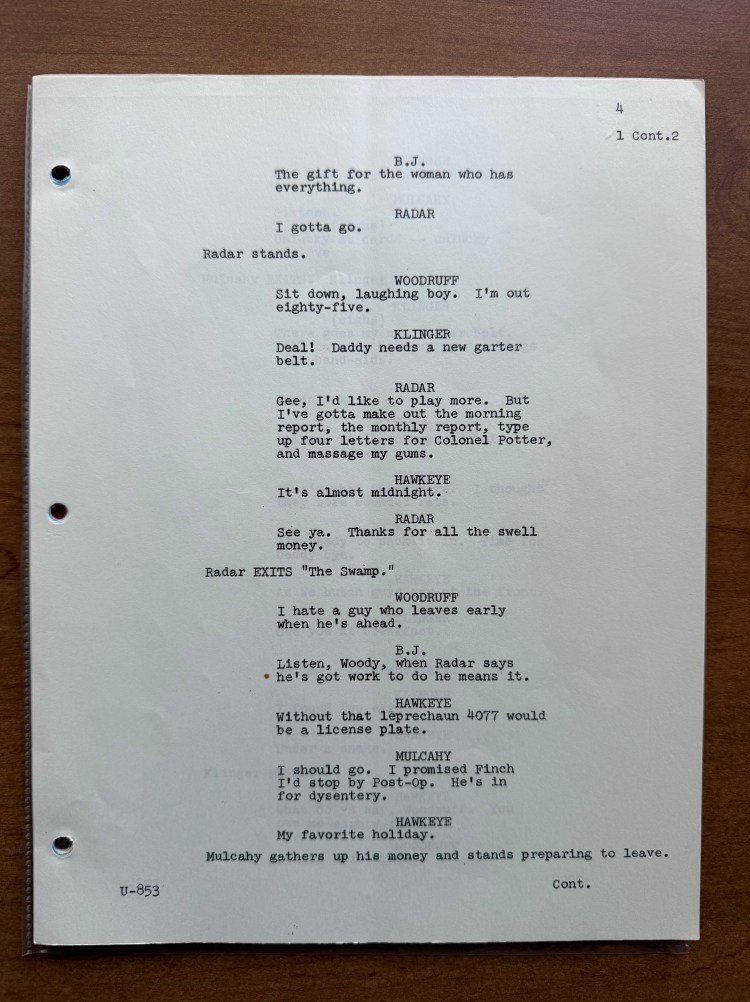
I am often asked what my favorite object in the collection is. While it is impossible to choose only one item, I can choose a category of items. The scripts are easily my favorite because they demonstrate how the episodes were made in several ways. Most of the scripts in the collection contain at least one of the production documents (Shooting Schedule, Call Sheet, revised pages, wardrobe pages, etc.). Those documents offer insight into how much work went in to each day of filming an episode. The revised pages show how the writing changed as the scenes were read at the table read, rehearsed, and eventually filmed. Scripts that contain both the original and revised pages are a real treat! Finally, the most exciting thing for me is watching the words on the page come to life. Each scene is described in the set directions, and each actor’s lines are written on the page. But it was the job of the director and actors to marry the stage directions with the lines to create moments that the audience would respond to. That is truly the magic of television, and it’s what makes getting to read along with the script as I watch the episode my favorite task to do each month.
Final Episode
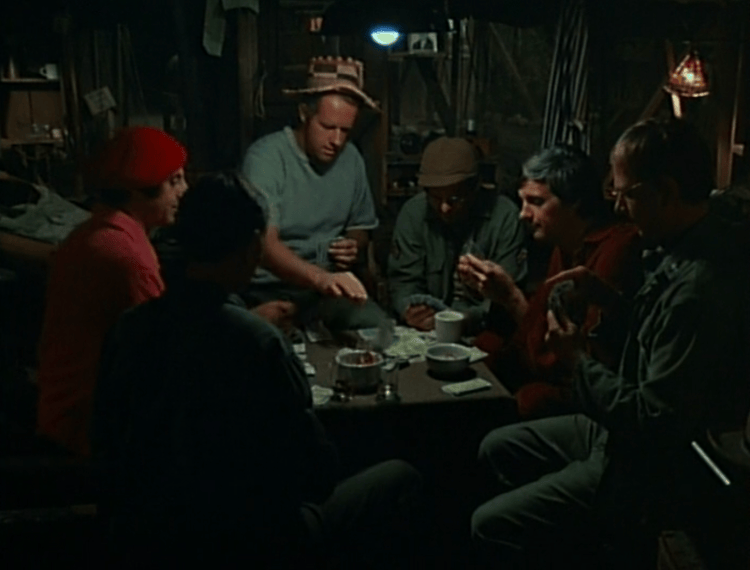
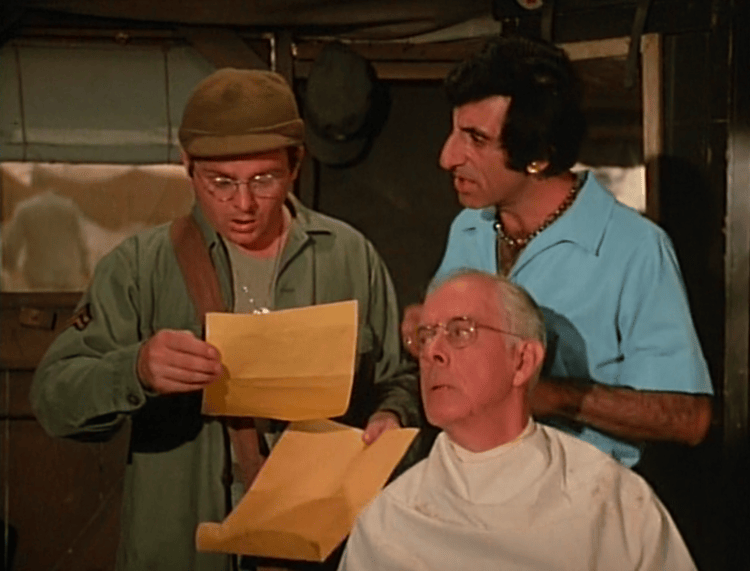
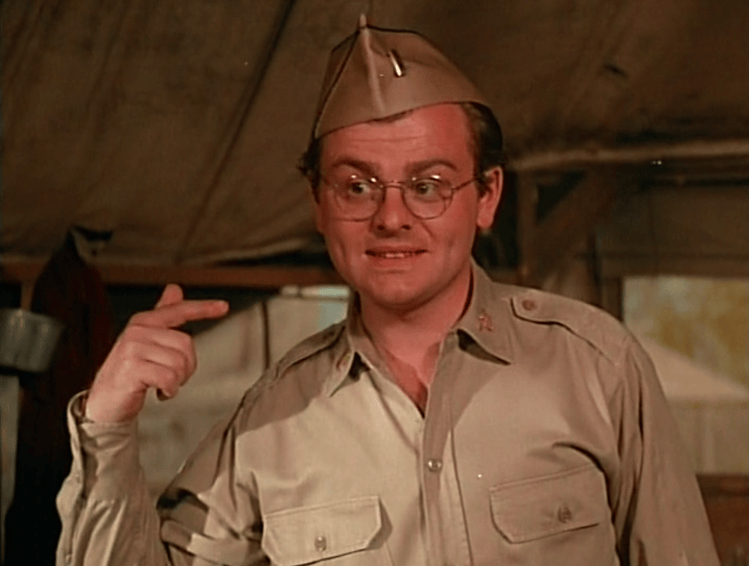
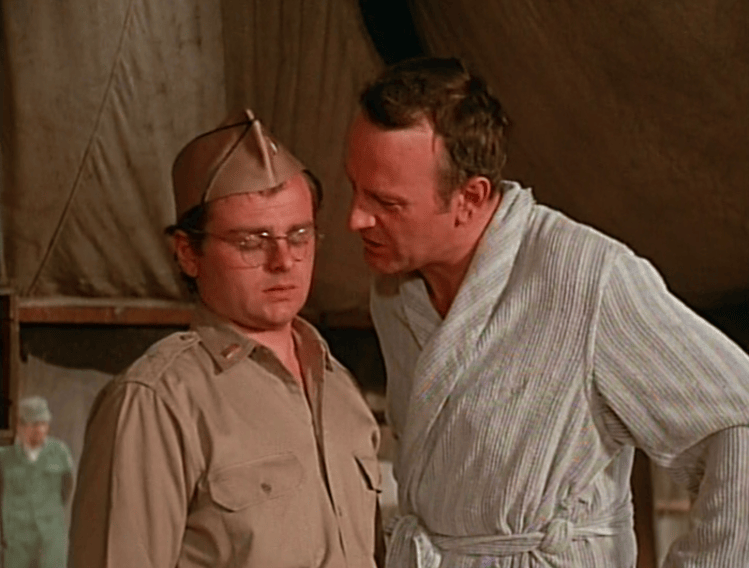
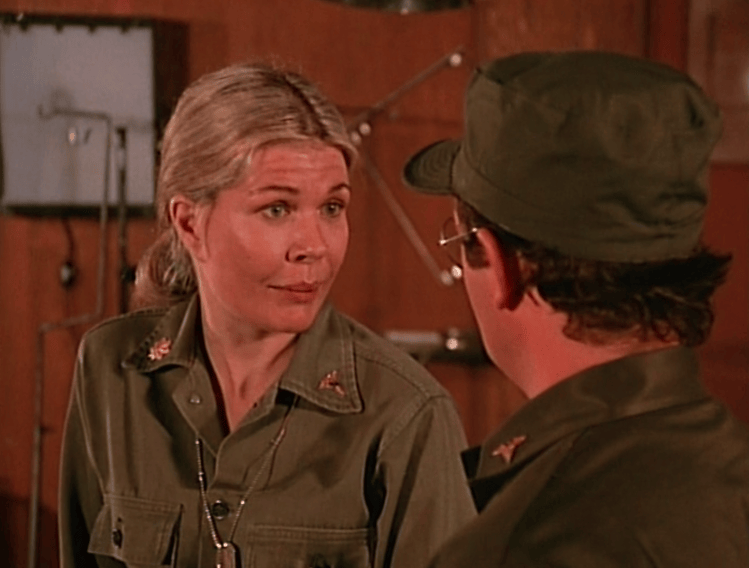
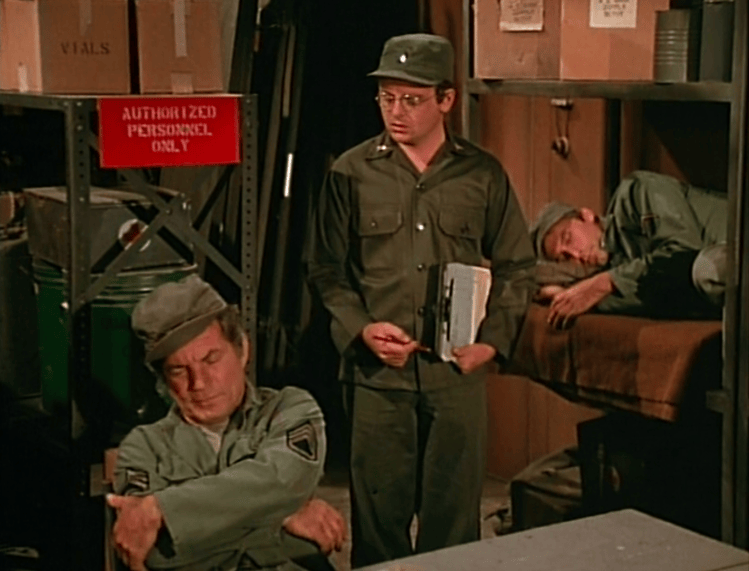
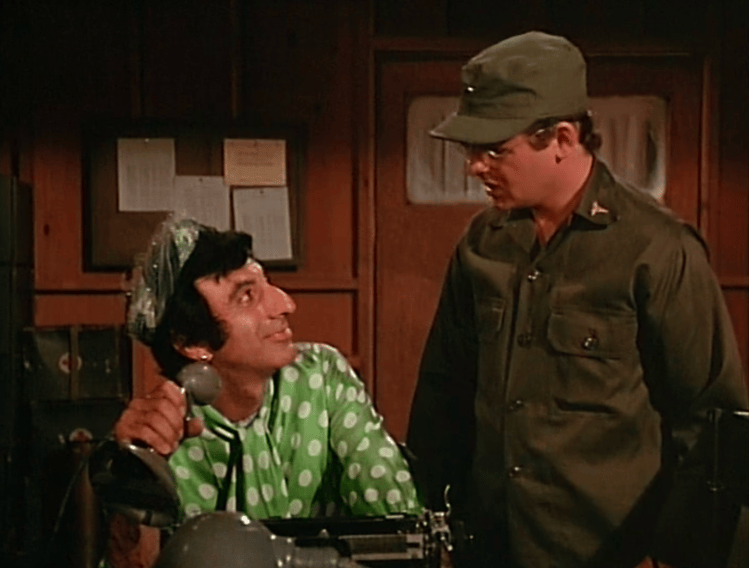
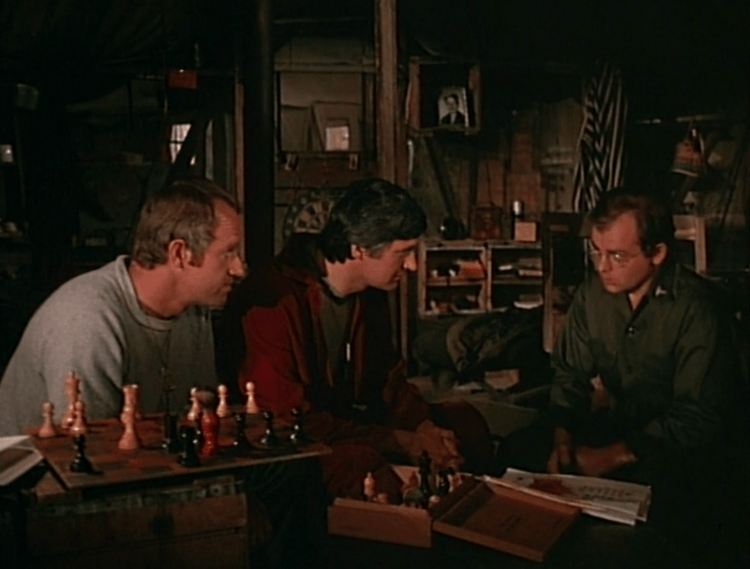
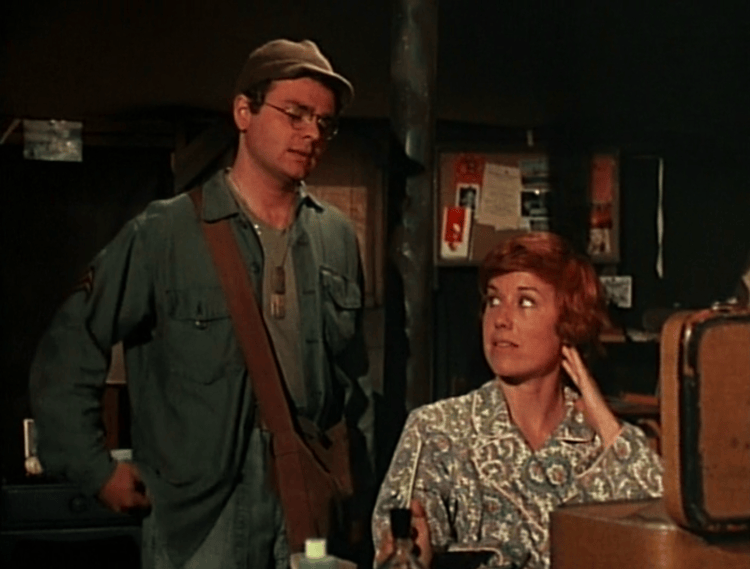
The episode opens with a poker game in the Swamp. Radar is winning, but he takes his winnings and leaves to return to his duties. Woodruff isn’t happy that Radar left the game early, but Hawkeye and B.J. assure him that Radar has work to do. When it is time to pay up, Woodruff doesn’t have the money. Hawkeye and B.J. aren’t pleased. Instead, Woodruff offers to promote one of them. B.J. and Hawkeye aren’t interested, but they suggest making Radar a second lieutenant. When the promotion comes through the mail, Radar is shocked! He can’t believe he is an officer, and neither can Col. Potter, who calls headquarters to confirm the promotion with Woodruff. Once it is confirmed, Radar steps into the role. But he quickly realizes that he doesn’t like being an officer. The enlisted men hate him and see him as a traitor. Igor and Zale don’t treat him well, and Klinger is not happy as he learns to take over Radar’s job as company clerk. Lt. Baker, who made passes at Radar when he was enlisted, tells him that she is no longer interested since he is an officer. She liked that he was an underdog as an enlisted man. He doesn’t fit it with anyone. Radar is miserable, so he goes to Hawkeye and B.J. to express his disappointment with being an officer. They assure Radar that they can arrange his demotion, and he is returned to corporal, and life goes back to normal.
While the episode has some funny moments and memorable lines, the premise falls apart pretty quickly when you really stop to think about it. Just because Woodruff can print the orders to make Radar a second lieutenant, he would have a harder time getting the other departments that control the payroll and everything else making it a legitimate promotion. And even if he was able to pull off getting the promotion put through all the way up the chain, undoing it would be even harder. Wouldn’t it look bad on Radar’s record that he was demoted back to a corporal? Maybe I am overthinking it, but by season five, M*A*S*H was usually grounded in some form of reality. Aside from that, there are some interesting moments in this episode including a rare mention of Col. Blake, Frank’s reaction to finding out about Radar’s promotion, and we get a preview of Klinger’s future role as company clerk. It’s an interesting bit of foreshadowing since Klinger does take Radar’s job after he leaves in season eight.
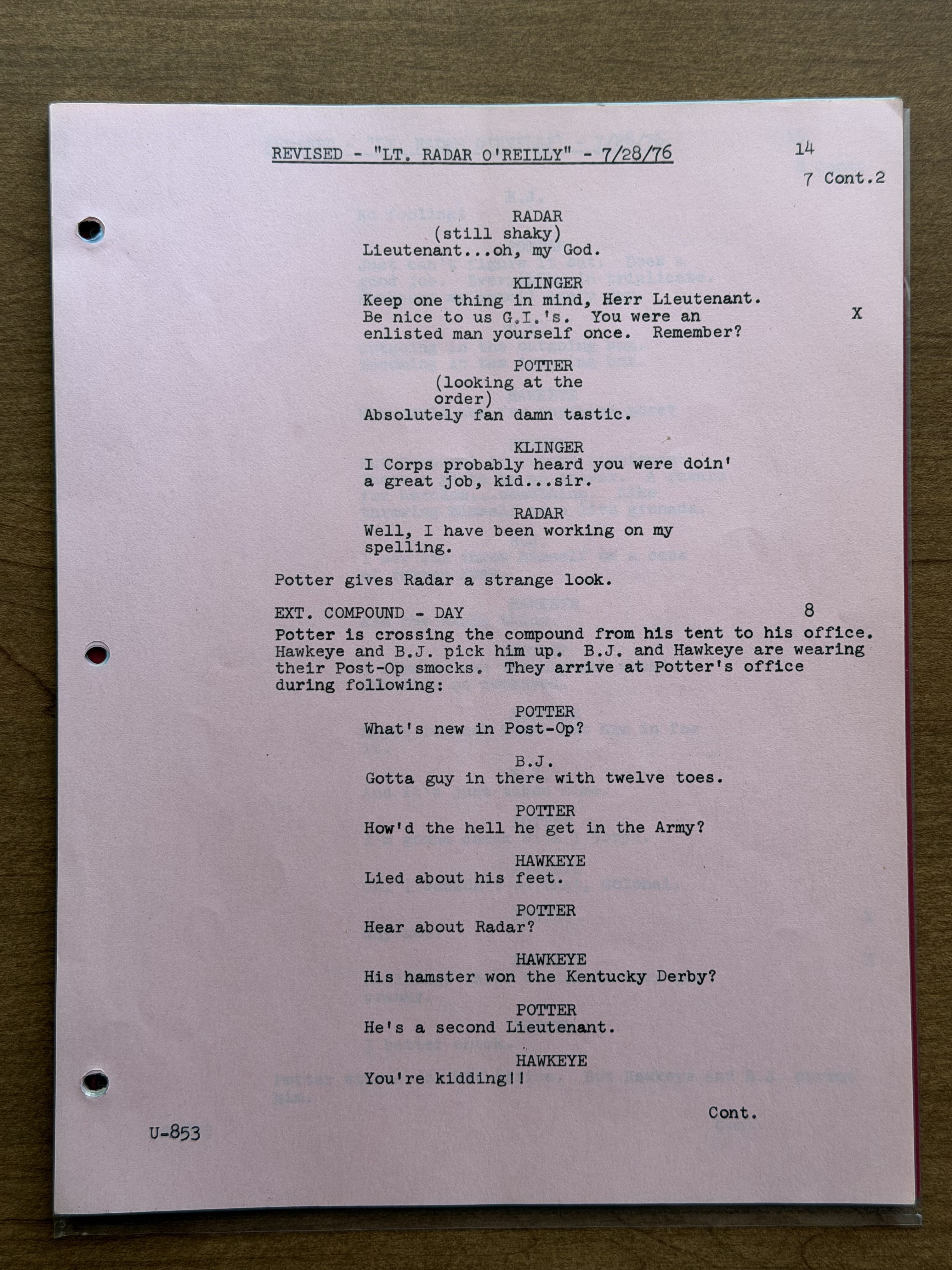
When it comes to differences between the script and the final episode, there aren’t too many to mention. There are minor word changes on most of the pages of the script, but that was pretty common. The M*A*S*H actors have often said that they followed the scripts to the letter since they trusted the writers. That definitely comes through in the case of this script. A few words have been switched around here and there, but that was likely either due to the actors wording things a little differently, or perhaps the director suggested an alternative take on a line as they filmed. However, while the wording might have been altered, the spirit of the line was never lost. There is one scene that is slightly different from the script to the final episode. In the scene where Col. Potter tells Hawkeye and B.J. about Radar’s promotion, there were a few additional lines that were cut from the episode (see page 14 above). I had never noticed it before, but when you watch the episode, there does appear to be an abrupt cut in the scene just before Potter delivers the line “Hear about Radar?”
As I mentioned in my introduction, “Lt. Radar O’Reilly” didn’t make my list of favorite episodes from season five, but it also didn’t make my list of least favorite. Maybe it feels off to me because Radar’s promotion scheme seems like something Hawkeye and Trapper would have done as opposed to Hawkeye and B.J. And the premise falls apart when you start to question of the logistics of a real Army promotion. There are some funny moments, and it is a rare M*A*S*H episode without a B-story. As we continue to celebrate the 50th anniversary of each M*A*S*H season, I enjoy looking back at television from 50 years ago. M*A*S*H was consistently in the top ten of the ratings by its fifth season, and it is easy to understand why. It was well balanced with comedy and drama, and it made you think. As a historian, I gravitate towards shows that have an element of realism, and M*A*S*H offered a historical fiction approach before the historical fiction genre was really popular.


2 thoughts on “Script Spotlight 60: “Lt. Radar O’Reilly””